Lamb's quarters
Scientific Name: Chenopodium album
Category: plant
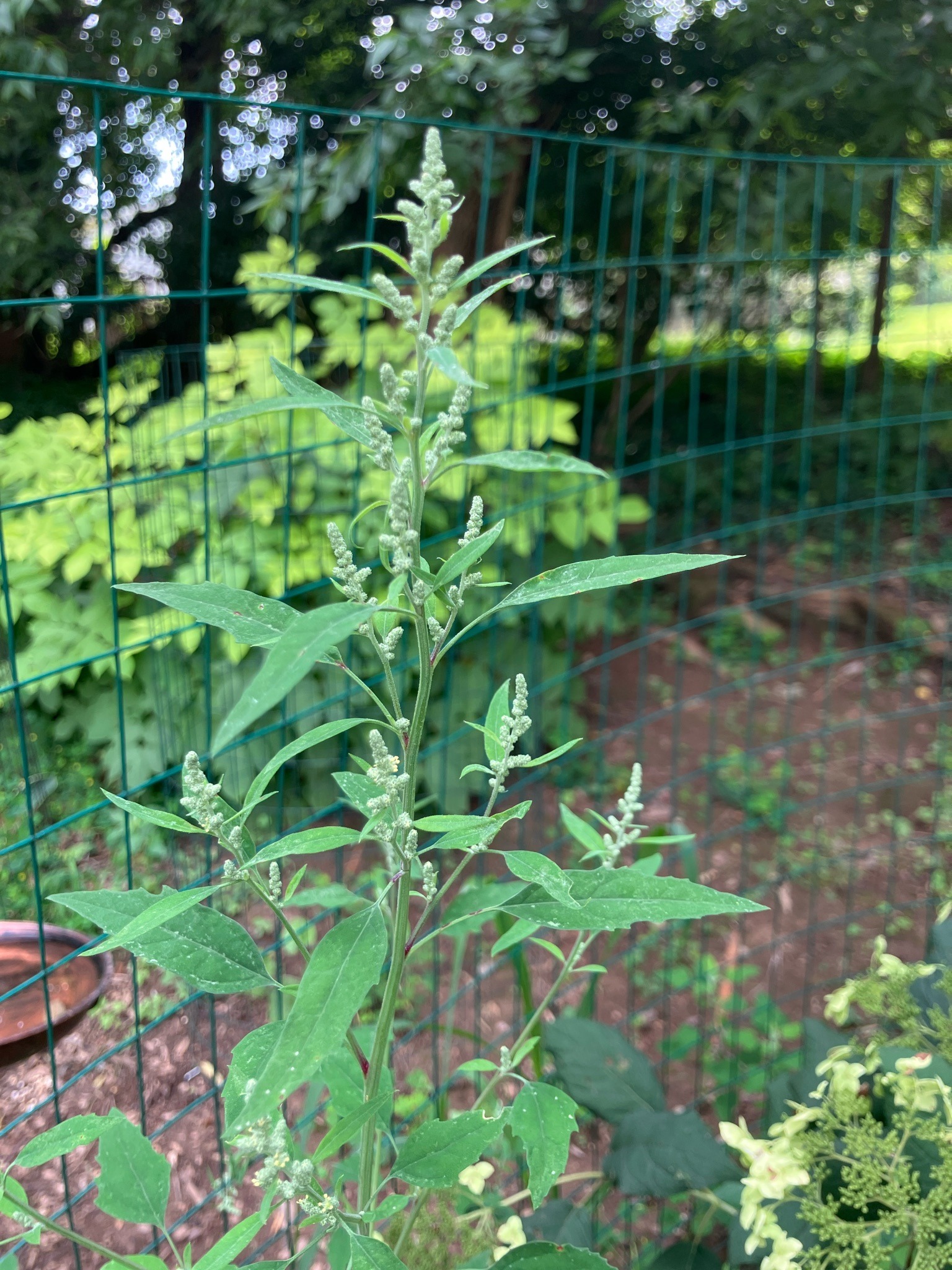
Brief Description
Lamb's quarters is an annual herbaceous plant often found in disturbed soils, gardens, and waste areas. It is recognizable by its upright stem, alternate leaves with a whitish, mealy coating underneath, and dense clusters of small green flowers.
Characteristics
Grows up to 1-1.5 meters tall with an angular, often grooved or striped stem. Leaves are variable in shape, typically diamond-toothed or lanceolate, coated with a white, flour-like meal (farinose) that gives them a grayish-green tint. Flowers are tiny, greenish, and packed in terminal and axillary spikes.
Habitat
Disturbed soils, agricultural fields, gardens, roadsides, and waste places.
When to Find It
Spring through autumn; flowers primarily from summer to early fall.
Conservation Status
N/A
Ecological Role
Provides food for various birds and insects. However, in agricultural settings, it can compete heavily with crops for nutrients and water.
Easily Confused With
Other Chenopodium species (such as nettle-leaved goosefoot) or Atriplex species (orach). Distinguishing features usually involve leaf shape, seed characteristics, and the density of the mealy coating.
Observation Tips
Look in sunny, disturbed patches of soil. The mealy white coating on the underside of young leaves is a key identifier when touching or examining closely.
Interesting Facts
Lamb's quarters is closely related to quinoa and spinach, and its young leaves are edible and highly nutritious, rich in vitamins A and C, calcium, and iron.