Mulberry Tree
Scientific Name: Morus
Category: tree
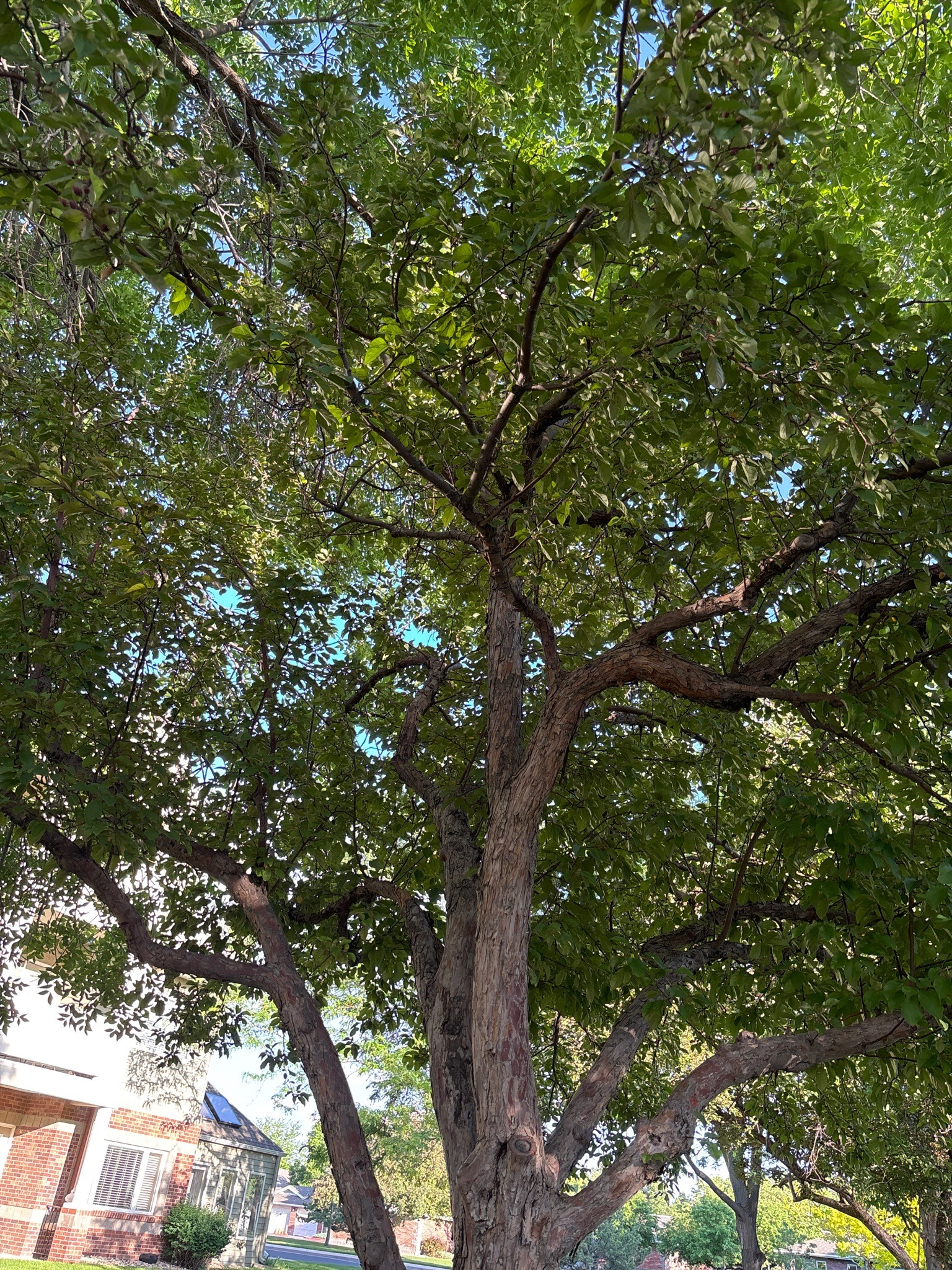
Brief Description
A medium-sized deciduous tree known for its serrated leaves and edible, berry-like fruit cluster.
Characteristics
Distinctive rough, grayish-brown bark that becomes furrowed with age. The leaves can be various shapes (lobed or unlobed) on the same branch, with serrated edges and a pointed tip. It produces small, aggregate fruits that resemble blackberries.
Habitat
Often found in open woodlands, forest edges, suburban yards, and disturbed areas. They are highly adaptable to various soil types.
When to Find It
Fruits typically ripen in late spring to early summer. Leaves turn yellow in the autumn before falling.
Conservation Status
Least Concern / Common
Ecological Role
Provides a critical food source for various bird species and small mammals. Its leaves are the primary food source for silkworms.
Easily Confused With
Blackberries (which grow on thorny canes, not trees) and Paper Mulberry (Broussonetia papyrifera), which has much fuzzier leaves.
Observation Tips
Look for purple stains on the ground during early summer, which indicate falling ripe fruit. Be careful when harvesting as the juice can stain skin and clothing.
Interesting Facts
The Red Mulberry is native to North America, while the White Mulberry was imported from Asia in an unsuccessful attempt to start a silk industry in the United States.