Southern Stingray
Scientific Name: Hypanus americanus
Category: fish
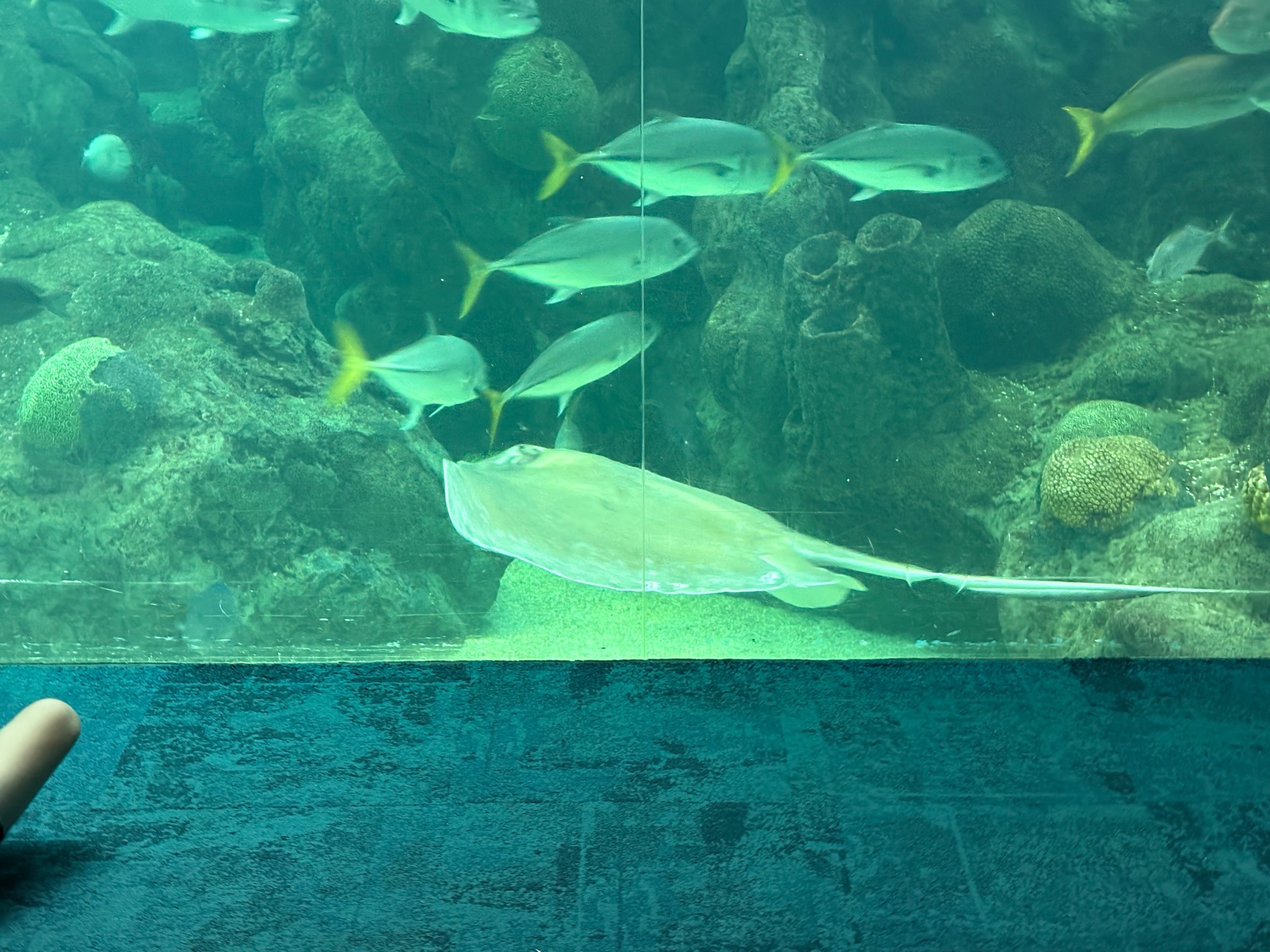
Brief Description
A species of stingray adapted for life on the sea floor, characterized by its diamond-shaped body and long, whip-like tail.
Characteristics
Flat, diamond-shaped pectoral disc with pointed corners. The snout is moderately pointed. The tail is long and whip-like, featuring a serrated venomous spine near the base. Coloration is typically olive-brown or grey on top to blend with the sand and white underneath.
Habitat
Found in shallow coastal waters, seagrass beds, and coral reefs. They prefer sandy or muddy bottoms where they can bury themselves.
When to Find It
N/A
Conservation Status
Near Threatened
Ecological Role
A key predator in reef ecosystems that controls populations of crustaceans and mollusks. By foraging in the sand, they help oxygenate the substrate through 'bioturbation'.
Easily Confused With
Roughtail Stingrays (Bathyraja centroura) which are much larger and have thorns along the tail, and Atlantic Stingrays which have a more rounded snout.
Observation Tips
In the wild, avoid stepping on them by using the 'stingray shuffle' when walking in shallow water. In aquariums, observe from a distance and avoid tapping on the glass as they are sensitive to vibrations.
Interesting Facts
Stingrays use electroreceptors called ampullae of Lorenzini to detect the electrical signals of prey buried in the sand. They are closely related to sharks.