American Aster
Scientific Name: Symphyotrichum spp.
Category: plant
Brief Description
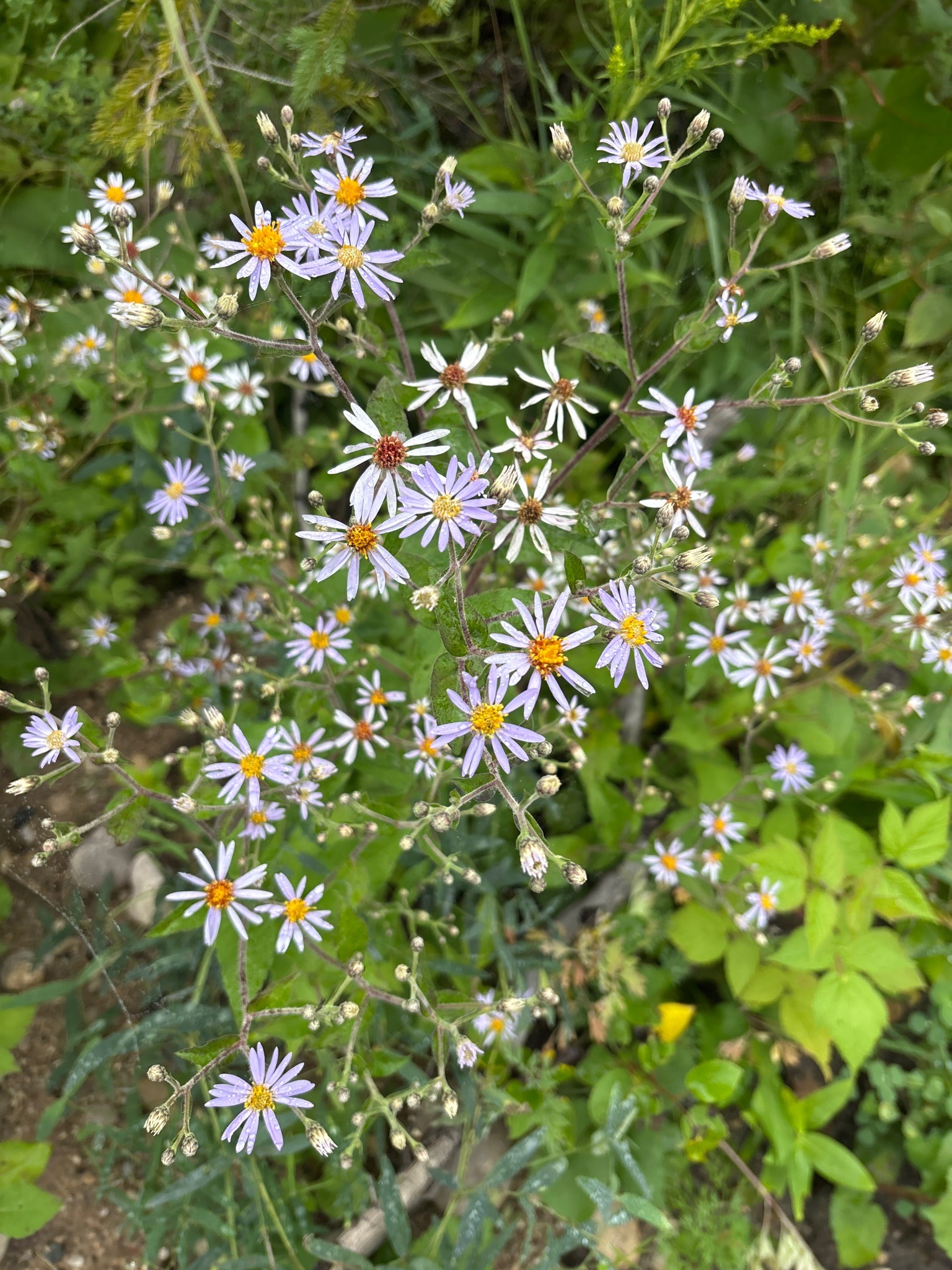
A charming wildflower featuring numerous delicate, daisy-like blossoms with pale purple to blue petals surrounding bright yellow centers.
Characteristics
Multi-branched stems, alternate simple leaves, and numerous small flower heads featuring ray florets in shades of purple, blue, pink, or white, with disc florets that typically turn from yellow to reddish-purple with age.
Habitat
Found in diverse habitats including open woodlands, thickets, prairies, meadows, and along roadsides and forest edges.
When to Find It
Blooms primarily in late summer through autumn, providing a crucial late-season food source for pollinators when many other plants have finished flowering.
Conservation Status
N/A
Ecological Role
Vital source of nectar and pollen for late-season pollinators such as bees, butterflies, and migrating monarchs; also serves as a host plant for various caterpillar species.
Easily Confused With
Can be confused with other aster species or fleabanes (Erigeron). Asters generally bloom later in the season and have firmer, sturdier stems, whereas fleabanes tend to bloom earlier in spring or summer with much narrower, more numerous ray petals.
Observation Tips
Look along woodland edges and sunny pathways during late summer and autumn. Bring a macro lens for photographing the diverse insect visitors.
Interesting Facts
The name aster comes from the ancient Greek word for 'star,' referring to the star-shaped flower heads. In the language of flowers, asters symbolize patience, elegance, and daintyness.