Tall Goldenrod
Scientific Name: Solidago altissima
Category: plant
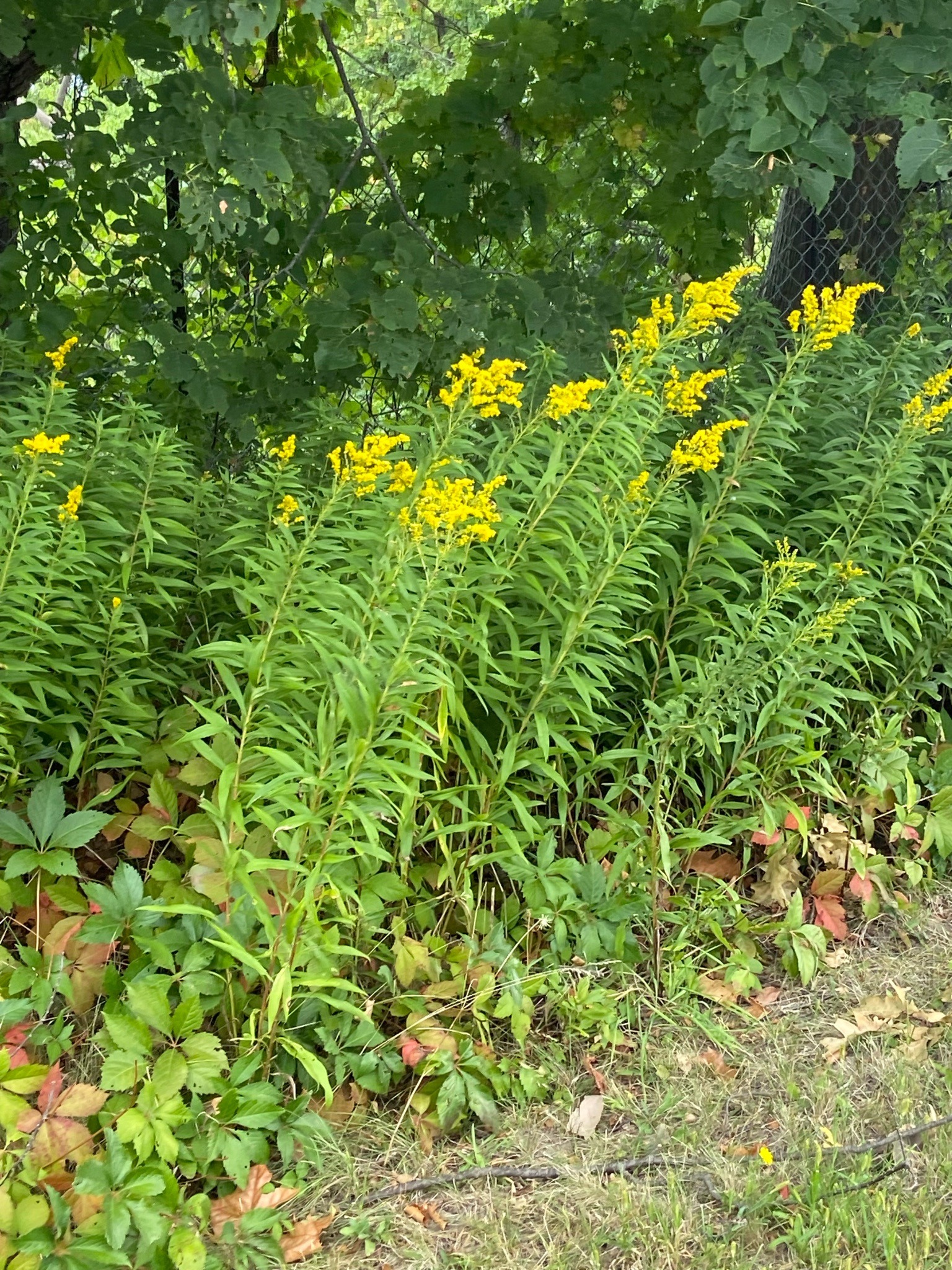
Brief Description
A tall perennial wildflower characterized by tall, unbranched green stems and dense plumes of bright yellow flowers blooming in late summer and autumn.
Characteristics
Grows up to 6 feet tall with hairy stems and lance-shaped, alternate leaves that are typically triple-veined. The flower heads are small, bright yellow, and arranged in large, branching, often pyramidal terminal panicles.
Habitat
Found in old fields, pastures, roadsides, forest edges, and open disturbed areas.
When to Find It
Blooms from late summer through autumn (typically August to October).
Conservation Status
Secure
Ecological Role
Provides an essential late-season nectar and pollen source for migrating monarch butterflies, native bees, and other pollinators.
Easily Confused With
Can be confused with other goldenrod species (like Canada Goldenrod, Solidago canadensis) or invasive Tansy Ragwort. Distinguish by checking leaf hairiness, stem characteristics, and branching patterns of the flower clusters.
Observation Tips
Look along forest edges and rural roadsides in September when they are in full bloom and active with pollinating insects.
Interesting Facts
A common urban myth is that goldenrod causes hay fever, but its heavy, sticky pollen is pollinated by insects rather than wind. The actual culprit for autumn allergies is usually ragweed, which blooms at the same time.
User Notes
M Lot (sept 15/26)