Central American Coral Snake
Scientific Name: Micrurus nigrocinctus
Category: reptile
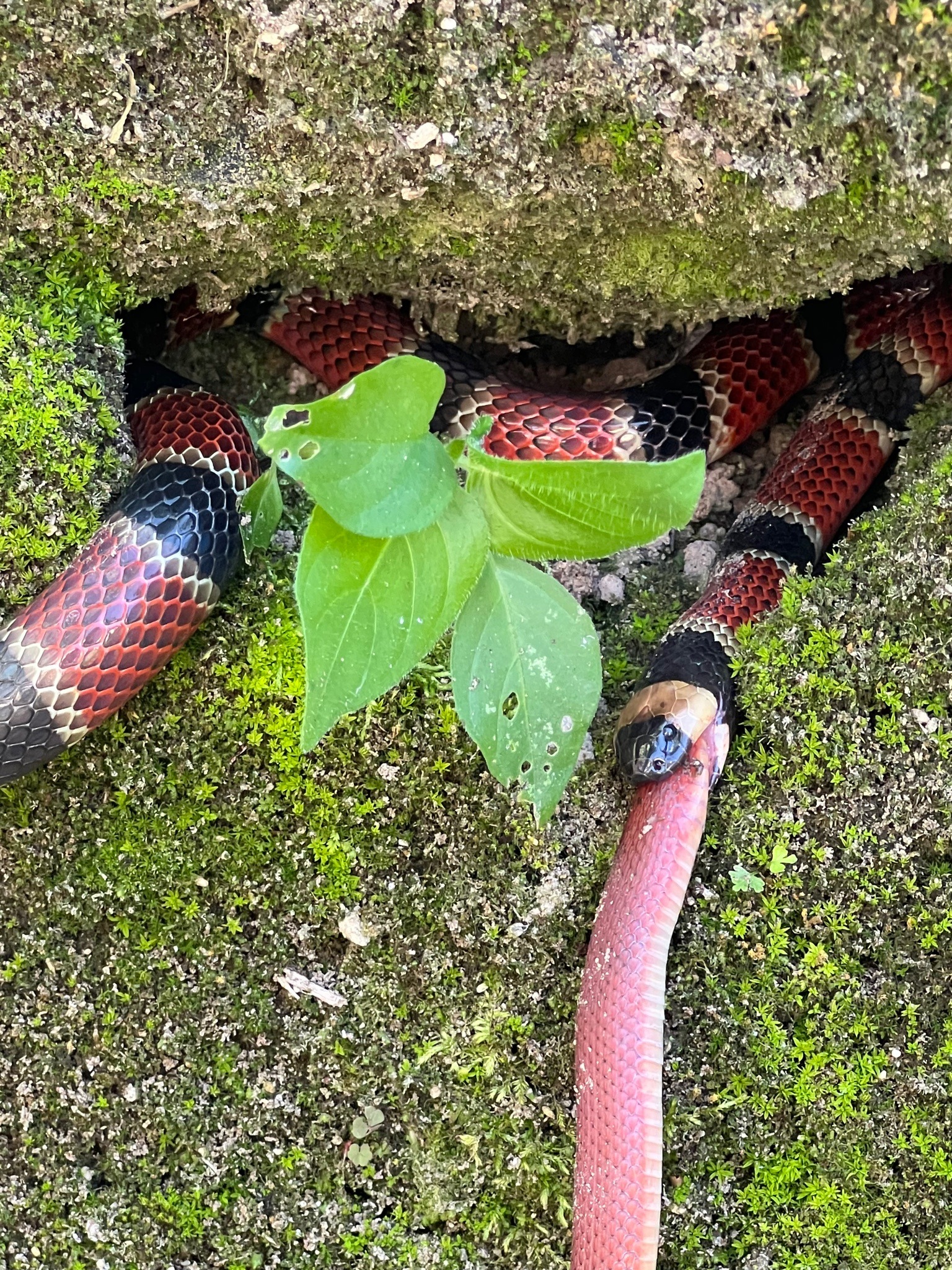
Brief Description
A highly venomous elapid snake recognized by its striking pattern of alternating red, black, and yellow or white rings.
Characteristics
Characterized by broad black rings bordered by narrow yellow or white rings, separating wider red intervals. The head has a distinct black snout and a light band across the back of the head. It has a round pupil and smooth scales.
Habitat
Found in tropical and subtropical moist forests, lowland rainforests, and often disturbed habitats like plantations, gardens, and agricultural lands under logs, rocks, or leaf litter.
When to Find It
Primarily nocturnal or crepuscular, though they may be active during the day after heavy rains.
Conservation Status
Least Concern
Ecological Role
Acts as both a predator of other small snakes and lizards, and prey for specialized predators; contributes to the balance of local micro-ecosystems.
Easily Confused With
False coral snakes (such as Erythrolamprus species) which often have red touching black instead of yellow, or different head color patterns.
Observation Tips
Observe from a safe distance without disturbing them. They are generally unaggressive unless stepped on, handled, or intentionally provoked.
Interesting Facts
Coral snakes possess potent neurotoxic venom delivered via fixed front fangs, but their mouth structure makes it difficult for them to bite flat surfaces of the human body easily.
User Notes
Siguatepeque, Honduras