Chiton
Scientific Name: Polyplacophora
Category: other
Brief Description
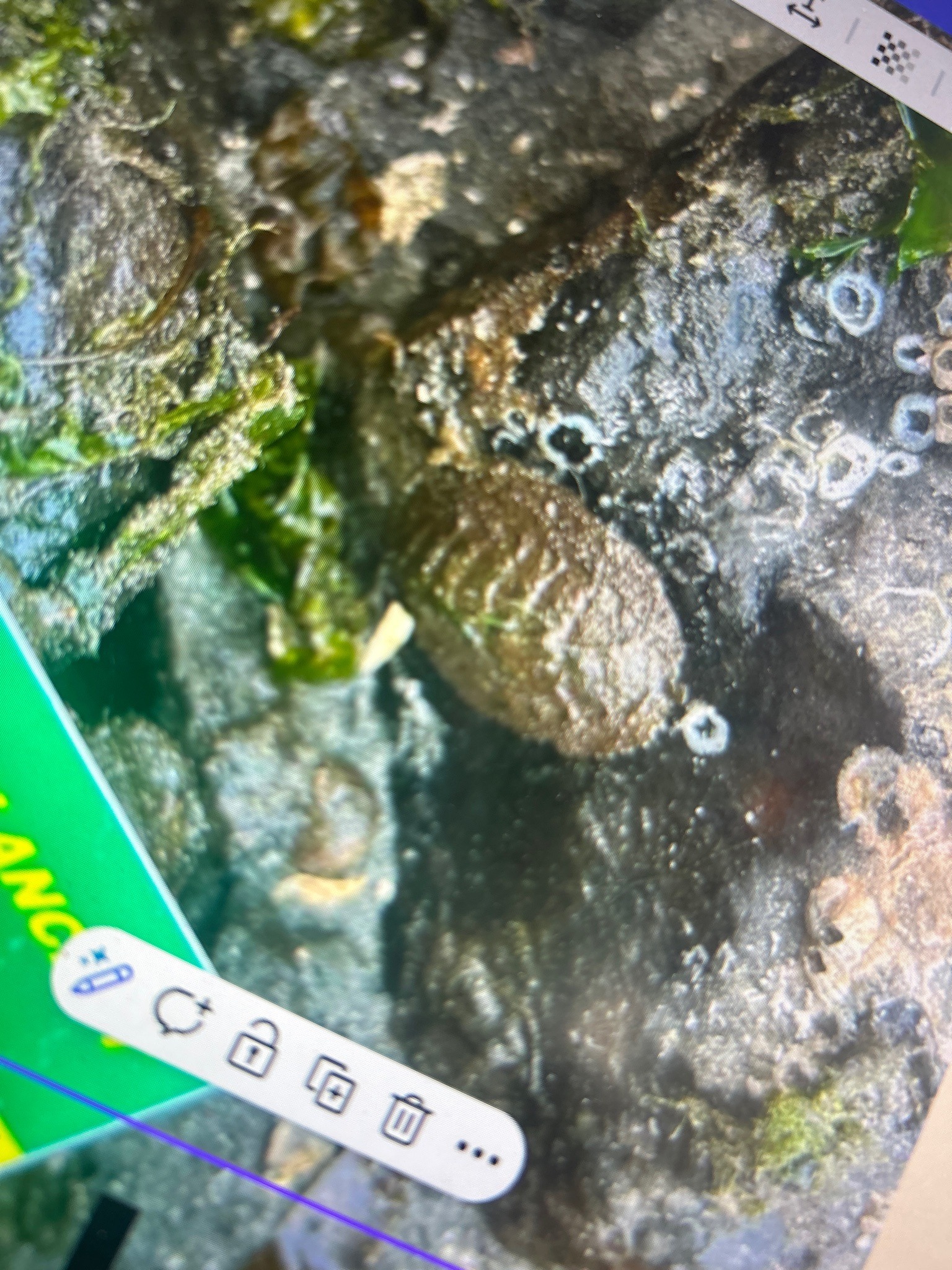
A marine mollusk that clings to rocks in the intertidal zone, recognizable by its shell composed of eight overlapping plates.
Characteristics
Oval-shaped body with a shell divided into eight calcareous plates (valves) surrounded by a fleshy border called a girdle. They have a strong muscular foot for suction.
Habitat
Intertidal and subtidal zones, typically found attached to rocks, in crevices or under ledges.
When to Find It
Visible year-round, best observed during low tide.
Conservation Status
N/A
Ecological Role
Chitons are important grazers, using their radula (toothed tongue) to scrape algae and organisms from rocks, maintaining the health of the intertidal community.
Easily Confused With
Limpets, which have a single solid unsegmented shell, and isopods (like sea slaters), which are crustaceans with segmented bodies but no calcareous plates.
Observation Tips
Look for them at low tide in the Puget Sound area by carefully checking vertical rock faces and the undersides of rocks in tide pools. Avoid prying them off, as it can harm them.
Interesting Facts
Chitons have teeth capped with magnetite, an iron mineral, making them hard enough to scrape algae off solid rock. Some species even have thousands of tiny eyes, called ocelli, embedded in their shell plates.
User Notes
Puget Sound