Pacific Oyster
Scientific Name: Magallana gigas (formerly Crassostrea gigas)
Category: shell
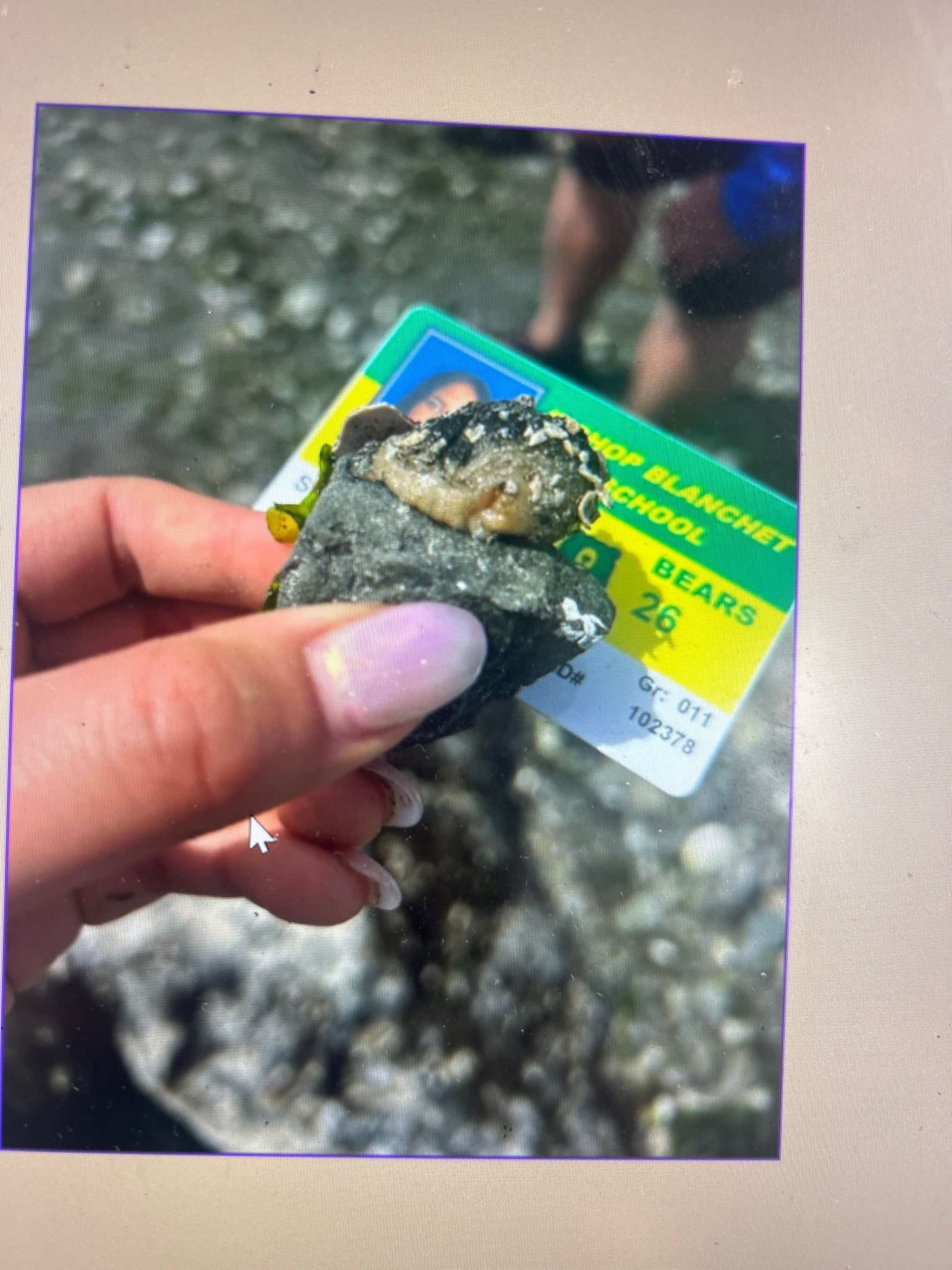
Brief Description
A large bivalve mollusk common in the intertidal zones of the Pacific Northwest, typically and distinctly found attached to rocks or other shells.
Characteristics
A roughly oval to elongated thick shell with irregular, wavy, and sharp-edged radial folds. The exterior is usually a mottled gray-white, often encrusted with barnacles, while the interior is smooth and white with a purple or brown muscle scar.
Habitat
Intertidal and shallow subtidal zones on various substrates including rocks, debris, and other shells. Found in estuaries and protected bays.
When to Find It
Visible year-round during low tide; spawning occurs in late summer when water temperatures are warmest.
Conservation Status
Sustainable/Widespread (Invasive in some regions outside its native range)
Ecological Role
Provides complex vertical habitat for other marine life, filters water to improve clarity, and acts as a foundation species in reef building.
Easily Confused With
Olympia Oyster (Ostrea lurida), which is much smaller, more circular, and rarely exceeds 2-3 inches.
Observation Tips
Best observed at low tide in the Puget Sound. Wear sturdy shoes as their shells are very sharp and can easily cut skin or thin rubber.
Interesting Facts
The Pacific Oyster is native to Asia but was introduced to the US West Coast in the early 1900s to support the commercial shellfish industry after native oyster populations crashed. They are protandrous hermaphrodites, meaning they usually spawn as males early in life and later change to females.
User Notes
Puget Sound WA