Lily Leaf Beetle
Scientific Name: Lilioceris lilii
Category: insect
Brief Description
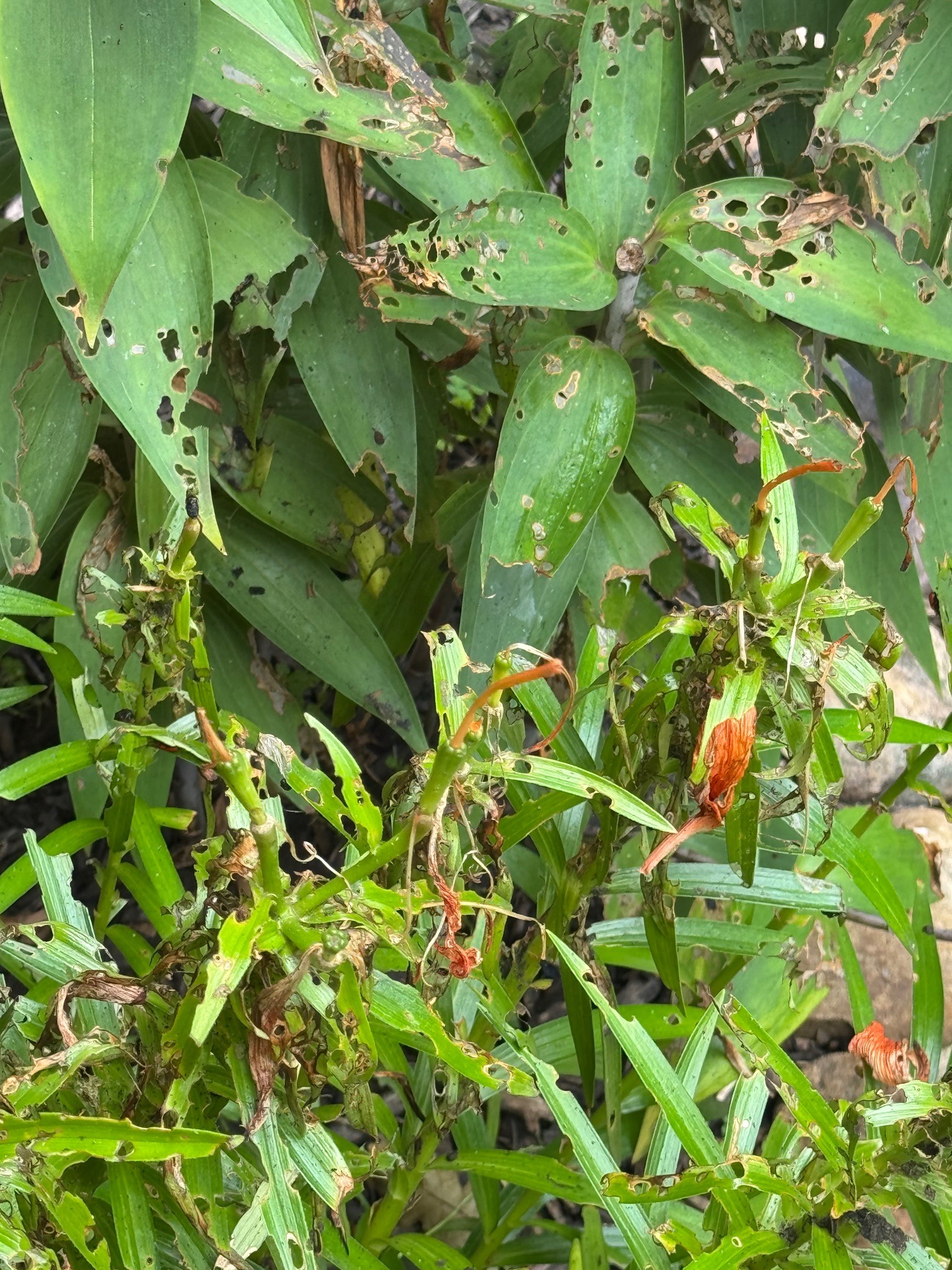
An invasive beetle known for causing severe defoliation of lilies and fritillaries. The damage in the image shows the characteristic irregular holes and skeletonization caused by both adults and larvae.
Characteristics
Adults are bright scarlet-red with a black head, antennae, and legs. Larvae are slug-like, orange or yellowish, but typically cover themselves in their own black, wet excrement (frass) to deter predators.
Habitat
Found in gardens, nurseries, and wild habitats where lilies (Lilium) and fritillaries (Fritillaria) grow. Native to Eurasia but widely invasive in North America and parts of Europe.
When to Find It
Active from early spring through summer. Adults emerge in spring to feed and lay eggs; larvae appear shortly after.
Conservation Status
N/A
Ecological Role
As an invasive species in many regions, it has a significant negative impact on garden lily populations and can threaten native wild lily species by stripping foliage and preventing flowering.
Easily Confused With
Often confused with the Cardinal Beetle (Pyrochroidae), which has a more flattened body and serrated antennae, or the Scarlet Malachite Beetle, which has a different body shape and habitat.
Observation Tips
Check the undersides of lily leaves for rows of tiny reddish-orange eggs or the messy, frass-covered larvae. If you touch an adult, they often drop to the ground and land on their backs, where their black undersides make them hard to see against the soil.
Interesting Facts
The larvae's habit of covering themselves in their own waste (a 'faecal shield') is a highly effective defense against predators like birds. They are capable of completely defoliating a plant in just a few days if left unchecked.
User Notes
What is eating my lilies?