American Beech
Scientific Name: Fagus grandifolia
Category: tree
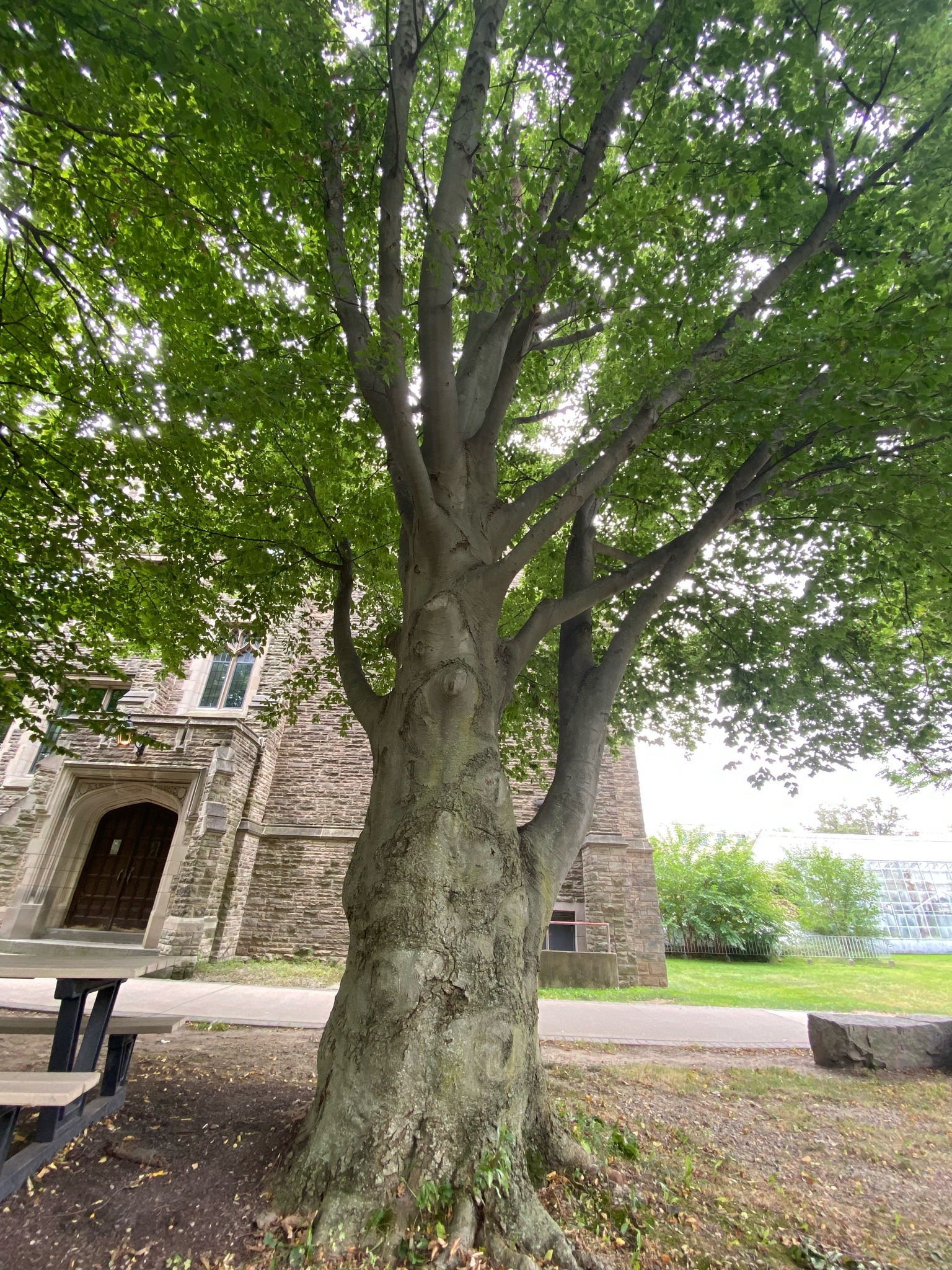
Brief Description
A large deciduous tree easily recognized by its smooth, slate-gray bark and elliptic, coarsely toothed leaves.
Characteristics
Characterized by very smooth, light gray bark that often resembles elephant skin and remains smooth as the tree matures. Leaves are simple, alternate, oval to oblong, 6-12 cm long, with prominent parallel veins ending in sharp teeth. Winter buds are long, slender, and cigar-shaped.
Habitat
Rich, moist, well-drained soils of deciduous forests, often found in association with sugar maple in northern hardwood forests.
When to Find It
Foliage turns a distinctive golden-bronze in autumn, and many leaves remain on the tree through winter (marcescence).
Conservation Status
Secure globally, though heavily impacted locally in some regions by Beech Bark Disease.
Ecological Role
Produces beechnuts, a high-energy mast food essential for numerous birds, rodents, and mammals including bears and turkeys. The smooth bark is frequently used by wildlife and humans for carving.
Easily Confused With
European Beech (Fagus sylvatica), which has darker bark and slightly smaller leaves; Blue Beech (Carpinus caroliniana), which has a distinctly muscular, fluted trunk.
Observation Tips
Look for the smooth gray trunk and check the ground underneath in autumn for triangular beechnuts enclosed in prickly husks.
Interesting Facts
American beech wood is extremely heavy, tough, and hard, making it excellent for flooring, furniture, and tool handles, though it is prone to warping if not properly dried.
User Notes
At Mac (sept 21/26)