Ruddy Duck
Scientific Name: Oxyura jamaicensis
Category: bird
Brief Description
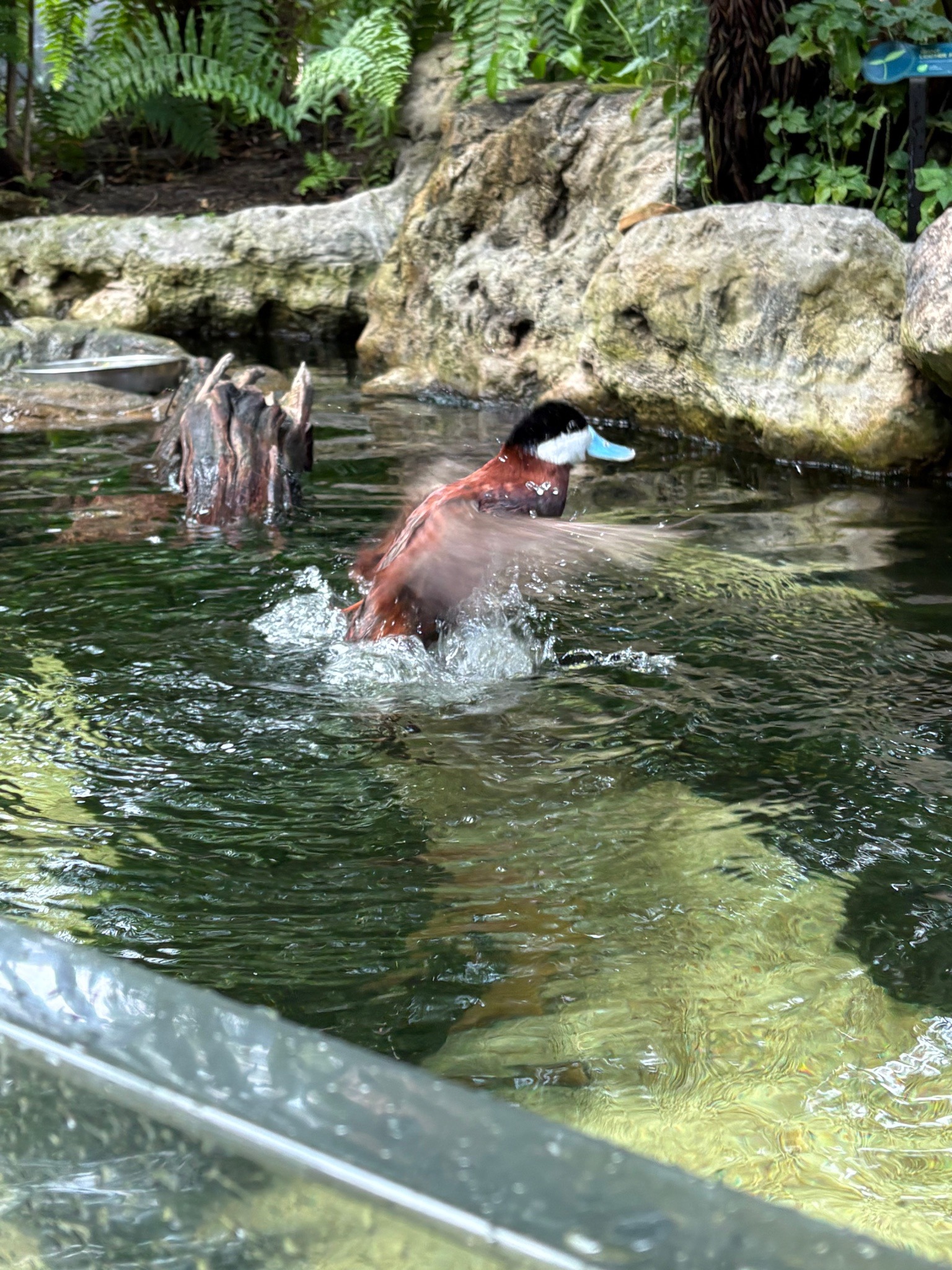
A small, chunky diving duck with a stiff tail and a notable blue bill in breeding males.
Characteristics
Breeding males have a chestnut-red body, a black cap, white cheek patches, and a bright sky-blue bill. They often hold their spiky tail feathers upright (stiff-tailed). Females and non-breeding males are grayish-brown with a dark cap and a blurry stripe through the cheek.
Habitat
Freshwater marshes, ponds, and lakes with dense vegetation for nesting; during winter, they move to coastal bays and ice-free lakes.
When to Find It
Diurnal; most easily spotted during spring and summer when males display their breeding plumage and courtship behaviors.
Conservation Status
Least Concern
Ecological Role
They are important consumers in aquatic ecosystems, feeding on seeds and roots of aquatic plants, as well as aquatic insects and larvae.
Easily Confused With
The Masked Duck is similar but has a dark stripe across its white cheek and is much rarer in North America. Female Ruddy Ducks can be confused with female Buffleheads, but Buffleheads have a smaller bill and a distinct white oval on the cheek.
Observation Tips
Look for them swimming low in the water. To photograph the iconic blue bill, visit wetlands during the spring breeding season. Approach slowly as they are prone to diving when startled.
Interesting Facts
During courtship, the male Ruddy Duck slaps its bill against its inflated neck to create bubbles and a rhythmic sound, culminating in a tail-fanning display. They have among the largest eggs relative to their body size of any waterfowl.