Acorn Barnacle
Scientific Name: Balanus glandula
Category: other
Brief Description
A sessile crustacean that attaches itself permanently to hard surfaces like rocks in the intertidal zone.
Characteristics
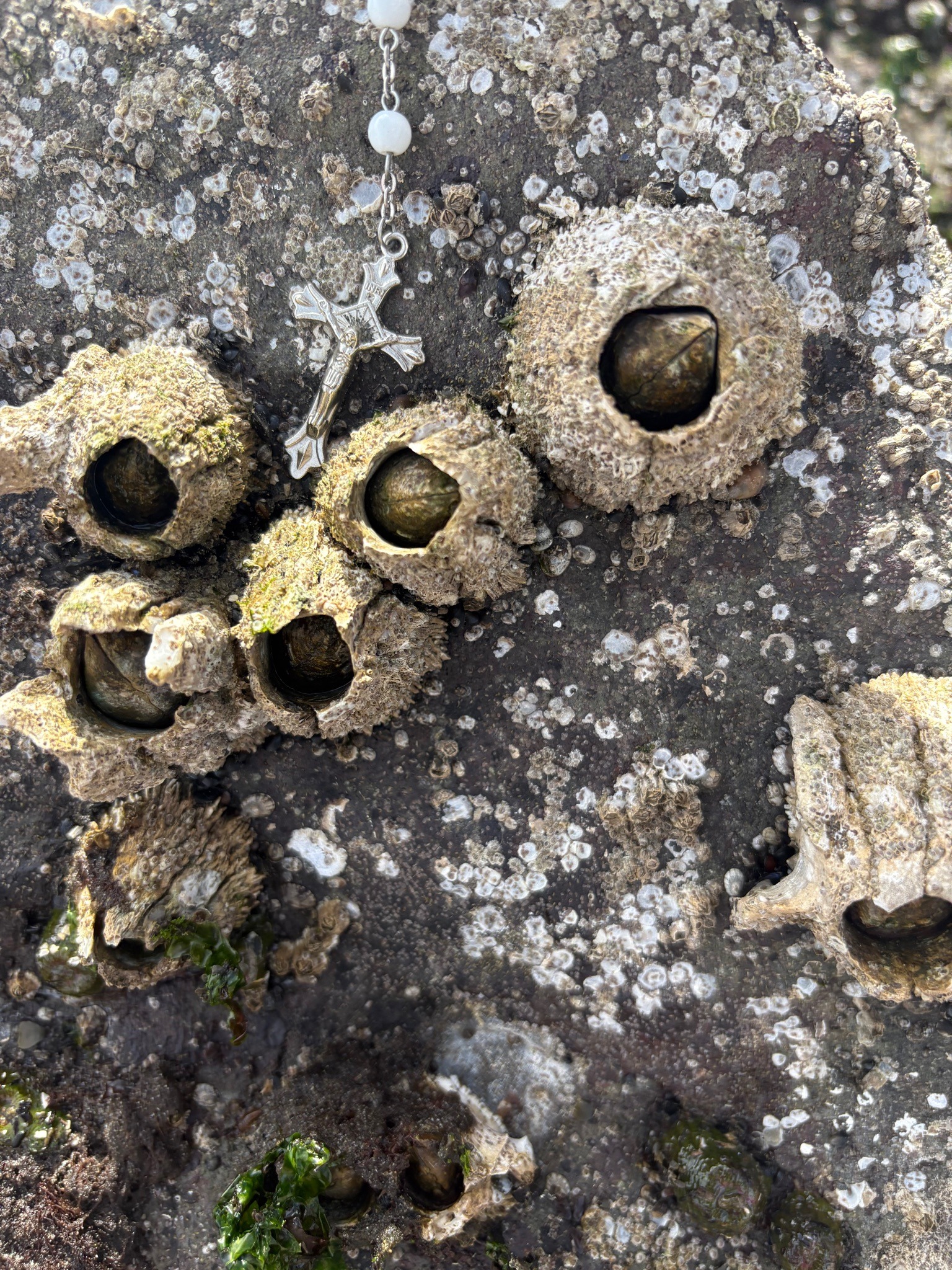
Conical, volcano-like white or gray shell made of overlapping plates with an opening at the top that can be closed by two movable plates.
Habitat
Hard substrates in the intertidal and subtidal zones of rocky shores and piers.
When to Find It
Visible all year round, especially active during high tide when submerged.
Conservation Status
Common / Not Evaluated
Ecological Role
Filter feeders that help clean seawater; they are a vital food source for snails, sea stars, and shorebirds.
Easily Confused With
Gooseneck barnacles (which have a fleshy stalk) or other Balanus species; Balanus glandula is usually smaller and whiter than the Giant Acorn Barnacle.
Observation Tips
Best viewed at low tide on rocky Washington beaches. Be careful as their shells are very sharp.
Interesting Facts
Despite looking like mollusks, barnacles are actually crustaceans, making them closer relatives of crabs and lobsters. They glue themselves to rocks with one of the strongest natural adhesives known.
User Notes
Found on a washington state beach