Hackberry
Scientific Name: Celtis occidentalis
Category: tree
Brief Description
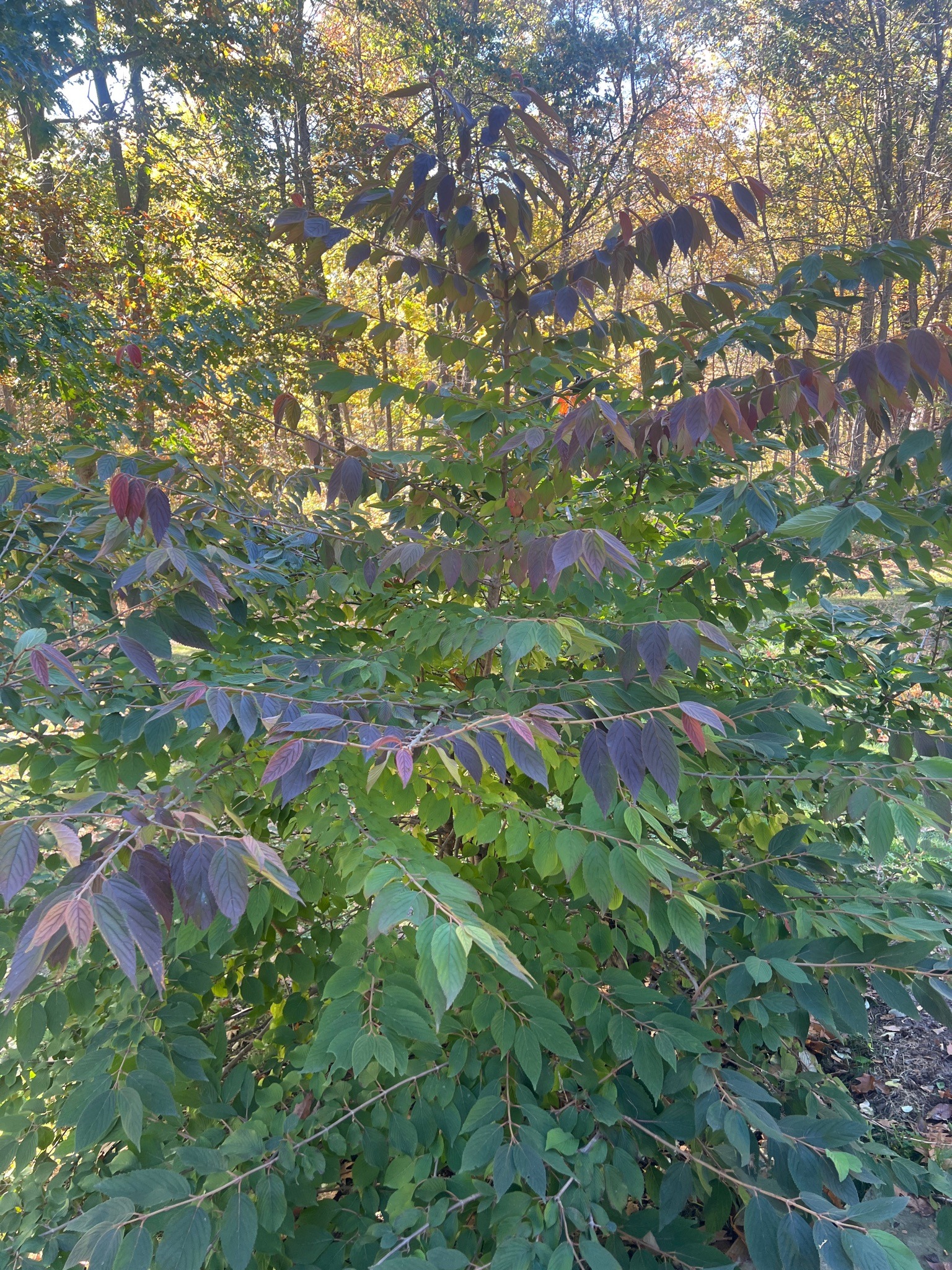
A medium to large deciduous tree recognized by its distinctive corky, warty bark and alternate, asymmetrical leaves with serrated margins and pointed tips.
Characteristics
Leaves are simple, alternate, ovate to lanceolate, 2 to 5 inches long, noticeably asymmetrical at the base, and rough-textured above. The bark is light gray to brown, featuring prominent corky ridges or warts. It produces small, dark red to purple-black berries in autumn.
Habitat
Commonly found in rich bottomland soils, floodplains, along stream banks, and in upland forests, though it is very adaptable to various soil types and urban environments.
When to Find It
Foliage turns a pale yellow in autumn before dropping. Berries ripen in September and October and often persist through the winter, providing food for wildlife.
Conservation Status
Least Concern
Ecological Role
Hackberry trees provide essential food and cover for a wide variety of wildlife. The fruit is eaten by numerous bird species and small mammals. It is also the primary larval host plant for several butterfly species, including the hackberry emperor.
Easily Confused With
Elms (Ulmus species), which also have asymmetrical leaf bases but typically feature double-serrated margins and lack the warty bark characteristic of hackberries.
Observation Tips
Look for the distinctive warty bark on the trunk and examine the leaves for their characteristic asymmetrical base to confirm identification.
Interesting Facts
The bark of the hackberry tree develops its unique warty texture due to corky outgrowths that form over time. The small berries, often called hackberries, are edible and were historically used by Native Americans as a food source, often pounded together with fat and meat.