European Starling
Scientific Name: Sturnus vulgaris
Category: bird
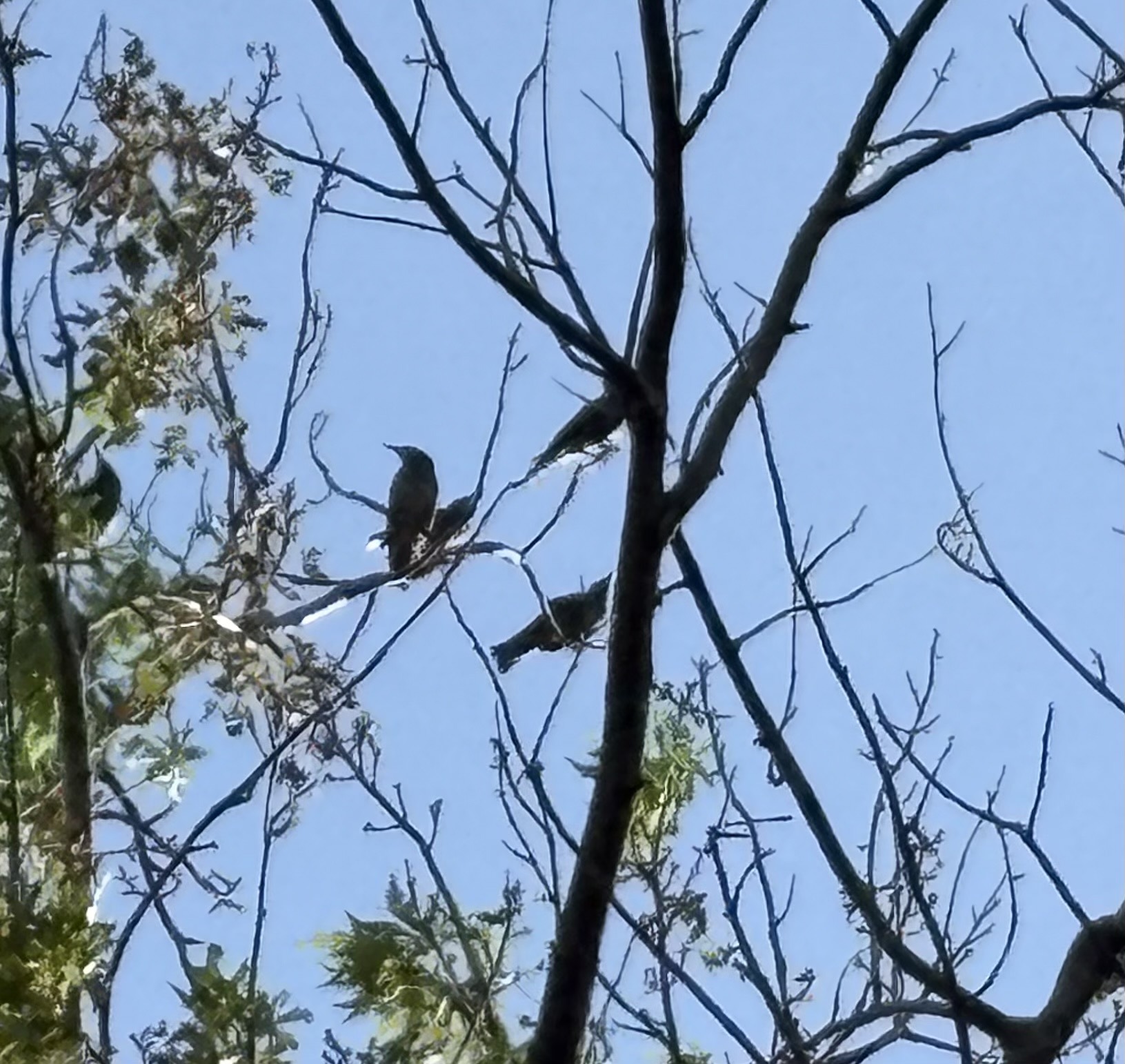
Brief Description
A medium-sized perching bird seen in silhouette perched on bare branches against a bright sky, characterized by a stocky build, short tail, and somewhat triangular head profile.
Characteristics
Stocky blackbird-sized body, short square tail, relatively long and sharp bill, and triangular head shape. In better lighting, adults show glossy black plumage with iridescent purple and green sheens and white speckles during winter.
Habitat
Urban areas, agricultural fields, open woodlands, grasslands, and suburban parks.
When to Find It
Common year-round resident in many parts of its range, highly gregarious outside the breeding season forming massive flocks known as murmurations.
Conservation Status
Least Concern
Ecological Role
Acts as both a seed disperser and an insect predator, though large introduced populations can sometimes compete with native cavity-nesting birds.
Easily Confused With
Common Grackle, which has a longer graduated tail and keel-shaped posture, and Red-winged Blackbird males, which have distinct red shoulder patches if visible.
Observation Tips
Look high up in bare trees, on utility wires, or on open lawns where they forage in flocks. Listen for their diverse repertoire of mimicry, whistles, and clicks.
Interesting Facts
European Starlings are legendary mimics capable of imitating the calls of dozens of other bird species, as well as mechanical sounds like car alarms and squeaky gates.