North American River Otter
Scientific Name: Lontra canadensis
Category: mammal
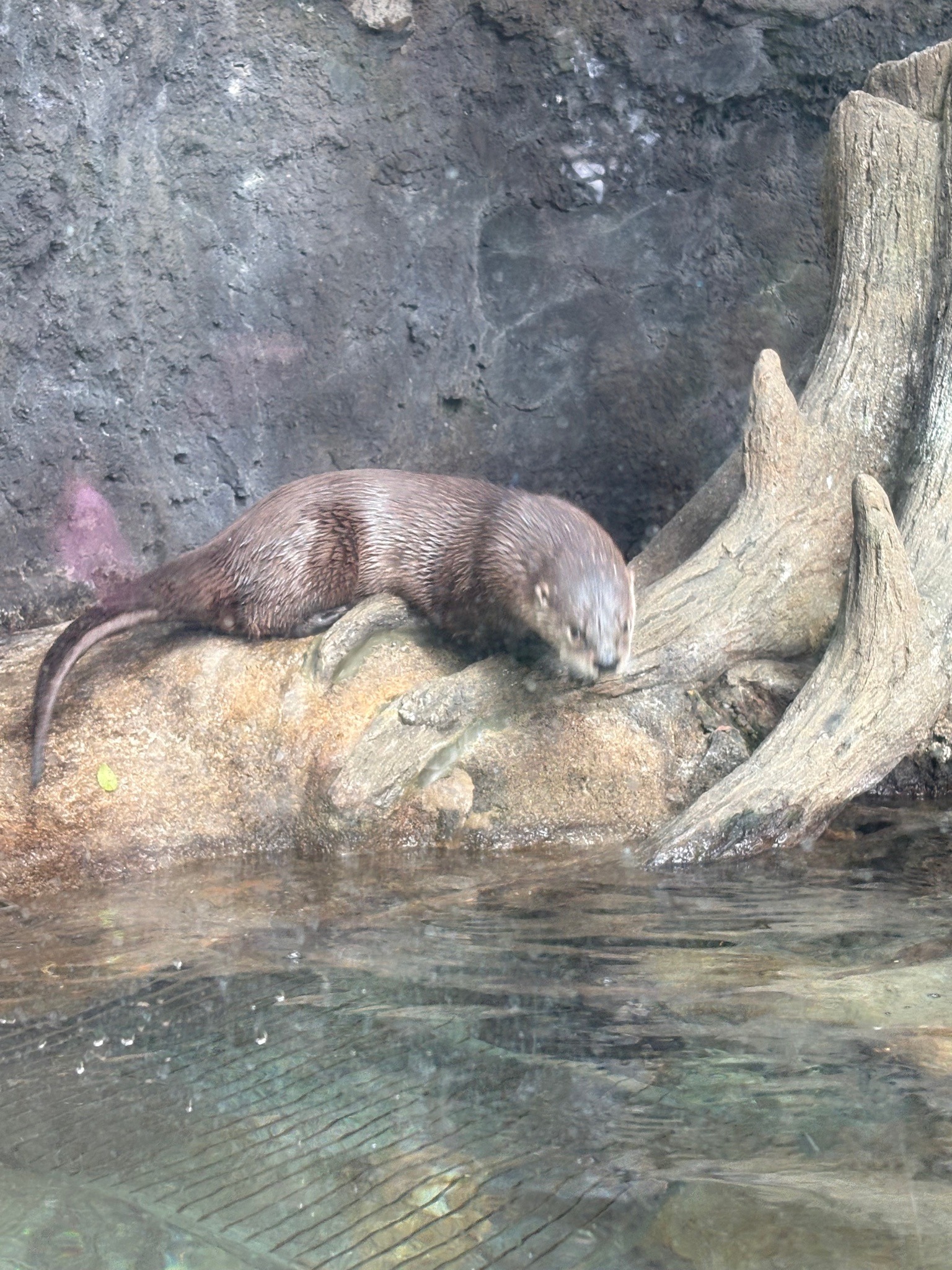
Brief Description
A semi-aquatic mammal known for its playful behavior, long streamlined body, and dense brown fur.
Characteristics
Streamlined body, short legs, webbed feet, and a thick, tapered tail. They have dense, water-repellent brown fur, small ears, and long whiskers (vibrissae).
Habitat
Found in a variety of aquatic habitats including rivers, lakes, ponds, marshes, and coastal shorelines across North America.
When to Find It
Active year-round, typically most active from dawn to dusk (crepuscular), but can be nocturnal in areas with human activity.
Conservation Status
Least Concern (IUCN), though protected or managed in many states due to historical over-trapping and habitat loss.
Ecological Role
An apex predator in their aquatic ecosystems, they help control populations of fish and crustaceans. They are also considered an indicator species for water quality.
Easily Confused With
Sea Otters (larger, rarely leave the ocean) and American Mink (much smaller, darker, and thinner tail).
Observation Tips
Look for them in clean waterways near log jams or riverbanks. Watch for bubbles rising to the surface or 'slides' on muddy or snowy banks. Maintain a respectful distance to avoid disturbing their natural hunting behavior.
Interesting Facts
River otters can hold their breath for up to 8 minutes and can dive to depths of 60 feet. They are highly social and often live in family groups consisting of a female and her juvenile offspring.