Pacific Razor Clam Shell
Scientific Name: Siliqua patula
Category: shell
Brief Description
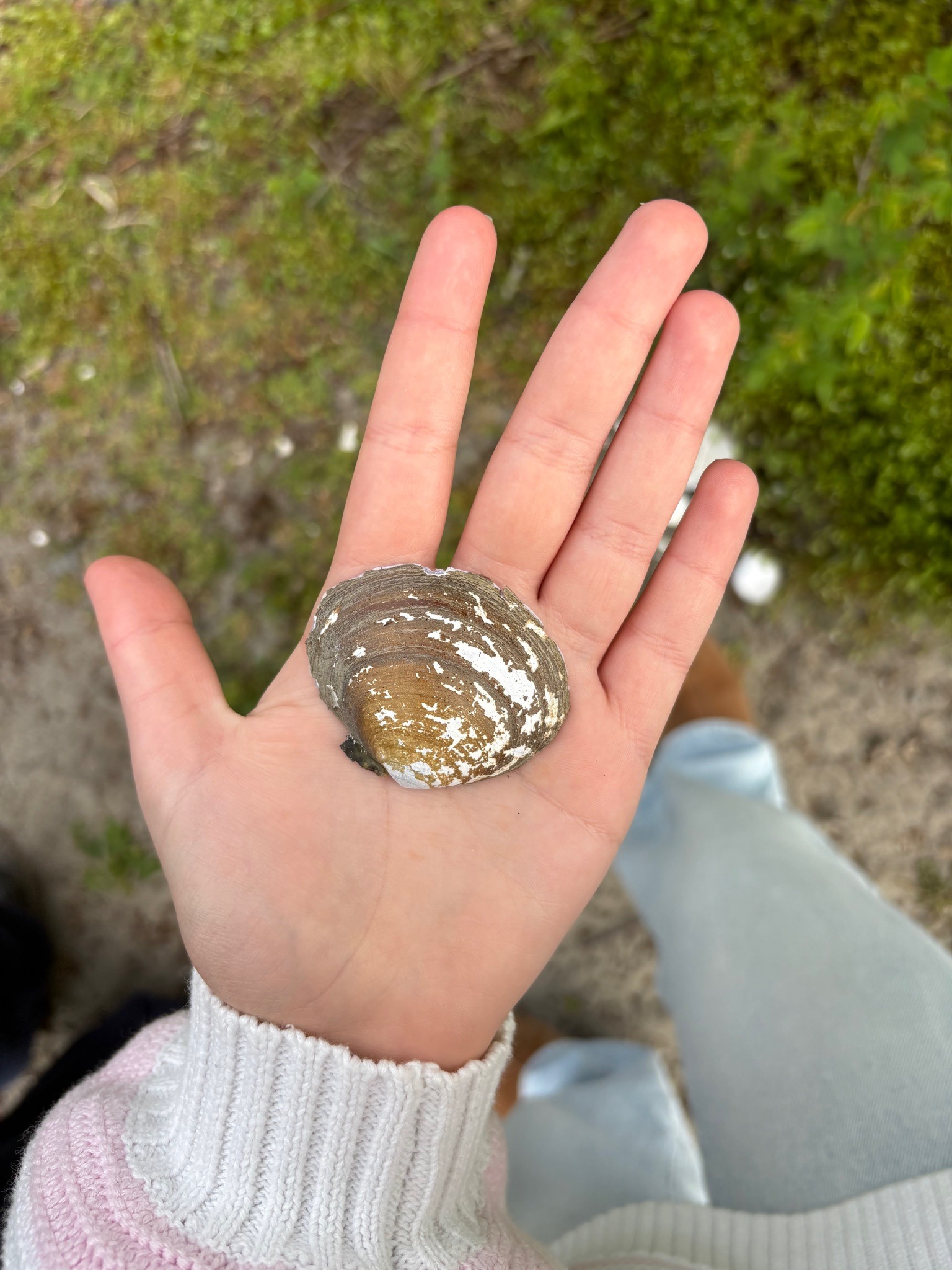
An elongated, oval-shaped bivalve shell typically found on sandy ocean beaches.
Characteristics
Oval, elongated shape with a thin, brittle shell. The exterior often has a glossy, brown periostracum (outer layer) which may be partially eroded, revealing a white or purplish underlayer. The interior is smooth and white with a violet tint.
Habitat
Found in the intertidal zone of surf-beaten sandy beaches, buried in the sand.
When to Find It
Can be found year-round as washed-up shells; best observed during low tide events in the spring and fall.
Conservation Status
Common, though populations are strictly managed for recreational and commercial harvest in Washington state.
Ecological Role
A major component of the coastal food web, serving as a food source for Dungeness crabs, gulls, and various marine mammals.
Easily Confused With
Jackknife clams (Solen species), which are much more slender and rectangular than the oval-shaped Razor clam.
Observation Tips
Look along the high-tide line after a storm or during a receding tide. Handle carefully as the edges are sharp, which is how they earned the name 'razor'.
Interesting Facts
Pacific razor clams can live up to 5 years and are highly mobile, using a strong muscular foot to dig rapidly through the sand to escape predators.
User Notes
Found on a Washington state beach