Arrowleaf Balsamroot
Scientific Name: Balsamorhiza sagittata
Category: plant
Brief Description
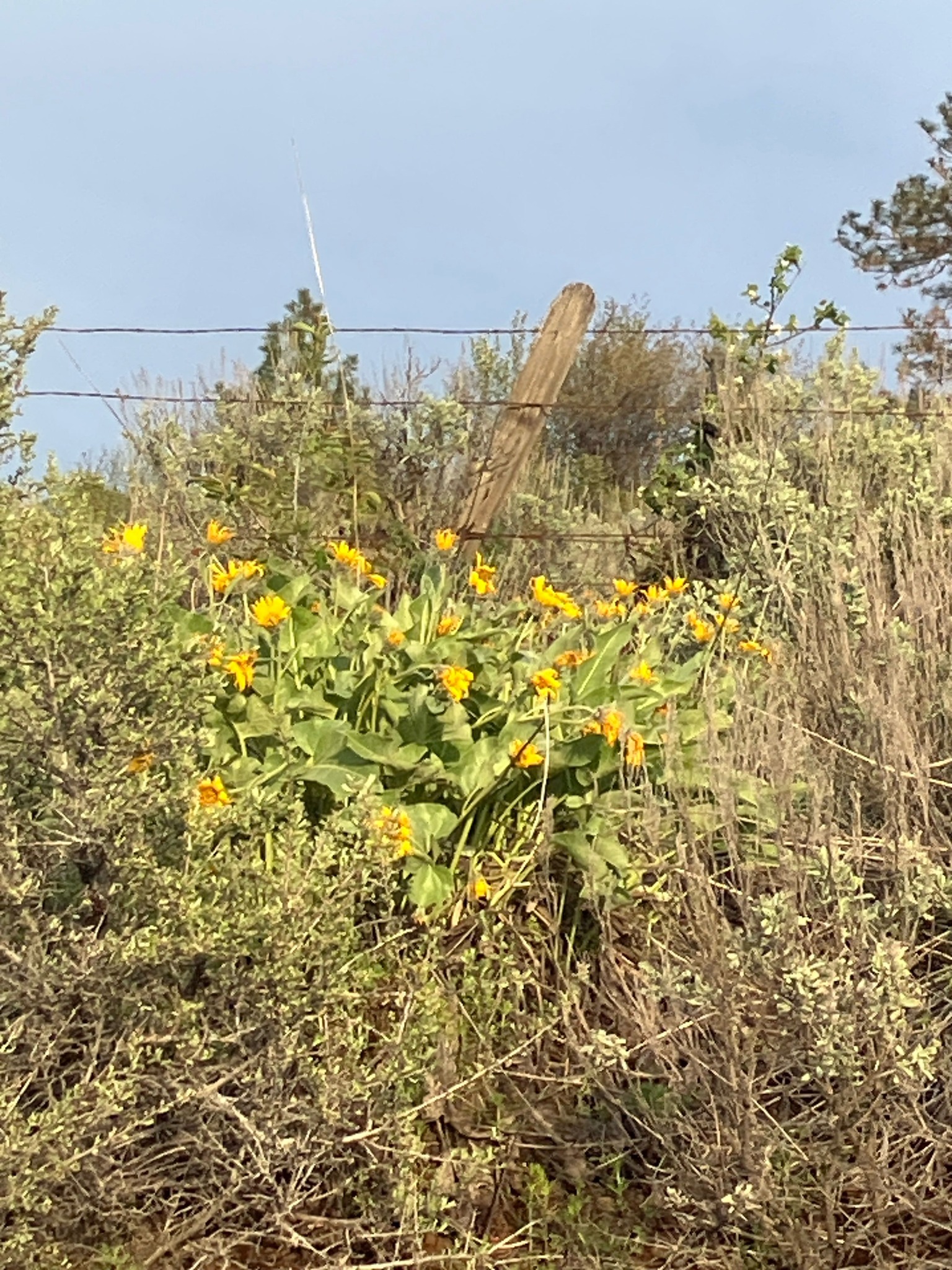
A vibrant perennials wildflower in the sunflower family known for its large, arrow-shaped leaves and bright yellow daisy-like flowers.
Characteristics
Features large, silvery-green, arrow-shaped leaves at the base. The flowers are bright yellow, usually 2 to 4 inches across, blooming on long individual stems. The plant grows in dense clumps and has a deep woody taproot.
Habitat
Dry, open hillsides, grasslands, and ponderosa pine forests. It thrives in well-drained, sunny locations across western North America.
When to Find It
Typically blooms in mid-to-late spring and early summer (April through July) depending on elevation.
Conservation Status
Secure (N/A)
Ecological Role
An important early-season food source for pollinators like bees and butterflies. The seeds are eaten by birds and small mammals, and the forage is used by elk and mule deer.
Easily Confused With
Mules-ears (Wyethia species) are frequently confused with Balsamroot. Mules-ears have leaves that are narrower, smoother, and lack the distinct arrow-shaped base of Balsamroot.
Observation Tips
Look for entire hillsides turning yellow in the Intermountain West during May. Ensure you stay on trails to avoid damaging the delicate crust of the dry soils they inhabit.
Interesting Facts
Indigenous peoples used various parts of the plant for food and medicine; the taproot can be roasted and eaten, and it allegedly has a coffee-like flavor. The plant is extremely drought-tolerant due to its taproot which can reach depths of over 8 feet.