Heart-leaf Arnica
Scientific Name: Arnica cordifolia
Category: plant
Brief Description
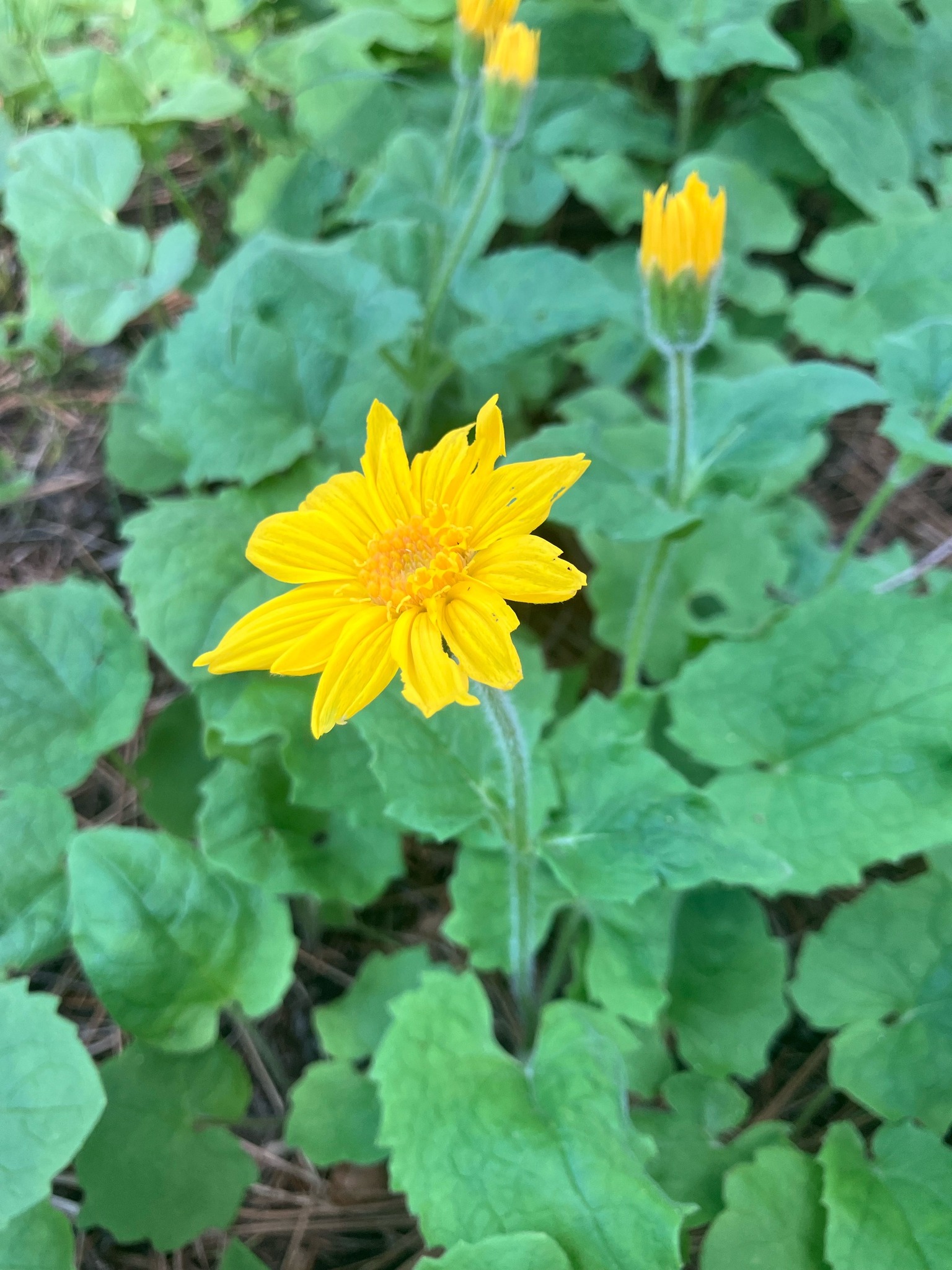
A perennial yellow wildflower belonging to the sunflower family, characterized by its heart-shaped leaves and bright golden-yellow daisy-like blooms.
Characteristics
Bright yellow rays and disc florets, roughly 2.5 to 4 inches across. The most distinguishing feature is the basal leaves which are distinctly heart-shaped (cordate) with serrated edges and long petioles. The stems and leaves are often covered in fine hairs.
Habitat
Commonly found in the understory of coniferous forests, mountain meadows, and open woodlands in subalpine to montane zones.
When to Find It
Typically blooms from late spring through mid-summer (May to August), depending on elevation and snowmelt.
Conservation Status
Secure/Common in its native range.
Ecological Role
Provides a nectar source for various pollinators such as bees and butterflies. It is also grazed by some wildlife species like deer and elk, particularly earlier in the season.
Easily Confused With
Broadleaf Arnica (Arnica latifolia) which has more elliptical or egg-shaped leaves that lack the deep heart-shaped base and are usually sessile or have very short stalks on the stem.
Observation Tips
Look for it in dappled shade beneath pine or fir trees. They often grow in colonies. Be careful not to trample the delicate forest understory when photographing them.
Interesting Facts
Members of the Arnica genus have a long history in herbal medicine for treating bruises and swelling, though heart-leaf arnica is primarily appreciated for its beauty in its natural habitat and should not be ingested.