Queen Anne's Lace
Scientific Name: Daucus carota
Category: plant
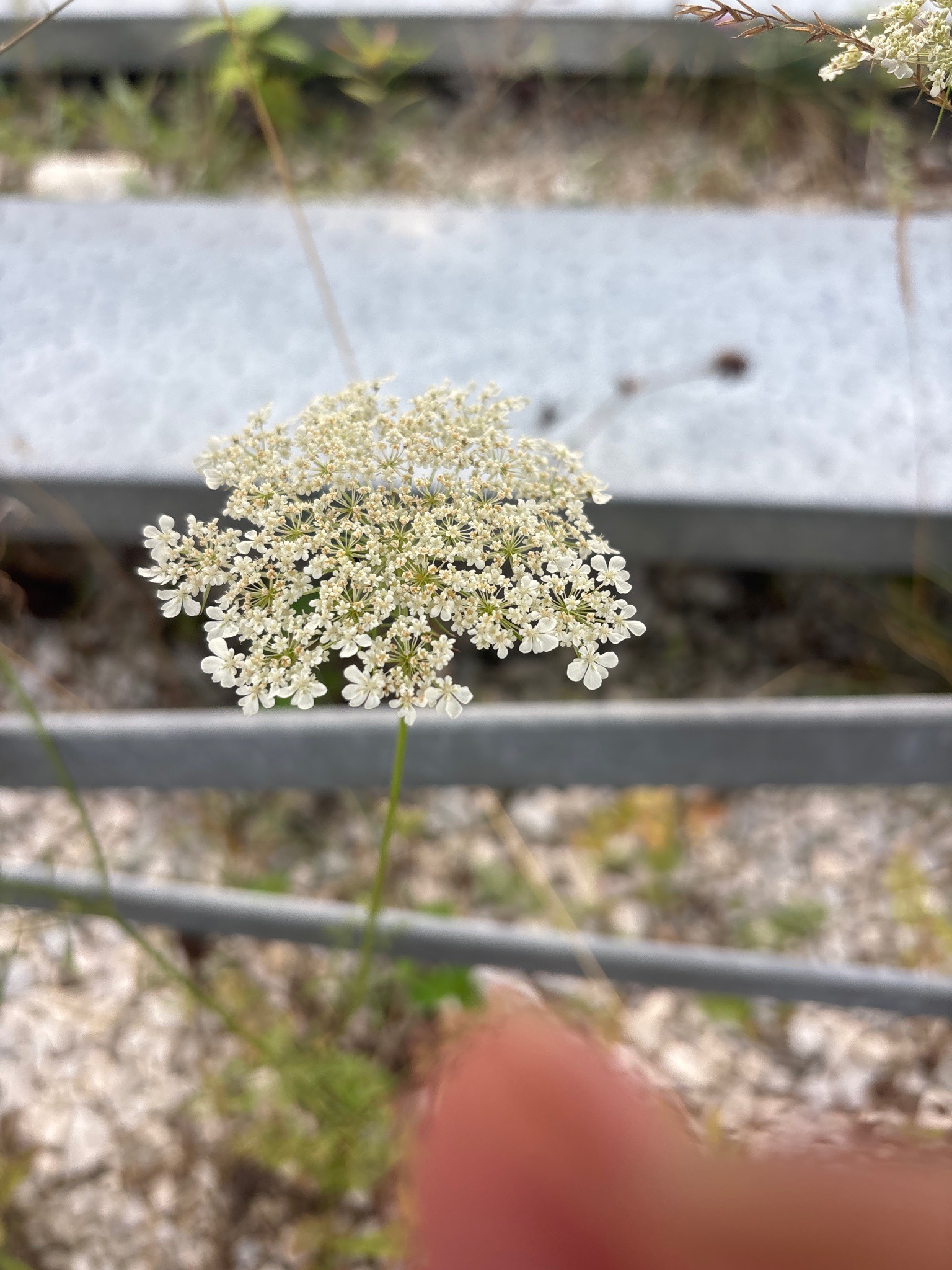
Brief Description
A flowering biennial plant in the carrot family, known for its large flat-topped clusters of delicate white flowers.
Characteristics
Flat-topped umbel of tiny white flowers, often with a single dark purple or black floret in the center; finely divided, fern-like leaves; hairy stems and a taproot that smells like carrots.
Habitat
Fields, pastures, roadsides, waste areas, and disturbed soils.
When to Find It
Blooms from late spring through mid-autumn.
Conservation Status
N/A
Ecological Role
Provides nectar and pollen for beneficial insects, parasitoid wasps, and butterflies; serves as a larval host for certain swallowtail butterfly species.
Easily Confused With
Poison Hemlock (Conium maculatum) and Water Hemlock (Cicuta), which are highly toxic; distinguished by Poison Hemlock's purple-spotted smooth stems and unpleasant odor.
Observation Tips
Look along sunny roadsides and meadows during summer; handle with care as sap can cause skin irritation in sunlight.
Interesting Facts
Cultivated carrots (Daucus carota subsp. sativus) are descended from this wild plant, and the dark central flower is said to represent a drop of Queen Anne's blood when she pricked her finger while making lace.