Queen Anne's Lace
Scientific Name: Daucus carota
Category: plant
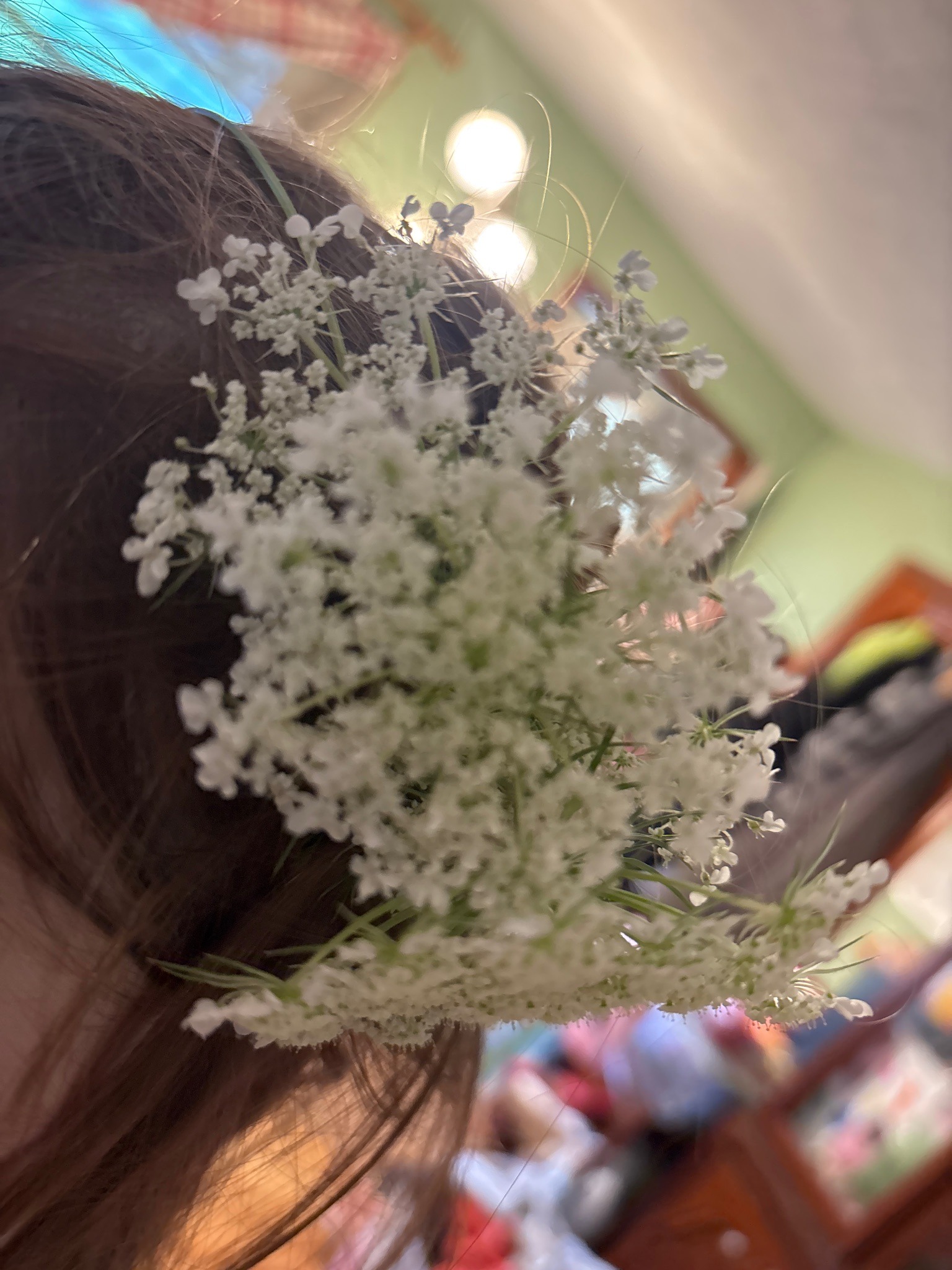
Brief Description
Queen Anne's Lace, also known as wild carrot, is a flowering plant characterized by its flat-topped clusters of tiny white flowers, often featuring a single dark purple flower in the center.
Characteristics
Stems are hairy and solid; leaves are fern-like and finely divided; flowers grow in compound umbels (flat-topped clusters) up to 4 inches across, usually white with one tiny purple flower in the exact center.
Habitat
Found abundantly in open fields, meadows, pastures, along roadsides, and in disturbed waste areas.
When to Find It
Blooms from late spring through early autumn (typically May to October).
Conservation Status
N/A
Ecological Role
Provides nectar and pollen for a wide variety of beneficial insects, including predatory wasps, butterflies, and bees. It is also the wild ancestor of the domesticated carrot and serves as a host plant for certain butterfly caterpillars.
Easily Confused With
Poison Hemlock (Conium maculatum) and Water Hemlock, which are highly toxic. Poison Hemlock can be distinguished by smooth, hairless stems with purple spots and a foul, musty odor, whereas Queen Anne's Lace has hairy stems and smells like carrots.
Observation Tips
Look for them in sunny, uncultivated fields and roadsides. Exercise caution if handling or foraging, ensuring positive identification to avoid highly toxic look-alikes like Poison Hemlock.
Interesting Facts
According to legend, the tiny purple flower in the center represents a single drop of blood shed by Queen Anne when she pricked her finger while making the lace-like blossoms.