Hackberry Leaf
Scientific Name: Celtis occidentalis
Category: tree
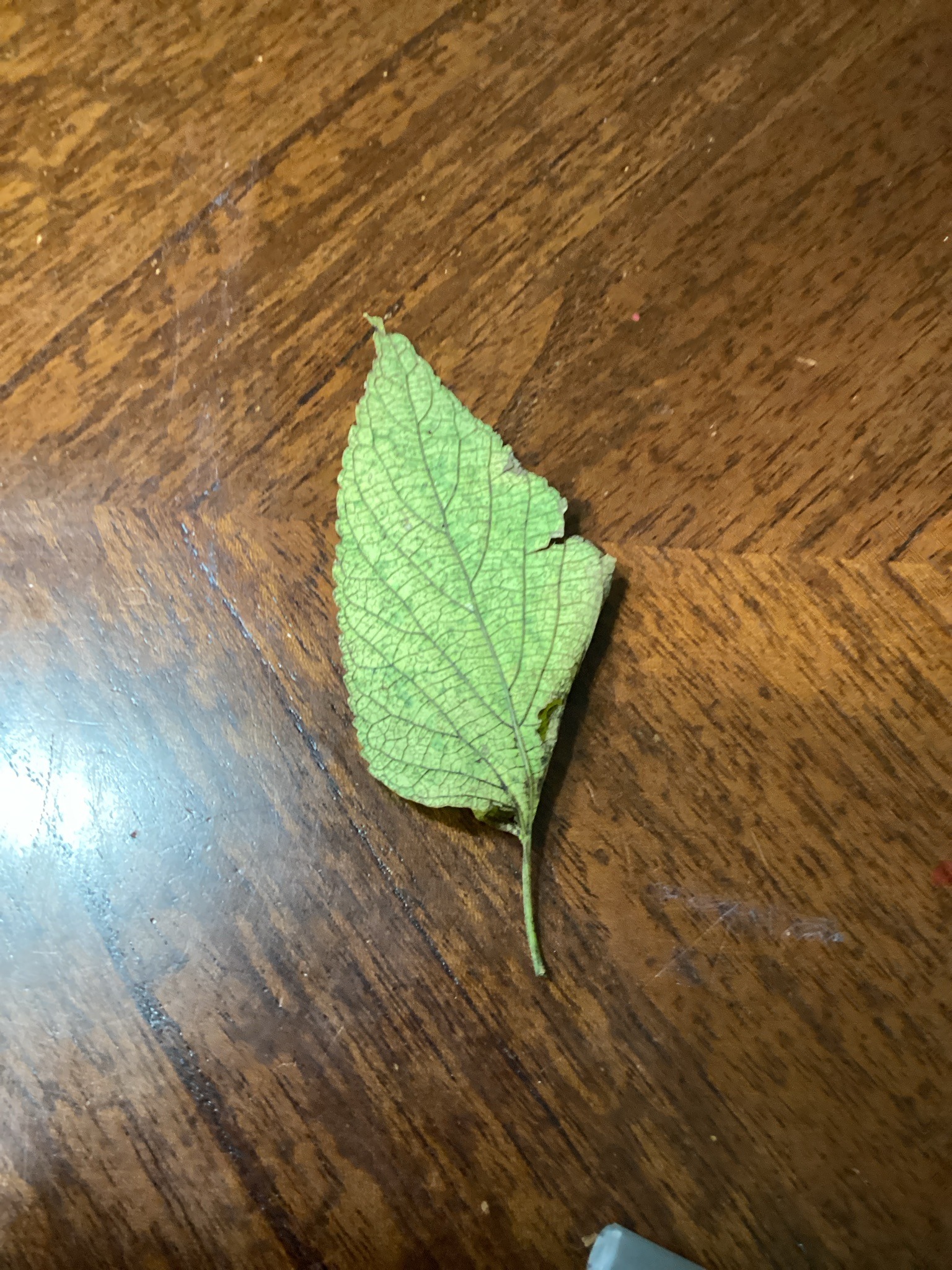
Brief Description
A single green deciduous leaf showing net-like venation, asymmetrical base, and coarsely toothed margins.
Characteristics
Leaves are typically ovate to lanceolate, 2 to 5 inches long, sharply toothed along the margins, and distinctively asymmetrical or uneven at the base where the petiole attaches. The upper surface is somewhat rough or scabrous, while the lower surface is lighter green with prominent, raised reticulate veins.
Habitat
Found in rich bottomlands, along streams, floodplains, and upland forests, often thriving in moist, well-drained soils.
When to Find It
Spring through autumn; leaves emerge bright green in spring, turn yellow in autumn, and drop before winter.
Conservation Status
Secure
Ecological Role
Hackberry trees provide essential food and cover for a wide variety of wildlife. The foliage serves as a host for several butterfly species, including the hackberry emperor and snout butterfly.
Easily Confused With
Can be confused with elm leaves (Ulmus spp.), which also feature prominent asymmetrical bases, but hackberry leaves typically have three distinct veins radiating from the base and are often smoother or more coarsely toothed depending on the species.
Observation Tips
Look up into the canopy or examine the ground beneath mature trees with characteristic corky, warty bark.
Interesting Facts
Hackberry trees produce small, sweet, edible berries (drupes) that turn dark purple when ripe and are heavily favored by birds and small mammals.
User Notes
On a trail in Warwood