African Violet
Scientific Name: Saintpaulia
Category: plant
Brief Description
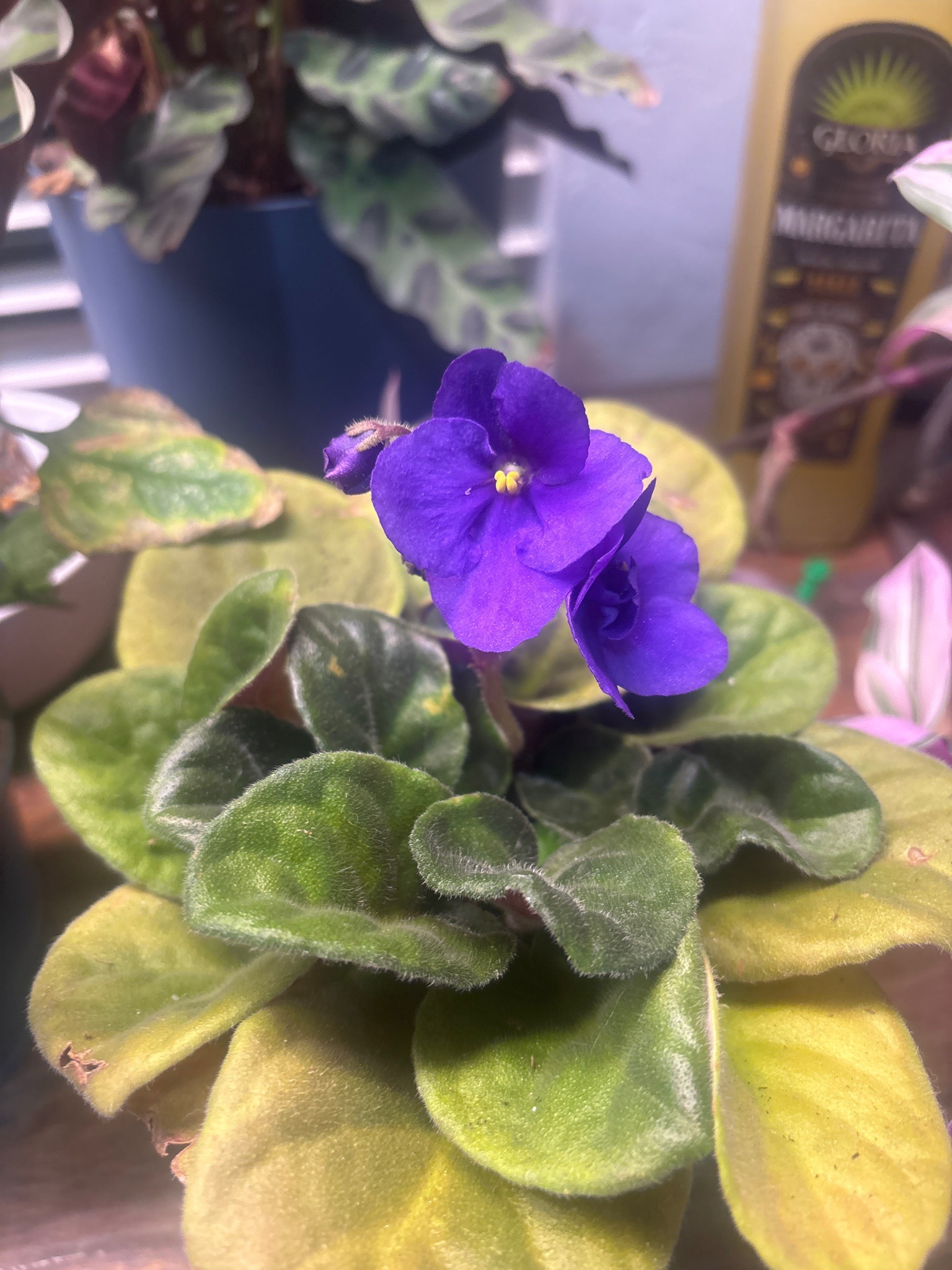
A popular indoor houseplant featuring velvety, succulent-like green leaves and clusters of vibrant purple, blue, pink, or white flowers.
Characteristics
Thick, fleshy, dark green leaves covered in fine hairs (pubescent); symmetrical rosette growth habit; flowers typically have five petals with distinct bright yellow anthers clustered in the center.
Habitat
Native to cloud forests and shaded rocky outcrops in eastern tropical Africa (primarily Tanzania and Kenya); commonly grown worldwide as an indoor houseplant.
When to Find It
Can bloom year-round indoors when provided with adequate light, warmth, and humidity.
Conservation Status
Many wild species are considered vulnerable or endangered due to habitat destruction in East Africa, though cultivated varieties are extremely common worldwide.
Ecological Role
In its native habitat, it provides nectar for specialized pollinators and contributes to the understory vegetation of fragile forest ecosystems.
Easily Confused With
Cape Primrose (Streptocarpus), which often has elongated leaves and differently shaped trumpet-like blooms, and Gloxinia (Sinningia speciosa), which typically has much larger, bell-shaped flowers and tuberous roots.
Observation Tips
Best observed indoors on a bright windowsill out of direct, harsh sunlight. Avoid getting water on the fuzzy leaves, as this can cause unsightly spotting or rot.
Interesting Facts
African violets do not belong to the true violet family (Violaceae) despite their common name; they actually belong to the Gesneriaceae family. They are known for being exceptionally pet-safe for cats and dogs.