Tree Branch with Gall
Scientific Name: N/A
Category: tree
Brief Description
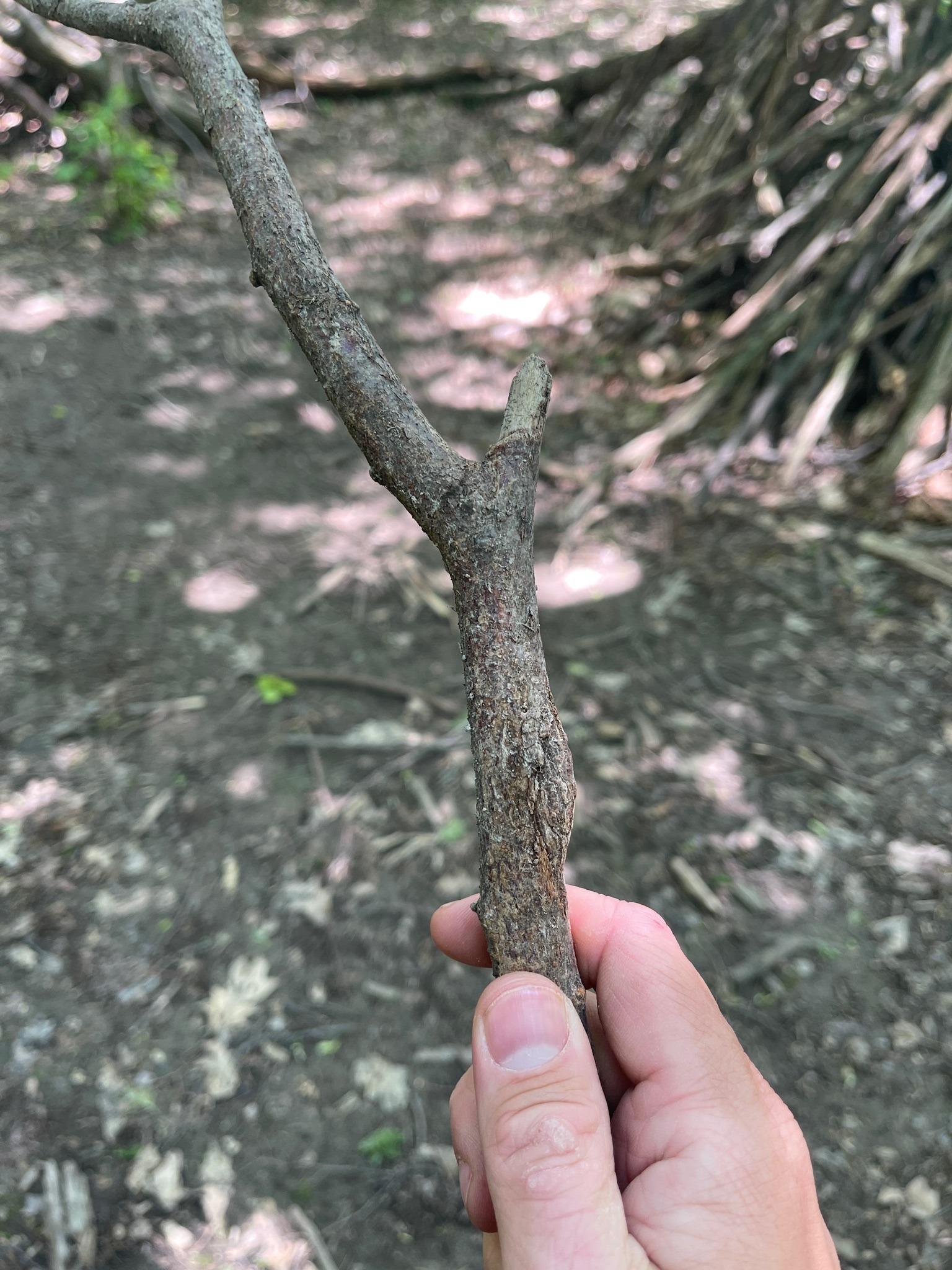
A section of a deciduous tree branch featuring a small swollen area known as a gall, which is an abnormal growth of plant tissue.
Characteristics
Grayish-brown bark with rough texture, cylindrical stem, and a localized swelling or bulge on the main shaft indicating a gall. The branch is woody and relatively thin.
Habitat
Temperate deciduous forests, woodlands, and urban parks. Found throughout the Midwestern United States.
When to Find It
Galls are often most visible in fall and winter when leaves have dropped, but are present year-round.
Conservation Status
Common / N/A
Ecological Role
Galls are typically caused by insects, mites, bacteria, or fungi. They provide food and shelter for the organism inside without usually killing the host tree.
Easily Confused With
Often confused with a simple knot in the wood or a canker. Knots are at the base of branches; galls are abnormal swellings often caused by external stimuli.
Observation Tips
Look for unusual lumps, bumps, or fuzzy growths on twigs and leaves. These micro-habitats are excellent for studying insect life cycles.
Interesting Facts
Galls are like a plant's version of a benign tumor. Some historical inks, like iron gall ink, were made from the galls found on oak trees.
User Notes
I saw it on the ground in a forest in north central Indiana