Chelicerata
Scientific Name: Chelicerata
Category: other
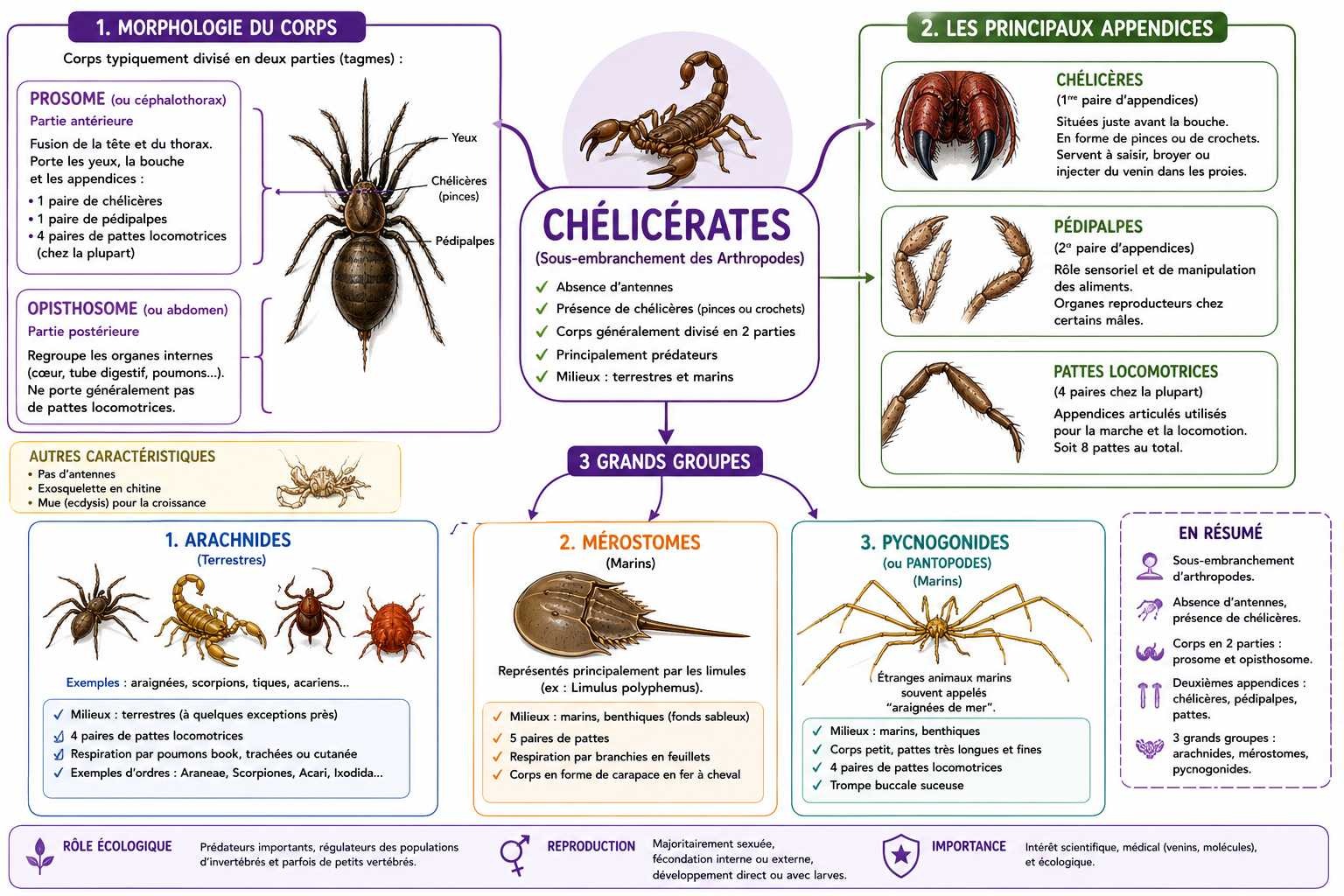
Brief Description
A subphylum of arthropods that includes arachnids, horseshoe crabs, and sea spiders, defined by having specialized mouthparts called chelicerae.
Characteristics
Body divided into two tagmata: the prosoma (cephalothorax) and the opisthosoma (abdomen). They lack antennae and typically possess six pairs of appendages on the prosoma: one pair of chelicerae, one pair of pedipalps, and four pairs of walking legs.
Habitat
Extremely diverse, ranging from terrestrial environments (scorpions, spiders) to marine benthic zones (horseshoe crabs, sea spiders).
When to Find It
Varies widely by species; some are active year-round while others are seasonal or nocturnal.
Conservation Status
Varies; some species like certain horseshoe crabs are vulnerable or endangered, while many spiders are common.
Ecological Role
They play vital roles as predators that regulate insect and other invertebrate populations. Marine species like horseshoe crabs are crucial for coastal ecosystems.
Easily Confused With
Mandibulata (insects, crustaceans, myriapods), which can be distinguished by the presence of antennae and mandibles rather than chelicerae.
Observation Tips
Invert logs or rocks carefully for terrestrial species, or look for webs. Use a UV light to find scorpions at night. For marine species, check tide pools or sandy beaches during spawning seasons.
Interesting Facts
The members of this group have occupied almost every habitat on Earth for over 400 million years. Their 'blood' (hemolymph) is often copper-based (hemocyanin), giving it a blue color in some groups like horseshoe crabs.