House Finch
Scientific Name: Haemorhous mexicanus
Category: bird
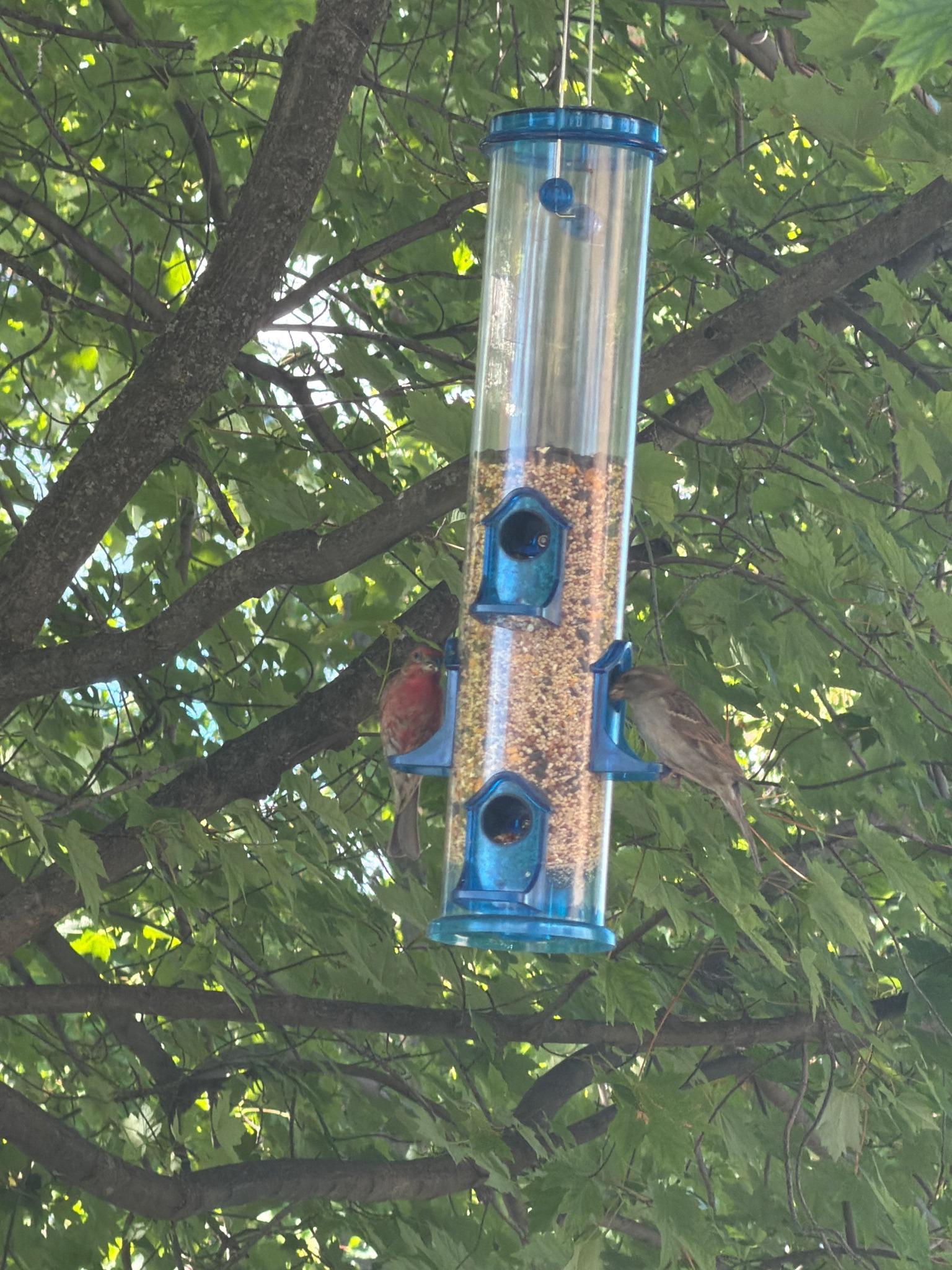
Brief Description
A small, social songbird commonly found at backyard feeders throughout North America.
Characteristics
Adult males feature a rose-red face and upper breast, with a streaky brown back and belly. Females are plain grayish-brown with thick, blurry streaks on their underside and no red coloration. Both have short, notched tails and thick, conical seed-eating beaks.
Habitat
Thrives in urban and suburban areas, backyards, farmyards, and forest edges. They are native to the western US but were introduced to the east and are now found across most of North America.
When to Find It
Year-round resident across most of its range; active during daylight hours.
Conservation Status
Least Concern (Common)
Ecological Role
As primary seed-eaters, they aid in seed dispersal. Their presence and health are also tracked as indicators of urban environmental conditions.
Easily Confused With
Purple Finch (looks very similar but the male is a deeper raspberry red throughout its body, not just the face/breast) and Cassin's Finch (paler red and found at higher elevations).
Observation Tips
Provide a tube feeder with black oil sunflower seeds or nyjer to attract them. They are very talkative and can often be heard before they are seen.
Interesting Facts
The red color of the male's feathers comes from pigments called carotenoids found in the seeds and fruit they eat; the more carotenoids in their diet, the brighter red the bird becomes.