Red Clover
Scientific Name: Trifolium pratense
Category: plant
Brief Description
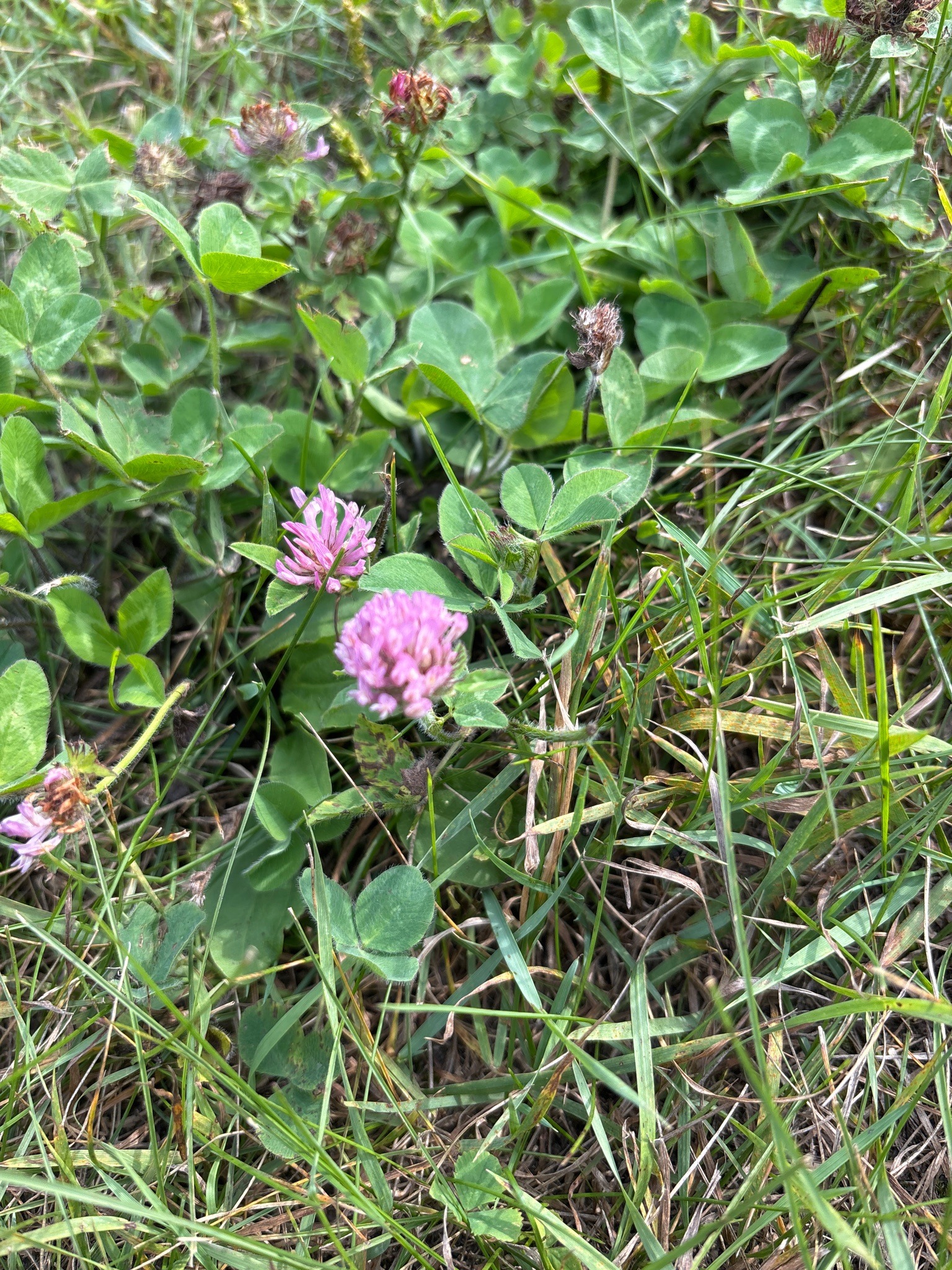
A herbaceous perennial plant featuring characteristic dark pink to purple flower heads and trifoliate leaves with faint pale markings.
Characteristics
Leaves are trifoliate (three leaflets) with a pale crescent or watermark shape. Flowers are dense, rounded inflorescences composed of numerous tiny pink-purple tubular florets.
Habitat
Fields, meadows, lawns, pastures, and along roadsides in temperate regions worldwide.
When to Find It
Blooms primarily from late spring through autumn, best observed on sunny days when pollinators are active.
Conservation Status
Least Concern
Ecological Role
A vital nectar source for bees, butterflies, and bumblebees. Being a legume, it fixes nitrogen in the soil, enriching fertility.
Easily Confused With
Alsike clover (Trifolium hybridum) which has white or pale pink-and-white flowers, and White clover (Trifolium repens) which has creeping stems and white flowers.
Observation Tips
Look in open grassy areas and meadows. Approach quietly to observe visiting pollinators such as honeybees and bumblebees.
Interesting Facts
Red clover is often grown as a cover crop and green manure to improve soil health. It is also used in herbal medicine traditionally for various respiratory and skin conditions.