Common Tansy
Scientific Name: Tanacetum vulgare
Category: plant
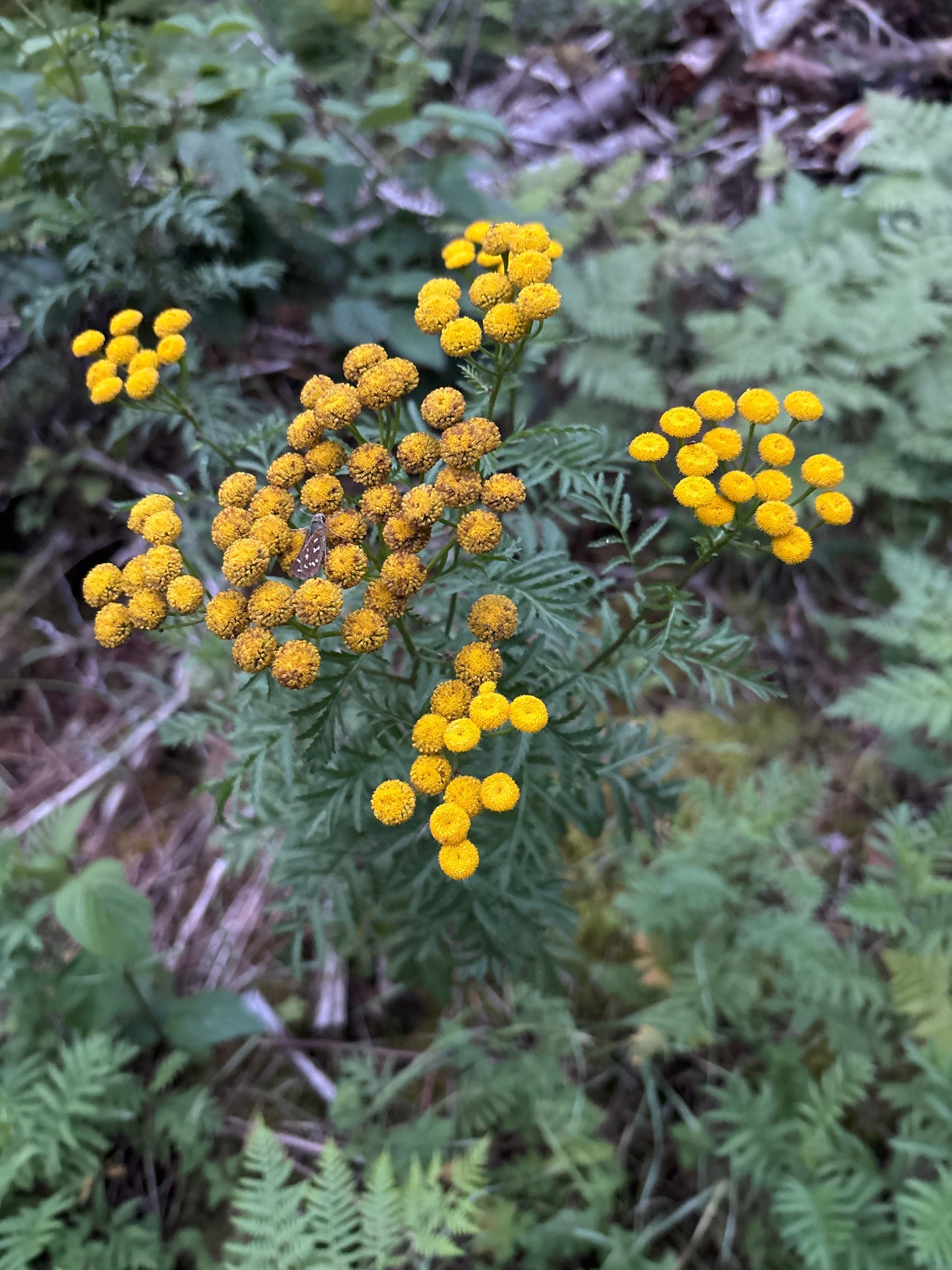
Brief Description
Common tansy is a perennial herbaceous flowering plant of the aster family, recognizable by its bright yellow, button-like flower clusters and deeply divided, fern-like leaves.
Characteristics
Grows up to 1.5 meters tall with erect stems. Leaves are alternate, deeply pinnately lobed, and fern-like with a strong, camphor-like scent. Flowers are small, bright golden-yellow, button-like disks arranged in flat-topped terminal clusters, lacking ray petals.
Habitat
Roadsides, waste places, river banks, pastures, and forest edges, typically thriving in disturbed soils and full sun to partial shade.
When to Find It
Blooms from mid-summer through early autumn (July to September).
Conservation Status
Least Concern (considered an invasive weed in many regions outside its native range).
Ecological Role
Provides nectar and pollen for various insects, including beneficial predatory insects and pollinators. However, it can be invasive in non-native ranges and is toxic to many livestock animals.
Easily Confused With
Can be confused with other yellow-flowered Asteraceae like sneezeweed or goldenrods, but tansy is easily distinguished by its button-like discoid flower heads (lacking ray petals) and strongly aromatic, fern-like leaves.
Observation Tips
Look along forest edges, roadsides, and open fields during summer. Crush a leaf gently between your fingers to check for the distinct strong, pungent, herbal scent.
Interesting Facts
Historically, tansy was used in traditional medicine, as an insecticide, and for embalming. Its essential oils contain thujone, which is toxic in large quantities and gives the plant its characteristic strong odor.