Milk Snake
Scientific Name: Lampropeltis triangulum
Category: reptile
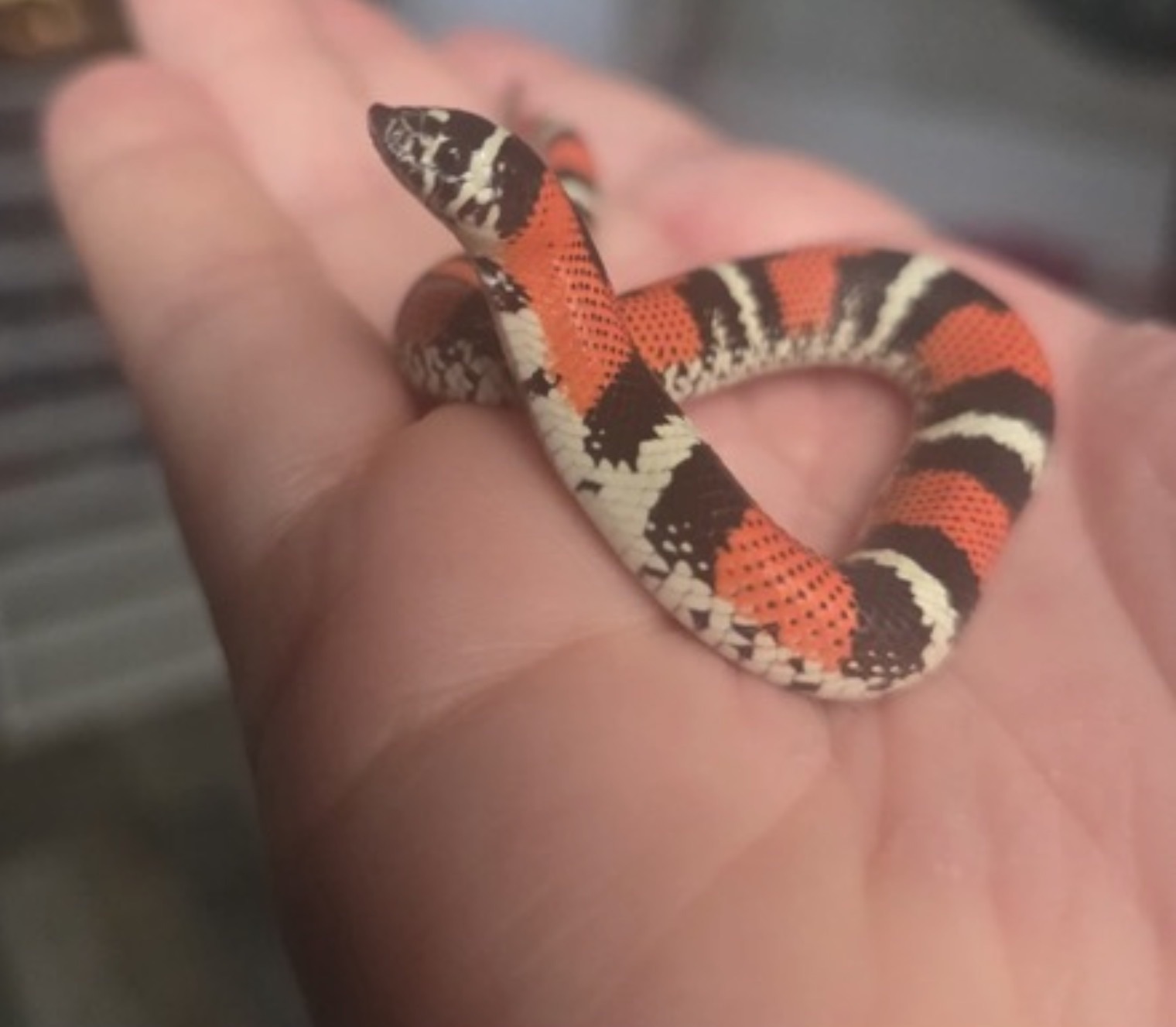
Brief Description
A small to medium-sized constrictor known for its striking red, black, and white or yellow banded pattern, which often mimics venomous coral snakes.
Characteristics
Smooth scales with alternating bands of red, black, and yellowish-white or white. The snout is typically black. Adults generally range from 14 to 50 inches in length.
Habitat
Found in a wide variety of habitats including forests, fields, rocky outcrops, and agricultural land, often hiding under logs, rocks, or debris.
When to Find It
Most active during spring and summer; nocturnal during the hottest summer months and crepuscular or diurnal in spring and fall.
Conservation Status
Least Concern, though local populations can face threats from habitat loss and illegal pet trade collection.
Ecological Role
Acts as an important predator in controlling rodent and insect populations, and serves as prey for larger birds of prey and mammals.
Easily Confused With
Venomous Coral Snakes (Micrurus spp.). Distinguish via the rhyme: 'Red on yellow, kill a fellow; red on black, venom lack' (though variations exist, milk snakes typically have red touching black).
Observation Tips
Look under flat rocks, rotting logs, or debris piles during damp weather or early morning. Handle gently as they may musk or bite defensively when first caught.
Interesting Facts
Despite the old myth that they milk cows, milk snakes are actually attracted to barns because of the abundance of rodents.