Quartz and Granite Pebbles
Scientific Name: Silicon Dioxide (SiO2) / Felsic Igneous Rock
Category: rock
Brief Description
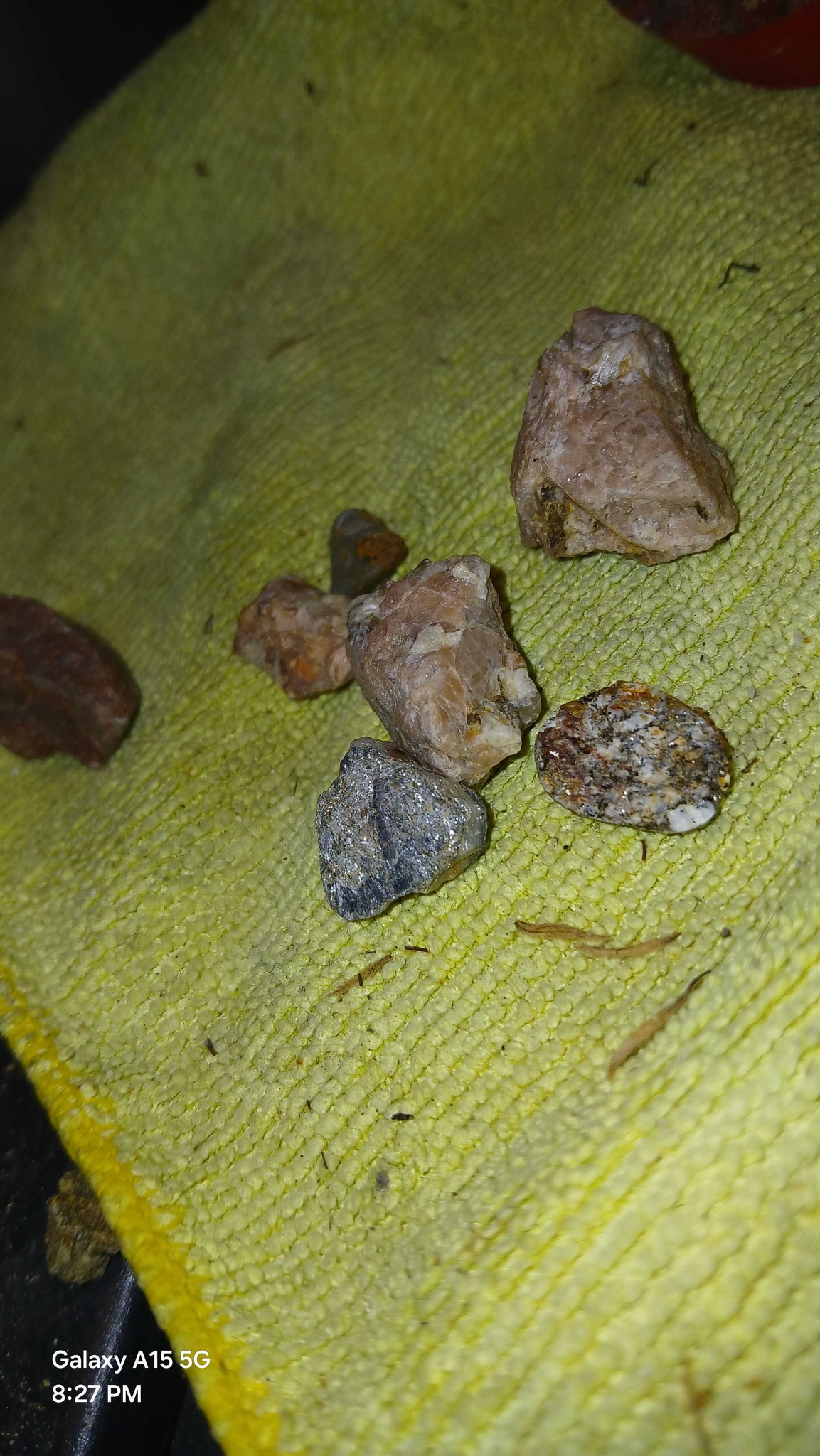
A collection of small geological specimens, primarily including rose quartz, smoky quartz, and a fragment of granite or gneiss.
Characteristics
The larger translucent pink stones are rose quartz, exhibiting a waxy luster. The speckled oval rock is granite, featuring visible grains of white plagioclase, gray quartz, and dark biotite or hornblende. These specimens show varied textures from crystalline to granular.
Habitat
Commonly found in river beds, beaches, or as products of erosion from igneous and metamorphic outcrops.
When to Find It
N/A
Conservation Status
N/A
Ecological Role
Quartz is a primary building block of the Earth's crust; these rocks break down over millennia to form sand and soil components essential for plant growth.
Easily Confused With
Quartz can be confused with calcite; however, quartz is much harder (7 on Mohs scale) and will not react with acid. Granite can be confused with diorite, but granite contains significantly more quartz.
Observation Tips
When searching for such stones, wet them with water to make their colors and internal crystallization patterns more visible. Use a hand lens to see individual mineral grains.
Interesting Facts
Quartz is the second most abundant mineral in Earth's continental crust. Its name comes from the German word 'Quarz', which likely has Slavic origins meaning 'hard'.