Olive Tree
Scientific Name: Olea europaea
Category: tree
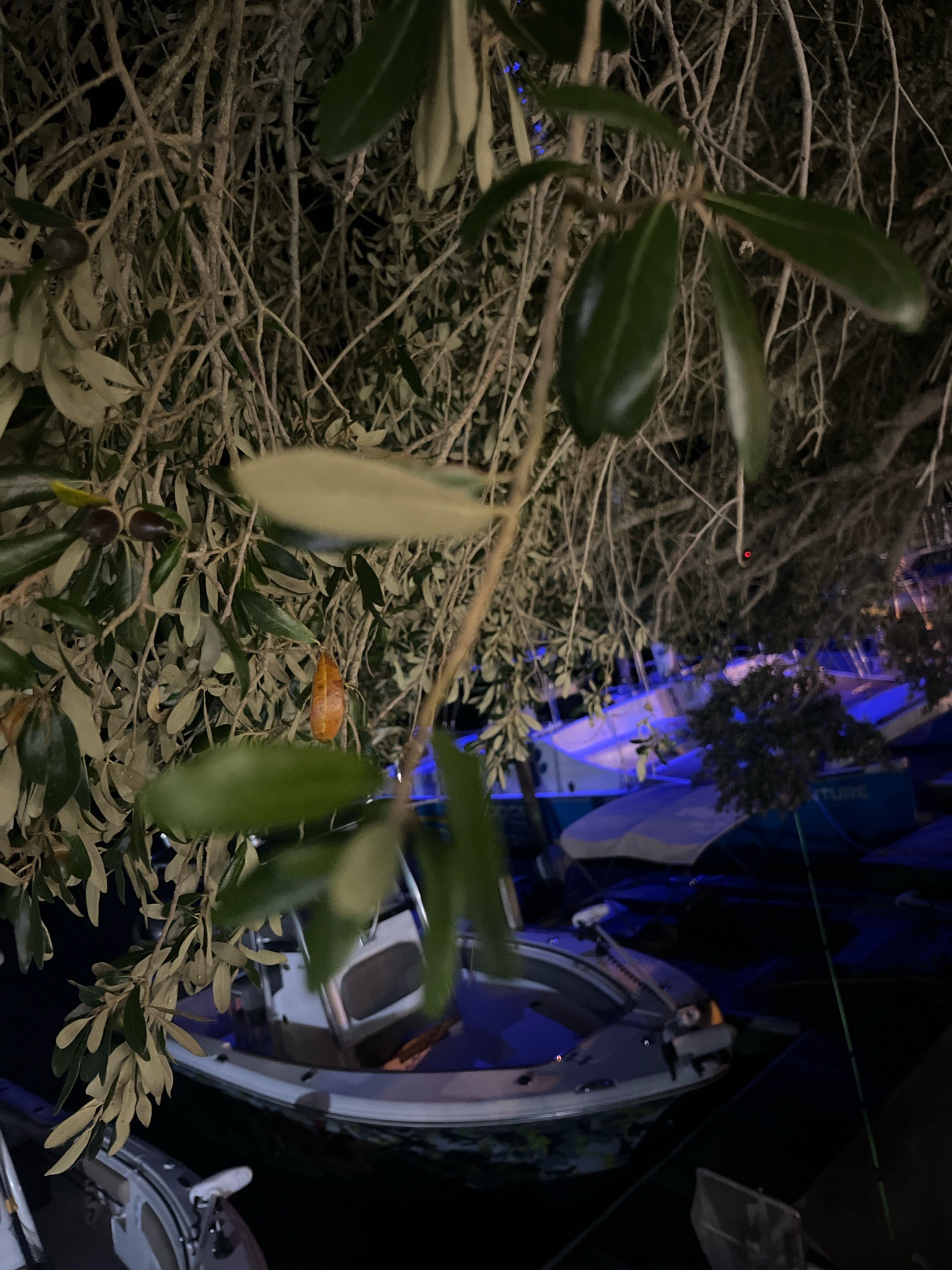
Brief Description
An evergreen tree with silvery-green lanceolate leaves and small drupe fruits (olives), commonly cultivated in Mediterranean climates.
Characteristics
Features rigid, gnarled trunks, narrow oblong to lanceolate leaves that are dark green above and silvery-grey hairy underneath, and small oval fruits that ripen from green to dark purple or black.
Habitat
Grows well in dry, poor soils with full sun, typically found in Mediterranean-type climates, coastal areas, and agricultural groves.
When to Find It
Fruit ripens in autumn to early winter; evergreen foliage visible year-round.
Conservation Status
N/A
Ecological Role
Provides habitat for various birds and insects, and its deep root systems help prevent soil erosion in arid Mediterranean slopes.
Easily Confused With
Oleander (Nerium oleander), which has similar narrow leaves but is highly toxic and produces showy flowers instead of olives.
Observation Tips
Observe the underside of leaves for the characteristic silvery scales and look for small drupes hanging in clusters among the branches.
Interesting Facts
Olive trees are extremely resilient, capable of living for centuries, and have been cultivated by humans for thousands of years for olive oil and fruit.