Bigleaf Maple
Scientific Name: Acer macrophyllum
Category: tree
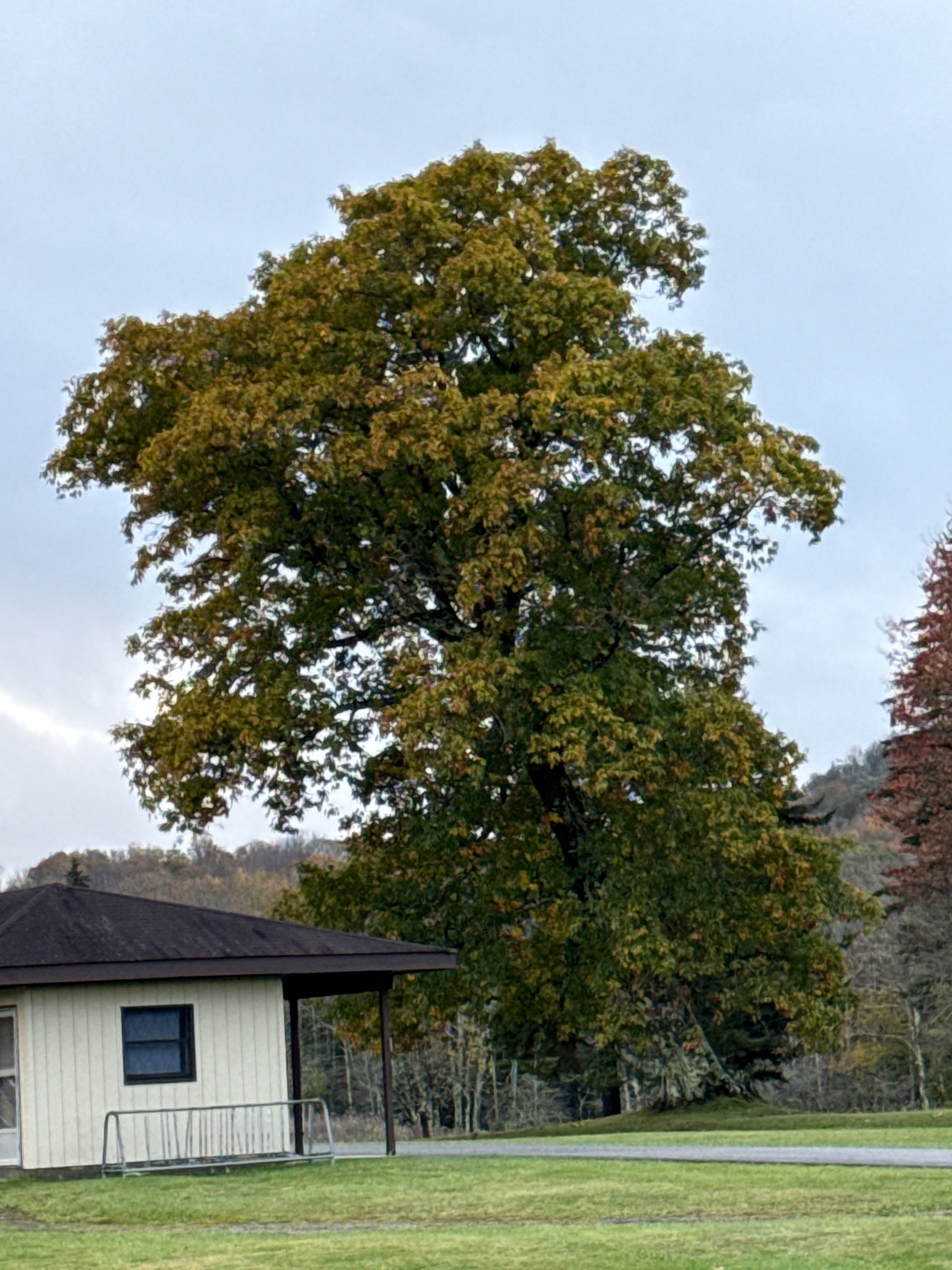
Brief Description
A large deciduous tree native to western North America, easily recognized by its exceptionally large lobed leaves and furrowed grayish-brown bark.
Characteristics
Grows up to 30-48 meters tall with a massive, rounded crown. Leaves are the largest of any maple, typically 15 to 30 cm across, with five deep lobes. Bark is dark gray, deeply furrowed, and often covered in thick mats of mosses and lichens.
Habitat
Found in moist soils along streams, river floodplains, canyons, and within mixed coniferous and deciduous forests.
When to Find It
Best observed from spring through autumn for its full foliage, and in autumn for bright yellow fall colors. In winter, its large branching structure and heavy epiphyte growth remain distinct.
Conservation Status
Secure
Ecological Role
Provides crucial habitat and foraging resources for numerous birds, mammals, and insects. Its heavy growths of mosses and epiphytes support a rich canopy ecosystem, and fallen leaves enrich forest soils.
Easily Confused With
Vine Maple (Acer circinatum) has smaller, rounder leaves and a shrubby habit; Norway Maple (Acer platanoides) has milky sap in the leaf petioles and pointed teeth on the leaf lobes.
Observation Tips
Look for them in Pacific Northwest river valleys and moist lowland forests. Check the lower trunks for diverse communities of mosses, ferns, and lichens.
Interesting Facts
The bigleaf maple produces the largest leaves of any maple species in the world. Its wood is sometimes used for furniture and musical instruments, and Indigenous peoples historically used its inner bark for weaving baskets and clothing.