Yellow Toadflax
Scientific Name: Linaria vulgaris
Category: plant
Brief Description
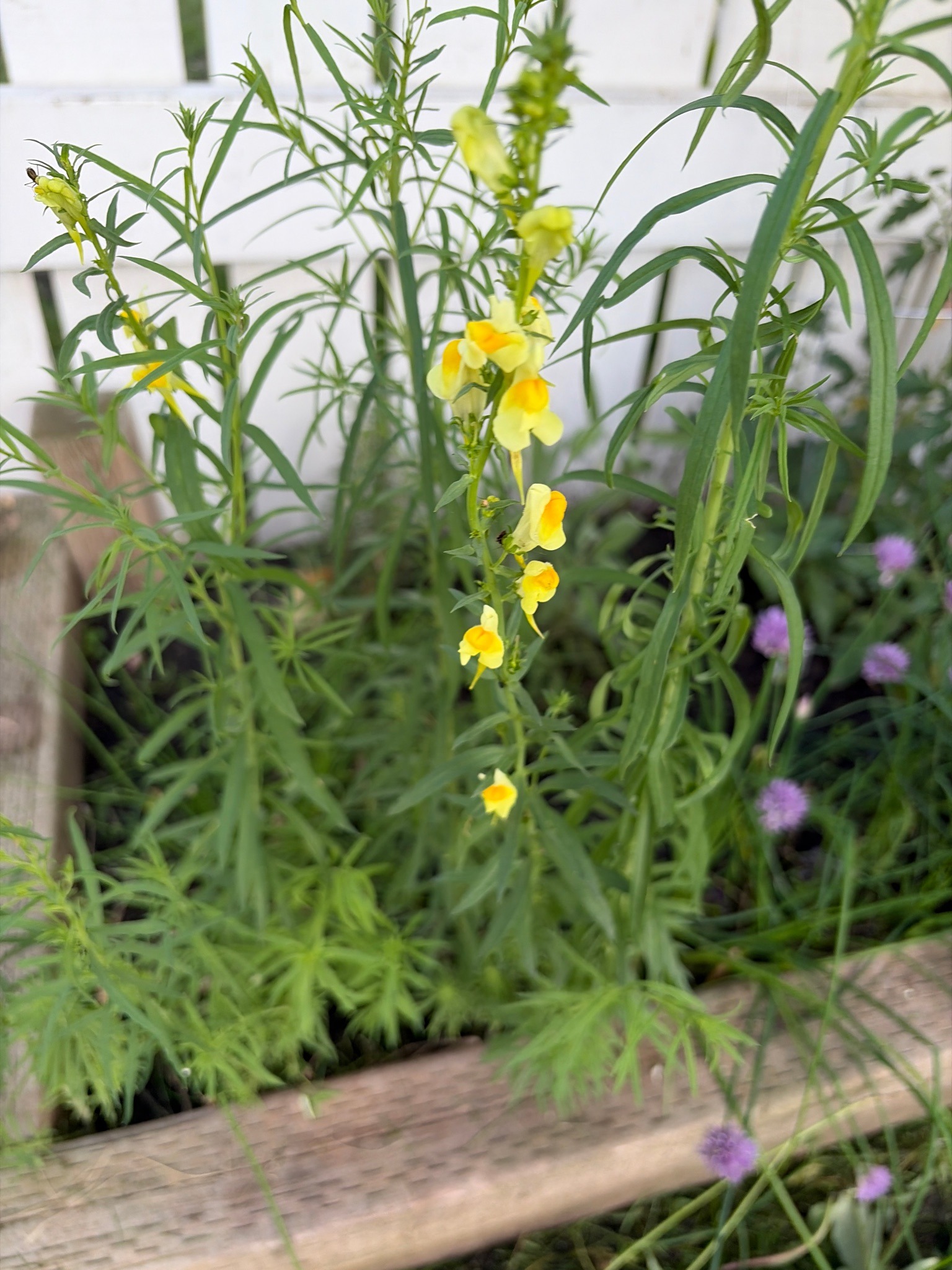
A perennial herbaceous plant with snapdragon-like yellow and orange flowers, often considered an invasive weed in North America.
Characteristics
Features bright yellow tubular flowers with an orange palate and a long nectar spur at the base. The leaves are narrow, linear, and pale green, densely crowding the stem. It grows 30-90 cm tall.
Habitat
Commonly found in disturbed areas, roadsides, pastures, and garden edges. It thrives in well-drained, sandy or gravelly soils.
When to Find It
Flowering typically occurs from mid-summer to early autumn (June to September).
Conservation Status
Invasive / Noxious Weed in Alberta
Ecological Role
Provides a nectar source for bumblebees, which are strong enough to open the closed flower petals. However, it can displace native vegetation and is unpalatable to most livestock.
Easily Confused With
Dalmatian Toadflax (Linaria dalmatica), which has broader, heart-shaped leaves that clasp the stem, whereas Yellow Toadflax has narrow, non-clasping leaves.
Observation Tips
In Alberta, it is often found invading garden beds or along paths. Look for the distinctive 'butter and eggs' coloration of the flowers.
Interesting Facts
It was nicknamed 'Butter and Eggs' due to its bi-colored yellow and orange flowers. In Alberta, it is classified as a Noxious Weed under the Weed Control Act because it spreads aggressively via creeping roots and abundant seeds.
User Notes
Alberta, Canada