American Sweetgum
Scientific Name: Liquidambar styraciflua
Category: tree
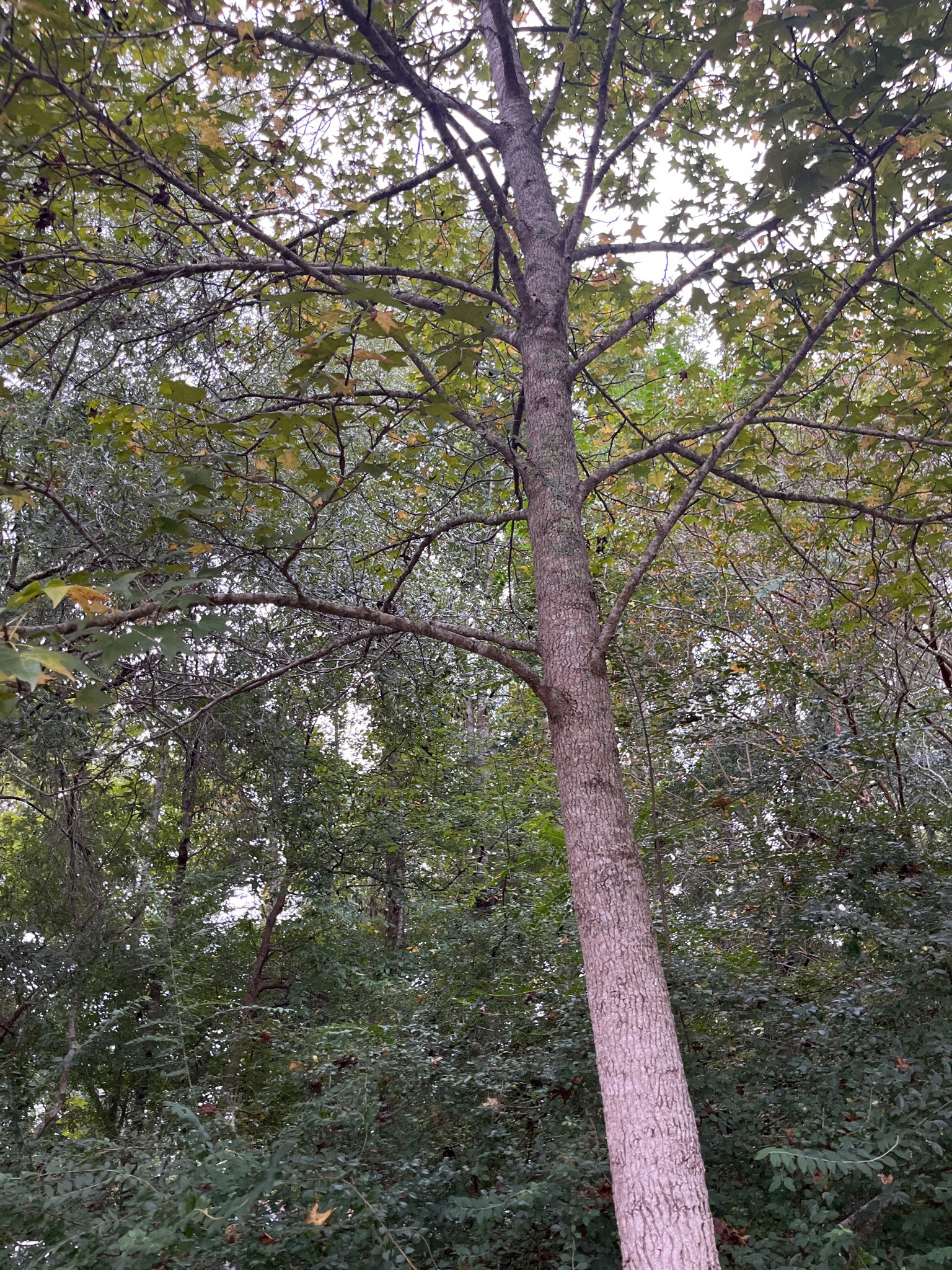
Brief Description
A large deciduous tree easily recognized by its star-shaped leaves, distinctive corky ridges on the branches, and spiky hard fruit balls.
Characteristics
Features a straight trunk, deeply furrowed grey-brown bark, and twigs often featuring prominent corky wings. Leaves are simple, alternate, star-shaped with 5 to 7 pointed lobes, turning vibrant shades of red, purple, and yellow in autumn. Produces woody, spiky aggregate fruits commonly known as gumballs.
Habitat
Common in low-lying, moist alluvial soils along streams, floodplains, and damp woods, but highly adaptable and also found in drier upland forests and disturbed areas.
When to Find It
Best observed in autumn for its striking colorful foliage, and winter for its persistent spiky seed pods hanging on branches.
Conservation Status
Least Concern
Ecological Role
Provides food and shelter for numerous wildlife species; seeds are consumed by finches, wild turkeys, and small mammals, while the dense canopy offers nesting sites for birds.
Easily Confused With
Maples (Acer species) also have lobed leaves, but maples typically feature opposite leaf arrangements, whereas sweetgum leaves are arranged alternately on the stem.
Observation Tips
Look up to spot the star-shaped leaves against the sky, and watch your step for the spiky seed pods on the ground below.
Interesting Facts
The resin of the sweetgum tree, known as storax, has historically been used in the production of chewing gum, incense, and folk medicines.