Poison Ivy
Scientific Name: Toxicodendron radicans
Category: plant
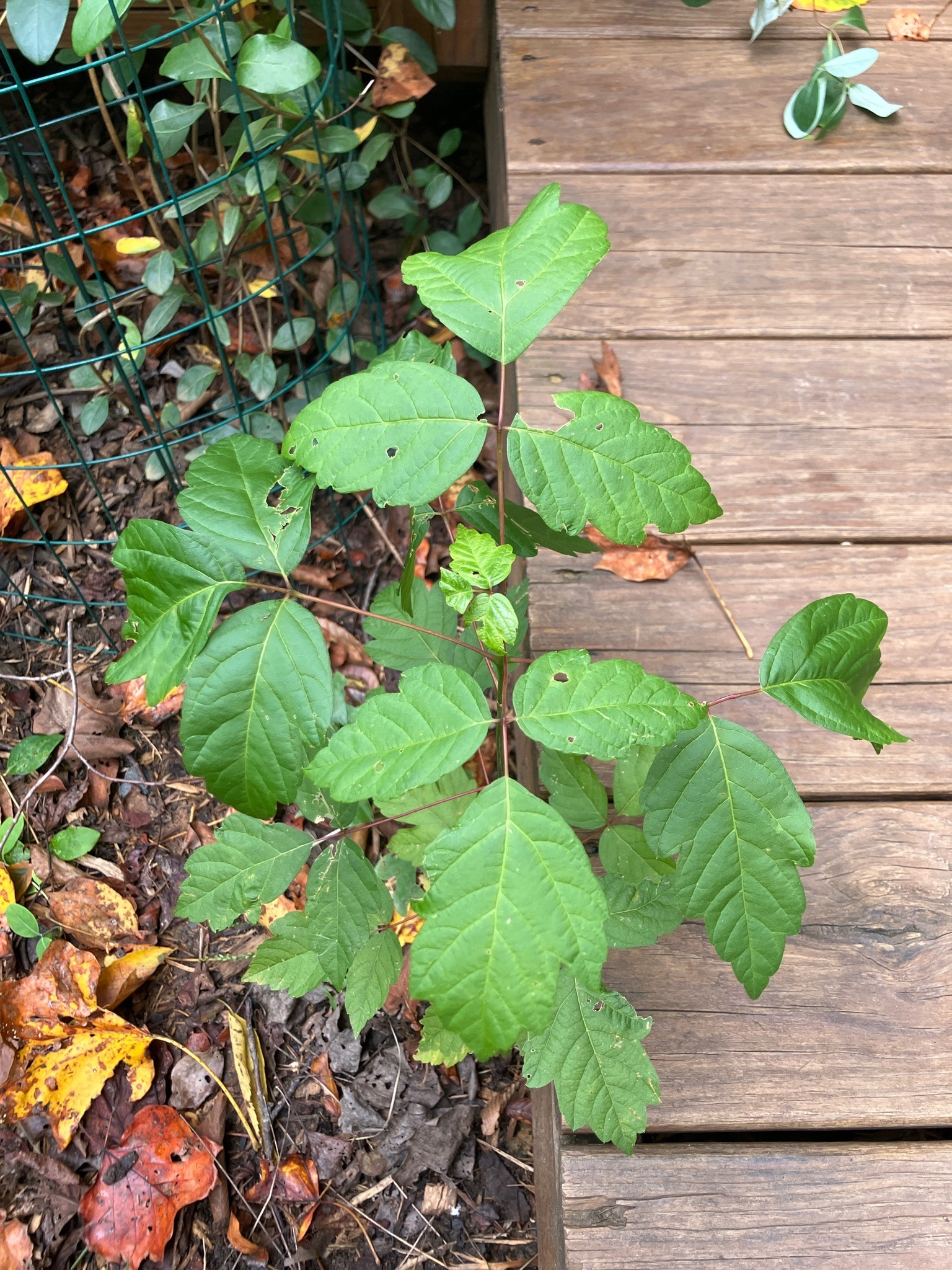
Brief Description
A woody vine or shrub known for causing allergic skin rashes in humans due to urushiol oil.
Characteristics
Compound leaves made up of three leaflets ("leaves of three, let them be"), alternate leaf arrangement, variable margin shapes (toothed, lobed, or smooth), and greenish-white flowers followed by grayish-white berries.
Habitat
Found in wooded areas, forest edges, fields, roadsides, and suburban yards.
When to Find It
Active growth and most hazardous from spring through autumn; loses leaves in winter.
Conservation Status
N/A
Ecological Role
Provides food and cover for birds and other wildlife, which eat the berries and disperse seeds.
Easily Confused With
Boxelder (Acer negundo) seedlings, which also have three leaflets; distinguish by boxelder's opposite leaf arrangement versus poison ivy's alternate arrangement.
Observation Tips
Do not touch or brush against the foliage. Wear long sleeves and pants if working near suspected areas.
Interesting Facts
Urushiol, the plant's irritating oil, remains active on surfaces (including clothing and pet fur) for years if not washed off properly.