Eurasian Blue Tit Fledgling
Scientific Name: Cyanistes caeruleus
Category: bird
Brief Description
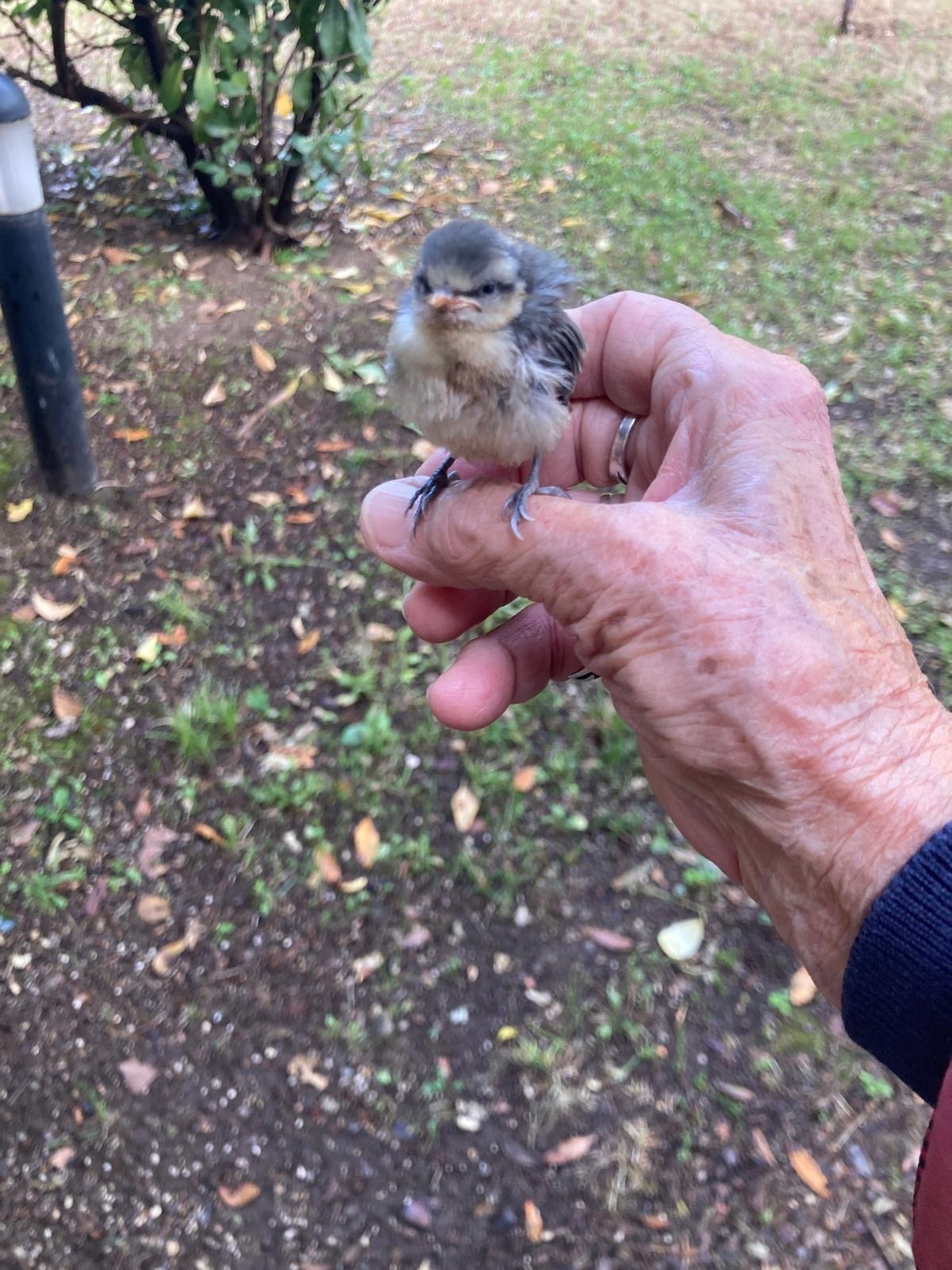
A young Eurasian Blue Tit that has recently left the nest, identifiable by its small size, yellowish-white cheeks, and grumpy-looking facial expression characteristic of fledglings.
Characteristics
Downy, ruffled feathers with a mix of grey, blue, and yellow; yellow/white tinged cheeks; fleshy yellow gape at the corners of the beak; short tail; small dark eyes.
Habitat
Deciduous and mixed woodlands, gardens, parks, and orchards with abundance of trees and nesting sites.
When to Find It
Fledglings are most commonly observed in late spring and early summer (May to June) after leaving the nest.
Conservation Status
Least Concern
Ecological Role
Blue tits are vital for pest control, consuming large quantities of insects and caterpillars, and serve as a prey source for larger birds and mammals.
Easily Confused With
Great Tit fledglings (which are larger with a more prominent black stripe on the chest) and Coal Tit fledglings (which lack the blue tints and have a white patch on the nape).
Observation Tips
If you find a fledgling on the ground, do not pick it up unless it is in immediate danger. Parents are usually nearby watching. If handling is necessary for safety, move it to a nearby branch out of reach of pets.
Interesting Facts
Fledglings often have a 'grumpy' facial structure due to their developing beak and feathers; they are highly vocal to ensure their parents can find them and provide food even after they have left the nest cavity.