Common Blue Violet
Scientific Name: Viola sororia
Category: plant
Brief Description
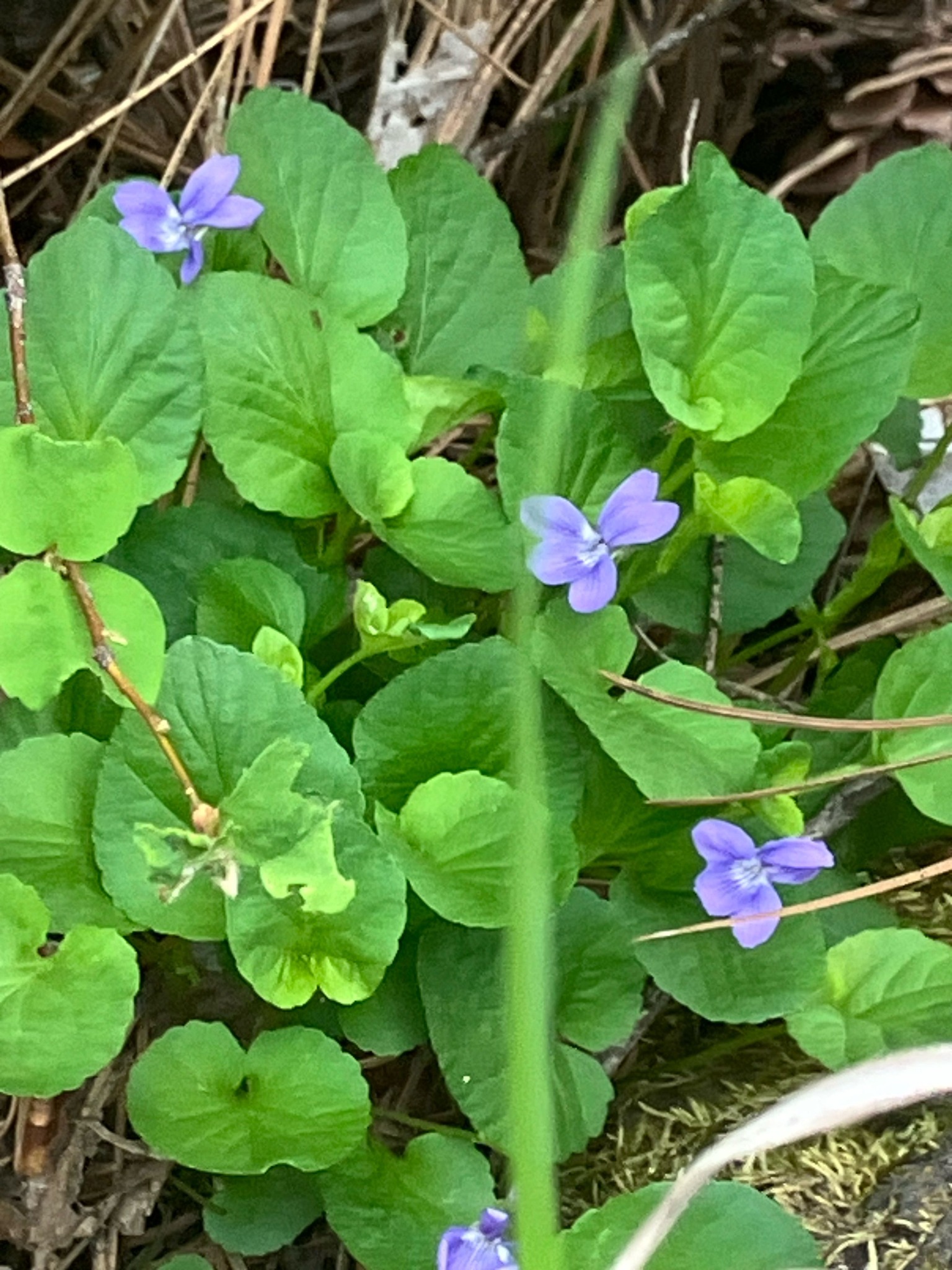
A small perennial wildflower with heart-shaped leaves and asymmetrical five-petaled purple-blue flowers.
Characteristics
Low-growing plant with basal, heart-shaped (cordate) leaves that have scalloped margins. Flowers range from light blue to deep violet, featuring five petals: two top, two side, and one bottom petal that serves as a landing pad for insects.
Habitat
Found in woodlands, meadows, lawns, and disturbed areas. Native to eastern North America.
When to Find It
Blooms in spring to early summer (typically March to June).
Conservation Status
Secure/Common
Ecological Role
A critical host plant for the larvae of Fritillary butterflies. The flowers provide an early nectar source for bees and other pollinators.
Easily Confused With
English Violet (Viola odorata), which is often fragrant, whereas Common Blue Violet is not. Marsh Blue Violet (Viola cucullata) has thinner, more pointed leaves and prefers wetter habitats.
Observation Tips
Look for them in partially shaded areas or at the edges of forests. They often grow in clumps and can be found easily in suburban yards that are not treated with herbicides.
Interesting Facts
The leaves and flowers are edible and high in vitamins A and C. In addition to their obvious flowers, they produce inconspicuous closed flowers near the ground (cleistogamous flowers) that self-pollinate without opening.