Bongo
Scientific Name: Tragelaphus eurycerus
Category: mammal
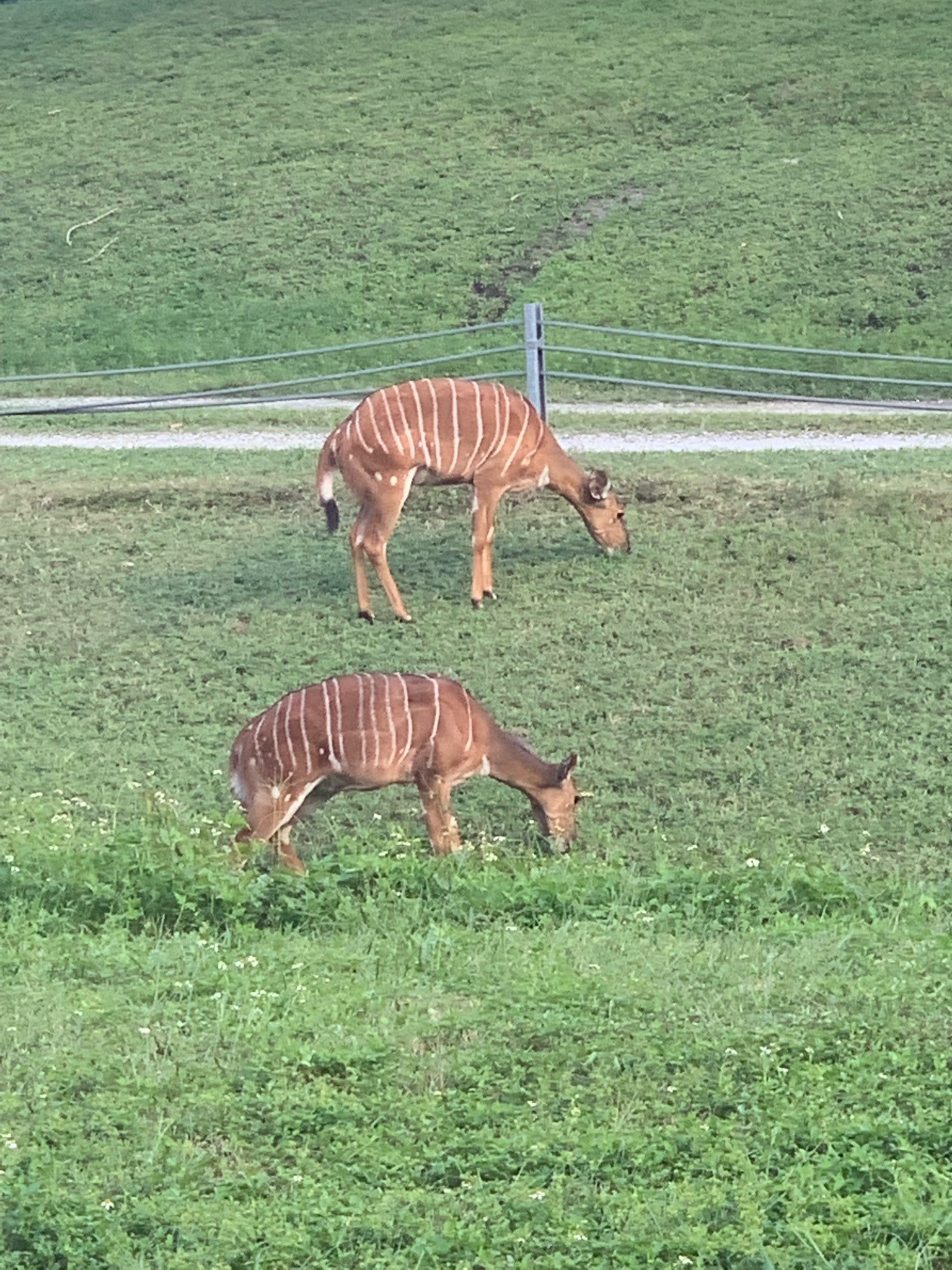
Brief Description
A large, forest-dwelling antelope known for its striking reddish-brown coat with narrow white vertical stripes.
Characteristics
They have a deep chestnut or reddish-brown coat with 10-15 vertical white stripes on the torso. Both males and females have long, spiraling horns. They also feature white markings on the face and legs.
Habitat
Dense lowland subtropical and tropical rainforests with thick undergrowth. Found in Central and West Africa, with a critically endangered subspecies in isolated mountains of Kenya.
When to Find It
Diurnal and nocturnal; they are most active during dawn and dusk.
Conservation Status
Near Threatened (Lowland Bongo); Critically Endangered (Mountain Bongo).
Ecological Role
As herbivores, they influence the vegetation structure of the rainforest and serve as a prey source for large predators like leopards.
Easily Confused With
Lesser Kudu and Nyala. Bongos are larger, have heavier bodies, and both sexes have horns, whereas in Kudus and Nyalas, usually only males have horns.
Observation Tips
Because they are shy and inhabit dense forests, they are extremely difficult to see in the wild; wildlife sanctuaries and managed enclosures are the most common places to observe them.
Interesting Facts
The Bongo is the largest and heaviest forest-dwelling antelope in the world. Their name is derived from the Kele language of Gabon.