Okapi
Scientific Name: Okapia johnstoni
Category: mammal
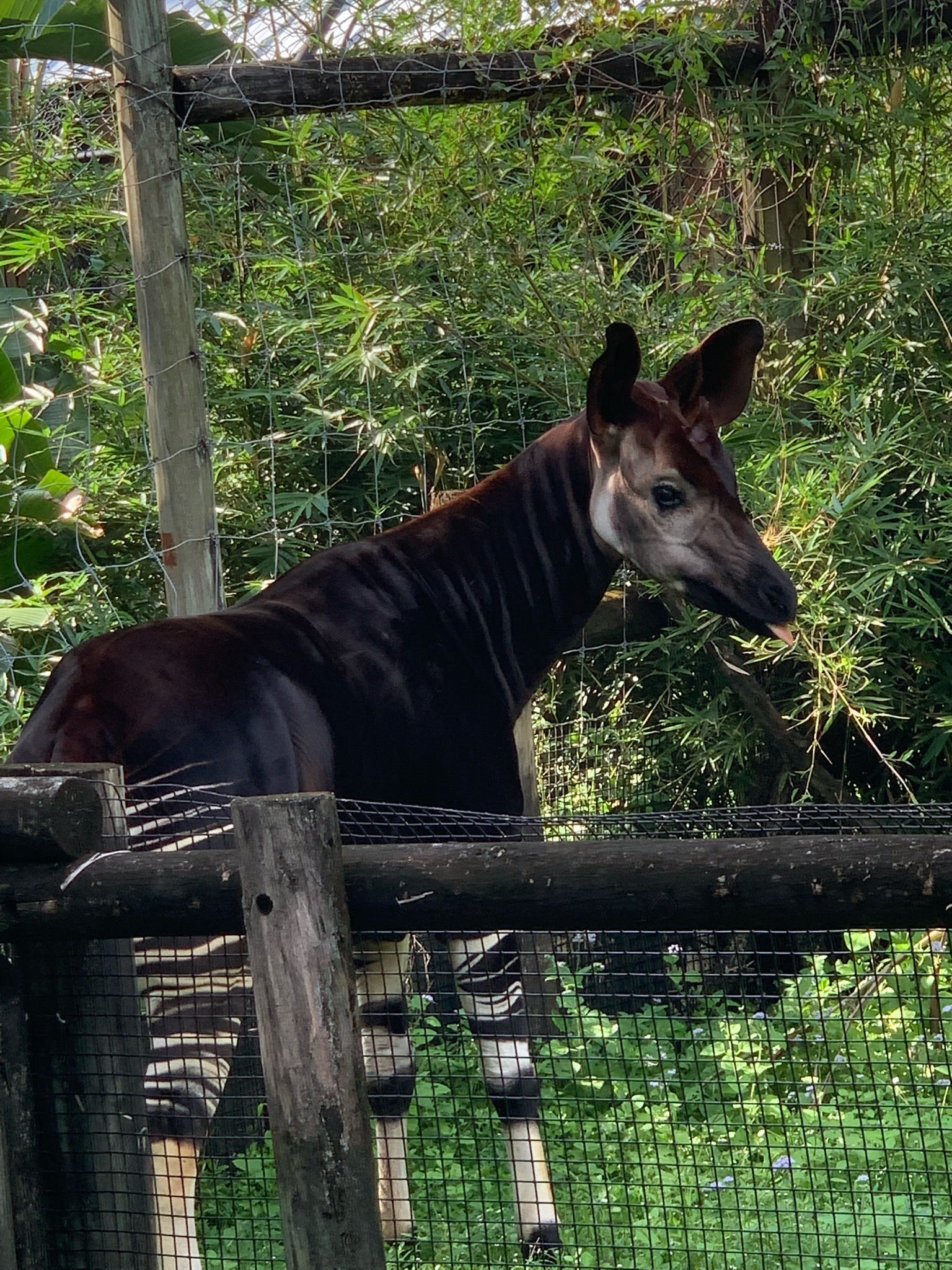
Brief Description
A unique mammal native to the rainforests of Central Africa, often called the 'forest giraffe' due to its close relationship with giraffes despite its zebra-like markings.
Characteristics
Velvety reddish-brown chocolate coat, horizontal black-and-white stripes on the hindquarters and upper legs, large upright ears, and a long, prehensile bluish-black tongue. Males have short, hair-covered horns called ossicones.
Habitat
Dense tropical rainforests, specifically secondary forests and riverine areas. It is endemic to the Ituri Forest in the Democratic Republic of the Congo.
When to Find It
Diurnal and solitary; active during daylight hours throughout the year in its tropical climate.
Conservation Status
Endangered (IUCN Red List) due to habitat loss, logging, and poaching.
Ecological Role
As a large herbivore, it helps shape the forest structure by consuming a wide variety of plant species and serves as a prey species for the leopard.
Easily Confused With
Zebras (due to the leg stripes) and Giraffes (due to the body shape and ossicones). Distinguished from zebras by their lack of stripes on the main body and from giraffes by their much shorter necks.
Observation Tips
In the wild, they are extremely elusive and shy. Most observations occur in specialized zoological facilities or through camera traps in the Democratic Republic of the Congo. Respect quiet environments to avoid startling them.
Interesting Facts
The okapi is the only living relative of the giraffe. Its tongue is long enough (up to 14-18 inches) that it can use it to wash its own eyelids and ears.