Quaking Aspen
Scientific Name: Populus tremuloides
Category: tree
Brief Description
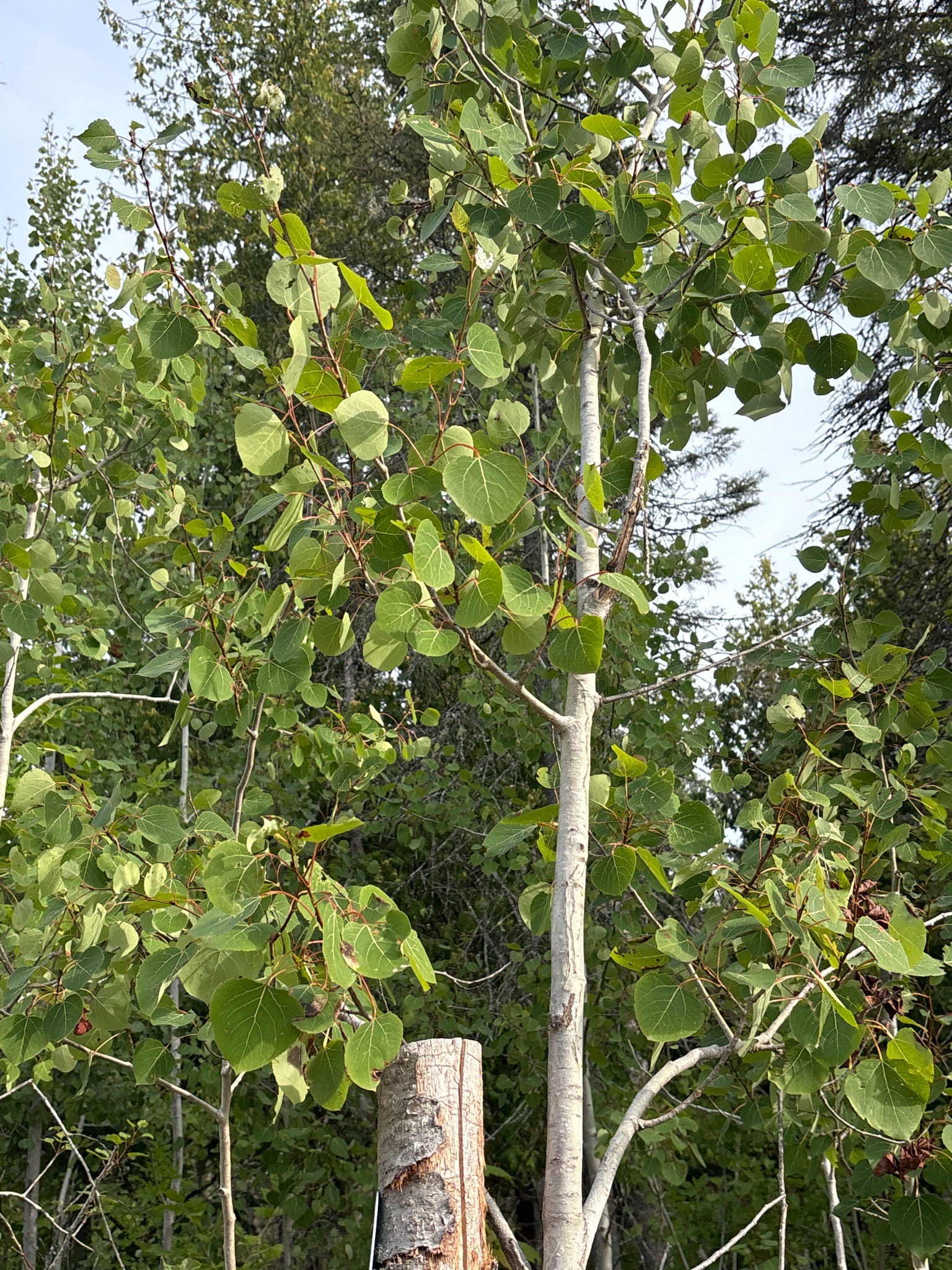
A medium-sized deciduous tree recognized by its smooth, pale white bark and rounded leaves that flutter tremulously in the slightest breeze.
Characteristics
Smooth greenish-white to cream-colored bark marked with dark scars; simple, rounded to triangular leaves with finely toothed margins and flattened petioles which cause the trembling motion; turns vibrant golden-yellow in autumn.
Habitat
Typically found in moist upland forests, forest margins, and mountain slopes, often forming large clonal colonies.
When to Find It
Best observed in spring and summer for vibrant green foliage, or in autumn when leaves turn brilliant gold.
Conservation Status
Least Concern
Ecological Role
Provides critical habitat, browse, and shelter for numerous wildlife species including elk, deer, beavers, and nesting birds; promotes forest regeneration after fires.
Easily Confused With
Bigtooth Aspen (Populus grandidentata), which has larger, coarsely toothed teeth on the leaves.
Observation Tips
Look for groves with striking white trunks and listen for the distinct rustling sound of leaves in the wind.
Interesting Facts
Quaking aspens often reproduce through root suckers, meaning an entire grove can be part of a single massive underground root system, making it one of the largest and oldest living organisms on Earth.