Common Selfheal
Scientific Name: Prunella vulgaris
Category: plant
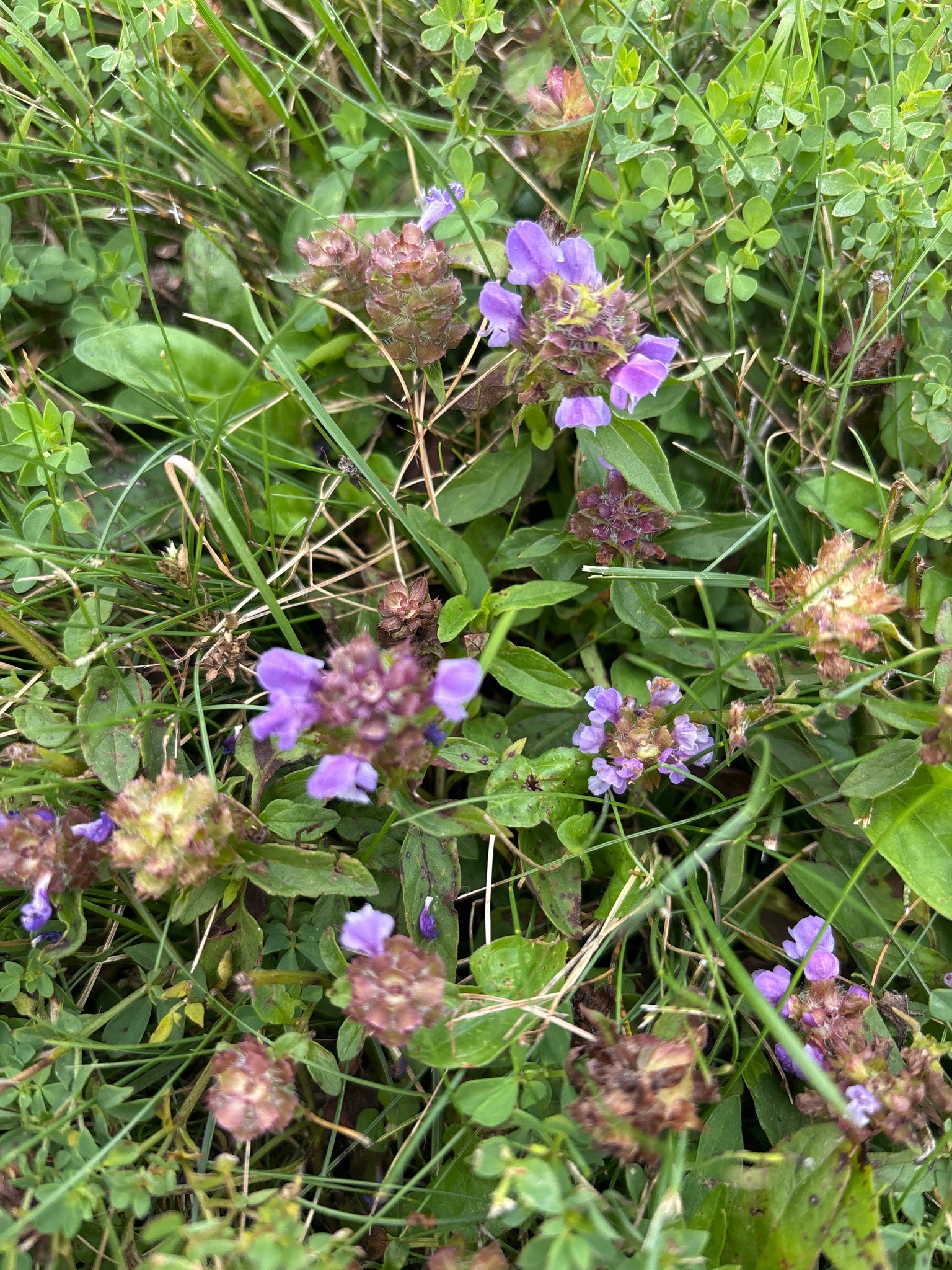
Brief Description
A low-growing perennial herb of the mint family with square stems, opposite leaves, and dense spikes of purple-blue tubular flowers.
Characteristics
Low-growing, spreading habit; square stems; simple, ovate to lance-shaped leaves arranged in opposite pairs; dense, whorled terminal flower spikes featuring two-lipped, violet-blue, purple, or occasionally pink/white flowers accompanied by reddish-purple bracts.
Habitat
Lawns, meadows, woodland edges, pastures, disturbed ground, and grassy paths across temperate regions.
When to Find It
Blooms primarily from late spring through autumn, generally May to September depending on latitude and climate.
Conservation Status
N/A
Ecological Role
Provides an important nectar source for pollinators, particularly bees, bumblebees, and butterflies, and acts as a tough groundcover supporting micro-ecosystems.
Easily Confused With
Bugleweed (Ajuga reptans), which generally has larger, shinier leaves and larger flower spikes, but they share a similar mint-family structure.
Observation Tips
Look closely in unmanaged lawns or damp grassy areas during the summer months; kneel down or use a macro lens to appreciate the intricate structure of the small purple blossoms.
Interesting Facts
Historically used in herbal medicine for wound healing (hence the name 'selfheal') and traditionally brewed into a tea to soothe sore throats.