Sago Palm
Scientific Name: Cycas revoluta
Category: plant
Brief Description
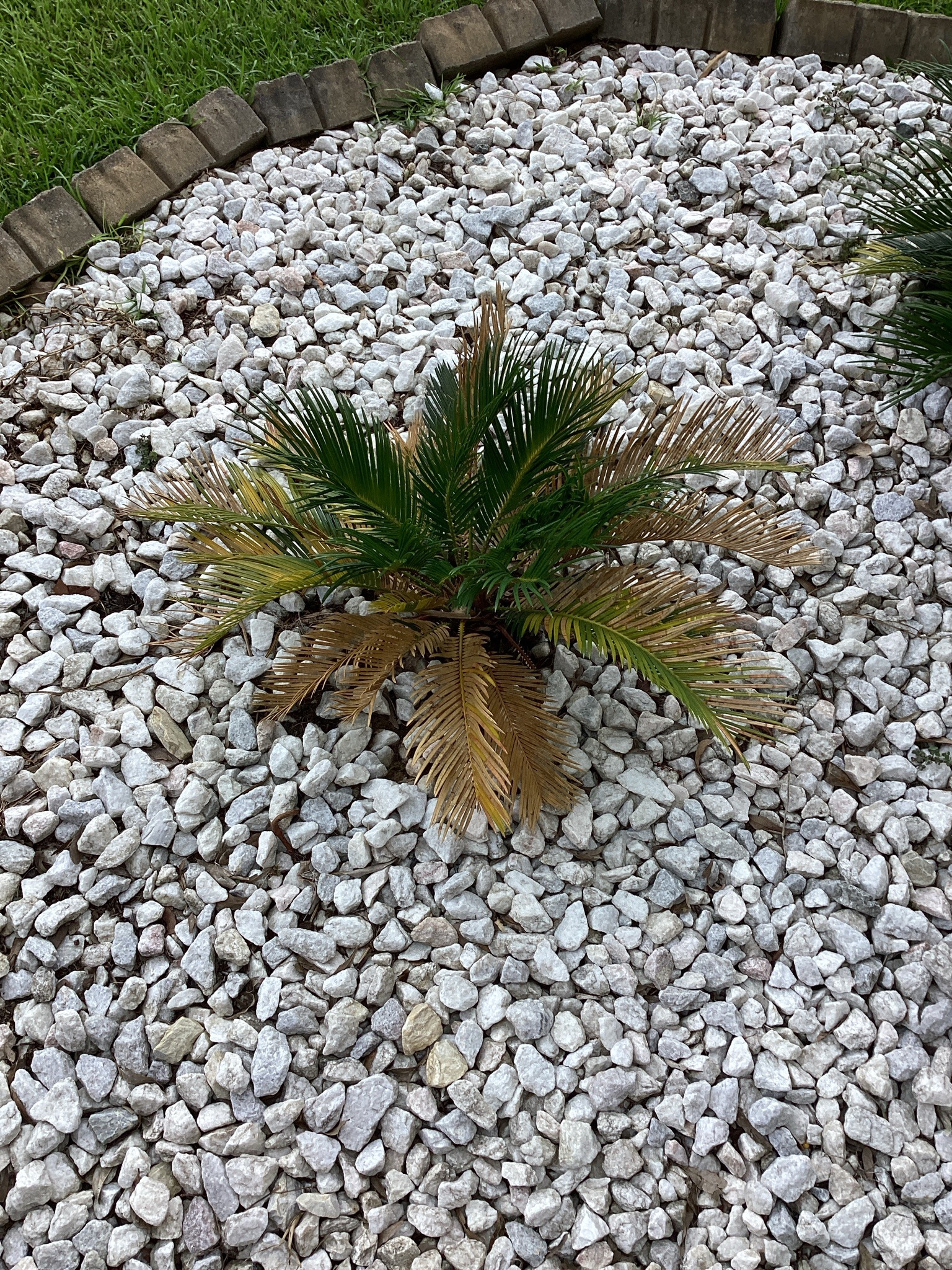
A slow-growing cycad with a rugged trunk and a crown of stiff, feathery, dark green fronds.
Characteristics
Palm-like appearance but not a true palm; features stiff, glossy, pinnate leaves with needle-like tips. The trunk is low and thick, covered in leaf scars.
Habitat
Tropical and subtropical regions; often used in landscaping due to its drought tolerance.
When to Find It
Perennial; new fronds (known as 'flushes') typically emerge in the spring or early summer.
Conservation Status
Least Concern
Ecological Role
As a cycad, it is a 'living fossil' representing a lineage that has existed for over 200 million years. It provides cover for small fauna but is extremely toxic if eaten.
Easily Confused With
True palms or Cardboard Palms (Zamia furfuracea). Sago palms have much sharper, stiffer leaflets than true palms and lack the fuzzy texture of Cardboard Palms.
Observation Tips
Handle with care as the leaf tips are very sharp. Note that the yellowing fronds in the image may indicate nutrient deficiency (magnesium or potassium) or transplant shock.
Interesting Facts
Every part of this plant, especially the seeds, contains cycasin and is highly toxic to humans and pets. It is a dioecious species, meaning individual plants are either male or female.
User Notes
Front yard