Red Baneberry
Scientific Name: Actaea rubra
Category: plant
Brief Description
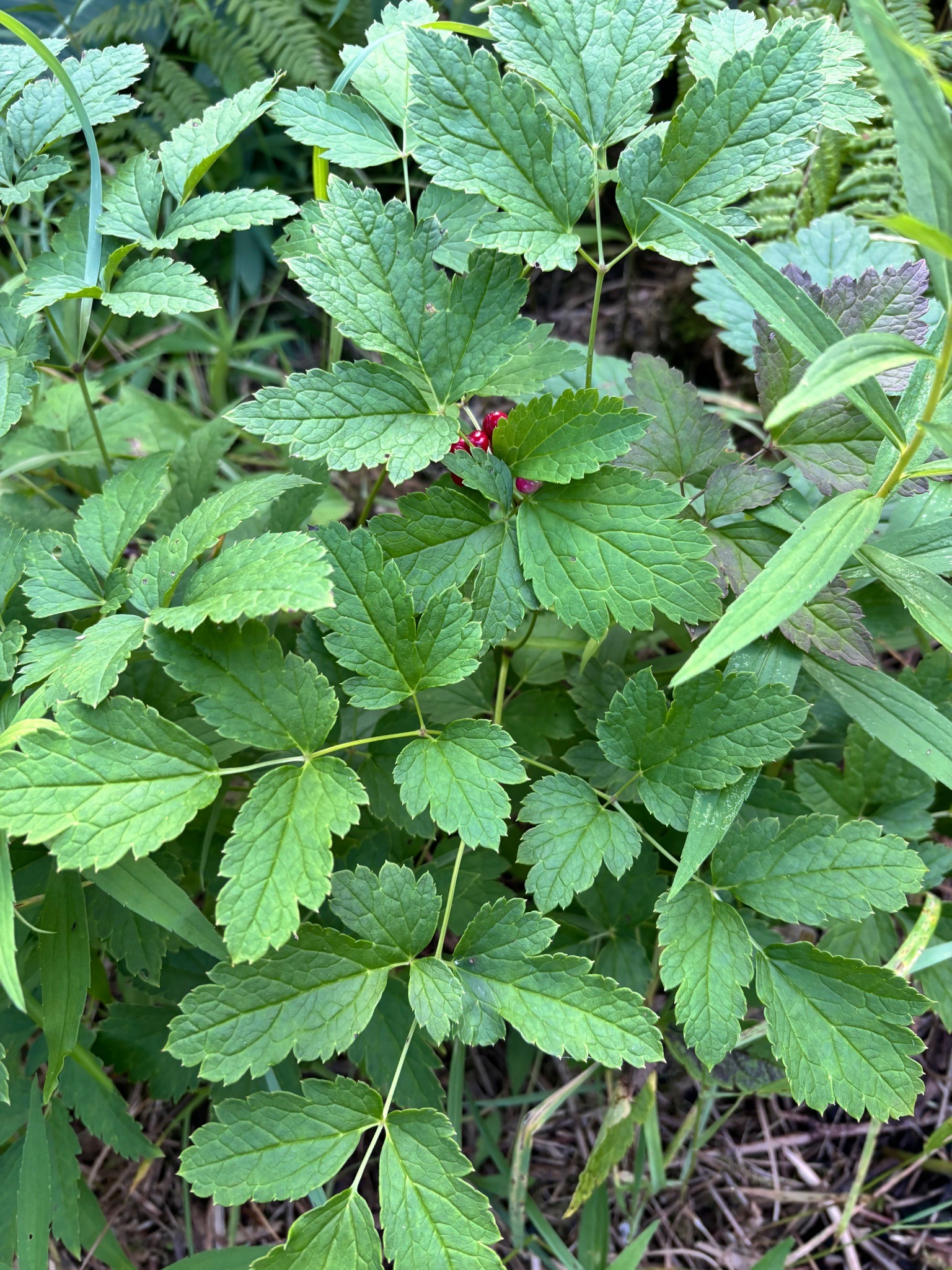
A perennial woodland wildflower known for its bright red, highly toxic berries clustered on thick stalks.
Characteristics
Stems are erect, growing up to 3 feet tall with large, compound leaves that are coarsely toothed and lobed. Small white flowers appear in clusters in spring, followed by shiny, bright red or occasionally white berries on thickened stalks in summer.
Habitat
Rich, moist deciduous or mixed forests, shaded ravines, and thickets.
When to Find It
Flowers in late spring; berries are prominent throughout summer into early autumn.
Conservation Status
Secure and widespread across much of its native range.
Ecological Role
Provides food for various forest birds and mammals that are immune to its toxins, helping to disperse the seeds.
Easily Confused With
White Baneberry (Actaea pachypoda), which has white berries on bright red stalks; can be distinguished by berry color and stalk thickness.
Observation Tips
Look in shaded understories of northern and montane forests. Do not ingest any part of the plant, as all parts are poisonous.
Interesting Facts
Also commonly known as doll's eyes due to the appearance of the white-fruited variety, though the red variety features berries that look like tiny miniature apples. Indigenous peoples historically used extracts for various medicinal purposes, despite its extreme toxicity.