North American River Otter
Scientific Name: Lontra canadensis
Category: mammal
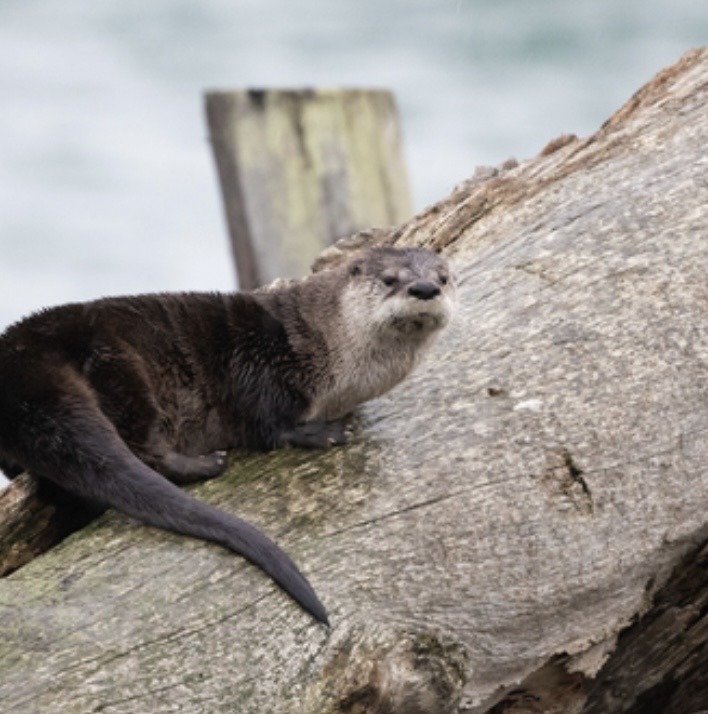
Brief Description
A semi-aquatic mammal characterized by a sleek, torpedo-shaped body, short legs, webbed feet, and a thick tail, typically found resting on logs near water.
Characteristics
Dark brown fur with a lighter silvery-gray throat and chin, small ears, long whiskers, a muscular tapered tail, and fully webbed feet.
Habitat
In and along freshwater and coastal marine habitats including rivers, lakes, marshes, and estuaries.
When to Find It
Active year-round, primarily during early morning and late evening hours.
Conservation Status
Least Concern
Ecological Role
Acts as an apex predator in aquatic ecosystems, helping to maintain healthy fish populations and indicating clean water health.
Easily Confused With
Distinguished from sea otters by living mostly in freshwater and lacking the habit of floating on their backs, and from European otters by geographical range and subtle facial differences.
Observation Tips
Look near water bodies with abundant logs or banks, remain quiet, and use binoculars from a distance to avoid startling them.
Interesting Facts
River otters are highly playful and agile swimmers, capable of holding their breath underwater for up to eight minutes.