Common Zinnia
Scientific Name: Zinnia elegans
Category: plant
Brief Description
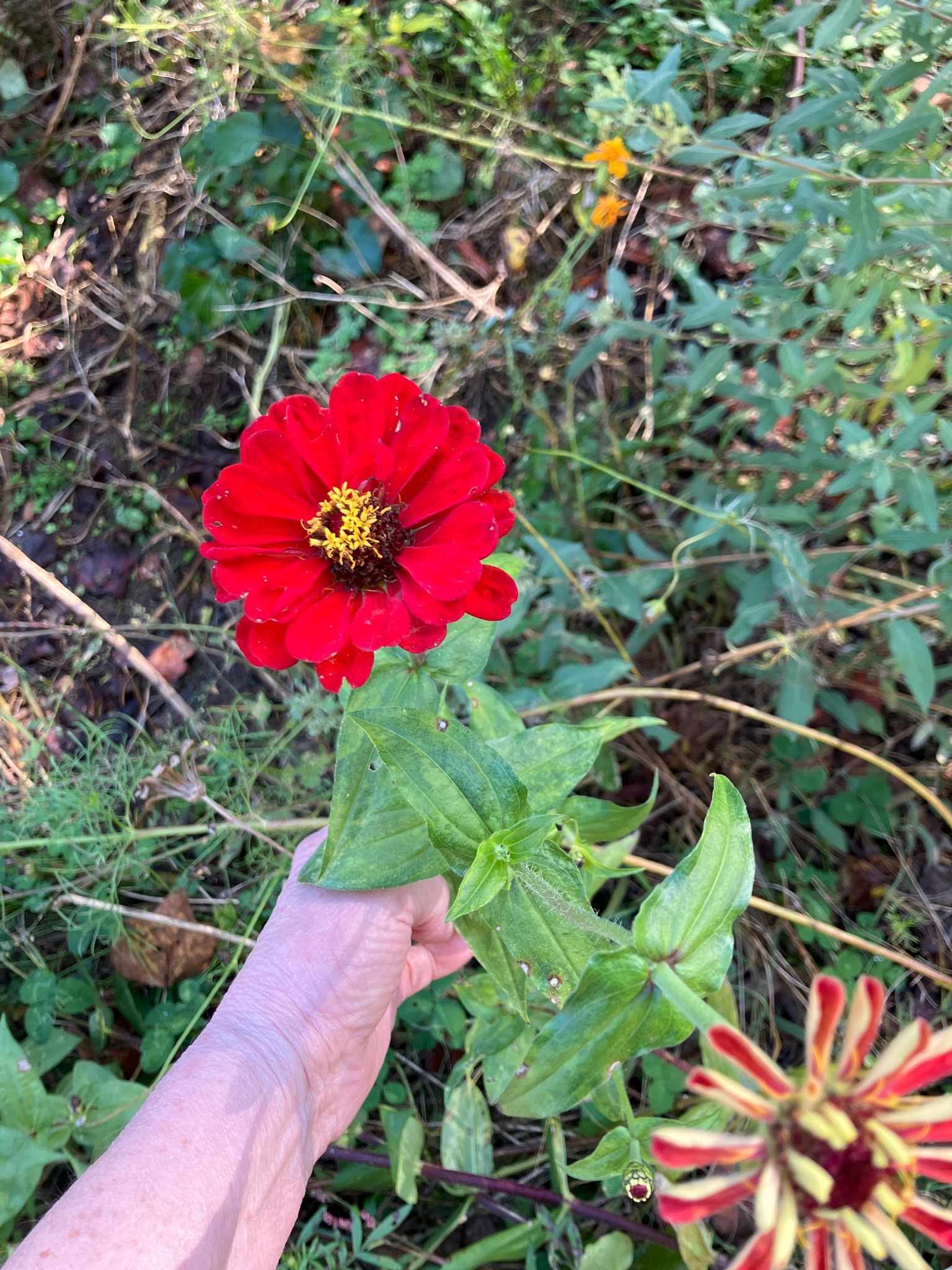
A vibrant garden flower featuring bright red, daisy-like composite flower heads with yellow centers and opposite, lance-shaped leaves.
Characteristics
Stiff, hairy, upright stems bearing opposite, sessile leaves that clasp the stem slightly. The flower heads are solitary, composed of brightly colored ray florets (red in this specimen) surrounding a central disc of yellow or brownish florets.
Habitat
Cultivated in gardens, flower beds, and urban green spaces; native to scrub and dry grassland areas in Mexico.
When to Find It
Blooms from mid-summer through the first autumn frosts, thriving best in warm, sunny weather.
Conservation Status
N/A
Ecological Role
Acts as an important nectar source for pollinators such as butterflies, bees, and hummingbirds.
Easily Confused With
Other members of the Asteraceae family such as marigolds (Tagetes) or chrysanthemums, distinguished by zinnia's stiff, coarse leaves and specific bract structure.
Observation Tips
Best observed in full sun during daylight hours when pollinators are actively visiting the blossoms.
Interesting Facts
Zinnias were the first flowers to be grown on the International Space Station, blooming successfully in 2016.