Birdsfoot Trefoil
Scientific Name: Lotus corniculatus
Category: plant
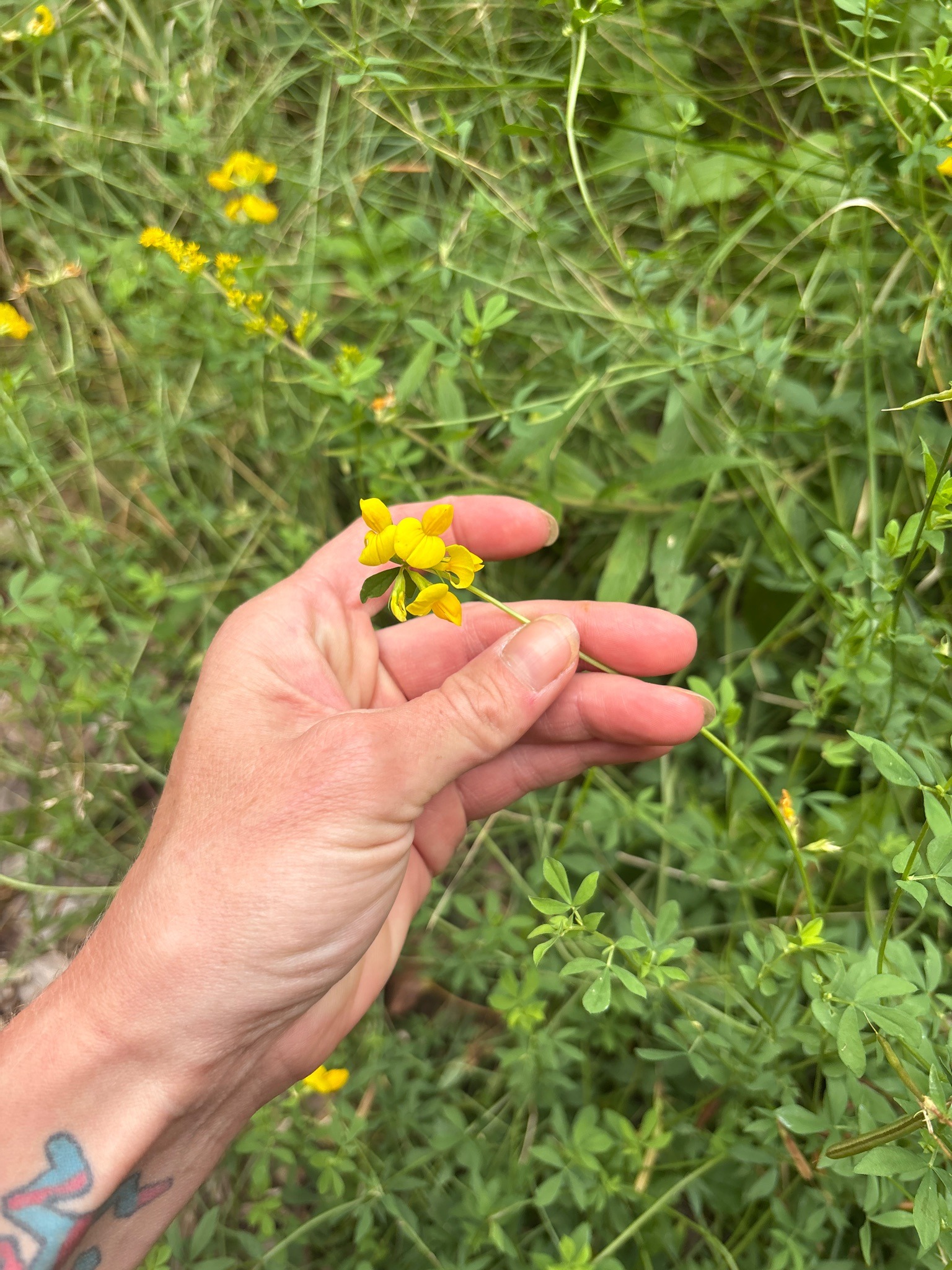
Brief Description
A low-growing perennial herbaceous plant featuring clusters of bright yellow flowers resembling small pea blossoms, followed by slender seed pods shaped like a bird's foot.
Characteristics
Features alternate leaves divided into five leaflets (three upper leaflets and two basal ones resembling stipules). Flowers are bright yellow, often tinged with red, arranged in small umbels of 3 to 8 blossoms. Seed pods are straight, linear, and spread out radially, resembling a bird's foot.
Habitat
Found in meadows, pastures, along roadsides, and in disturbed grassy areas. Prefers well-drained soils and full sun.
When to Find It
Blooms from late spring through summer, typically May to September.
Conservation Status
N/A
Ecological Role
Acts as a valuable nectar source for bees, butterflies, and other pollinators. It also fixes atmospheric nitrogen in the soil, improving soil fertility.
Easily Confused With
Can be confused with Black Medick (Medicago lupulina) or Greater Birdsfoot Trefoil (Lotus pedunculatus); Birdsfoot Trefoil is distinguished by its solid stems and specific leaflet arrangement compared to hollow-stemmed or differently leaved relatives.
Observation Tips
Look along sunny roadsides and meadows during summer. Photographers can capture close-ups of the distinctive claw-like seed pods when flowering concludes.
Interesting Facts
Despite being widely introduced as livestock forage and for erosion control, Birdsfoot Trefoil is often considered an invasive weed in native North American prairies and natural areas.