Platterful Mushroom
Scientific Name: Megacollybia rodmanii
Category: fungi
Brief Description
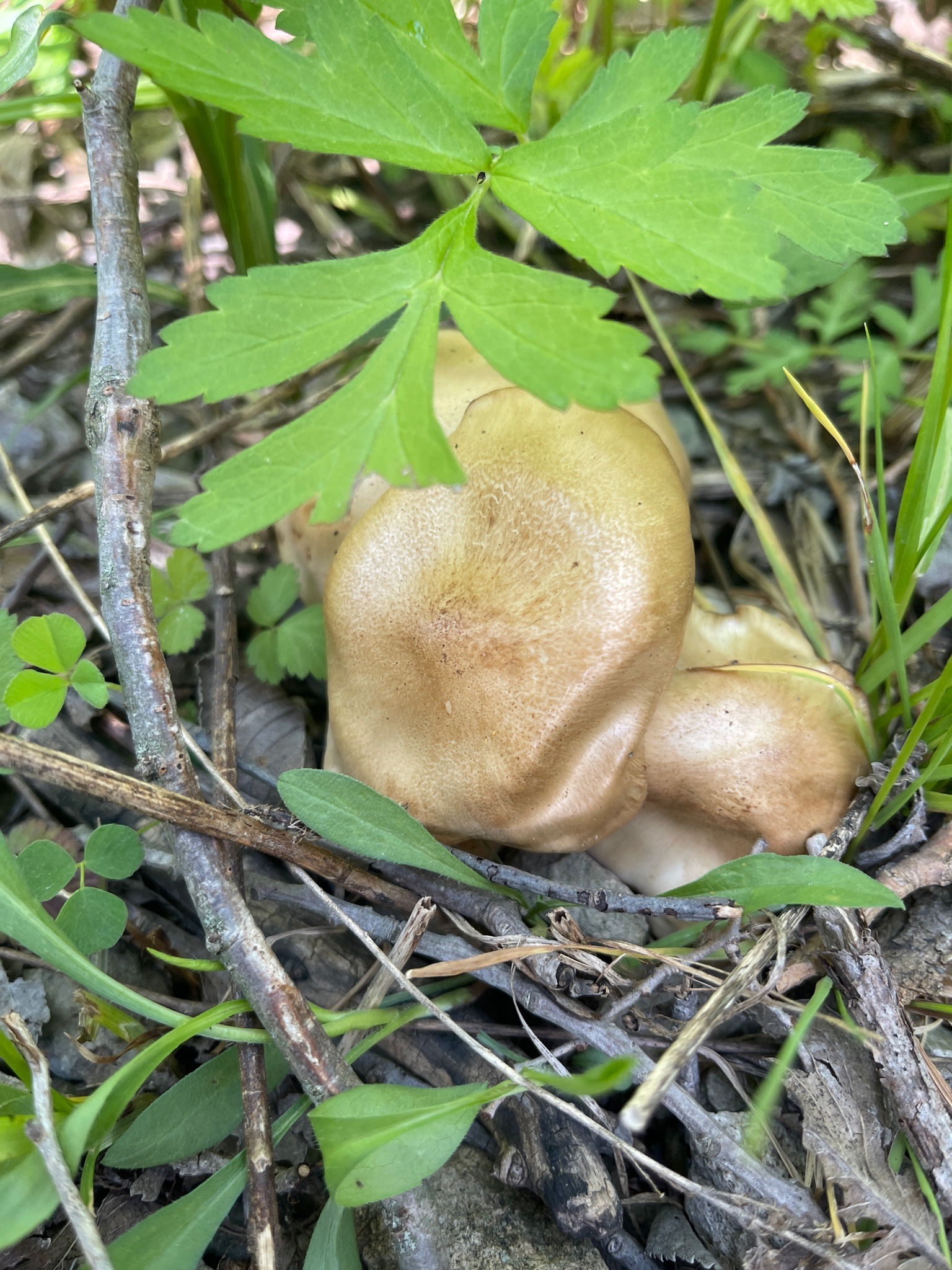
A medium to large mushroom characterized by a brownish cap with radiating fibers and broad, white gills.
Characteristics
The cap is 5-20 cm wide, convex to flat, often with a slight central hump. Its surface is dry and covered with fine, dark, radially arranged streaks or fibers on a grayish-brown to tan background. The gills are white, broad, and widely spaced. The stem is white, tough, and often has thick white cords of mycelium (rhizomorphs) at the base.
Habitat
Found growing on or near well-decayed hardwood logs, stumps, or buried wood in deciduous forests.
When to Find It
Late spring to early autumn, often appearing after heavy rains.
Conservation Status
Common
Ecological Role
It is a saprobic fungus, meaning it plays a crucial role in the ecosystem by decomposing dead hardwood and cycling nutrients back into the soil.
Easily Confused With
Distinguished from Pluteus cervinus (Deer Mushroom) which has pink spores and gills that reach the stem differently, and from some Tricholoma species which lacks the stringy rhizomorphs at the base.
Observation Tips
Look for these mushrooms near rotting logs. Gently lift the base of the stem to see if you can find the characteristic thick white 'root-like' cords (rhizomorphs) attached to the wood.
Interesting Facts
Formerly known as Megacollybia platyphylla (a European species), DNA testing has shown that the North American versions are distinct species such as M. rodmanii. While some guides list it as edible, it is known to cause digestive upset in many people and is generally not recommended for consumption.