Peppermint
Scientific Name: Mentha x piperita
Category: plant
Brief Description
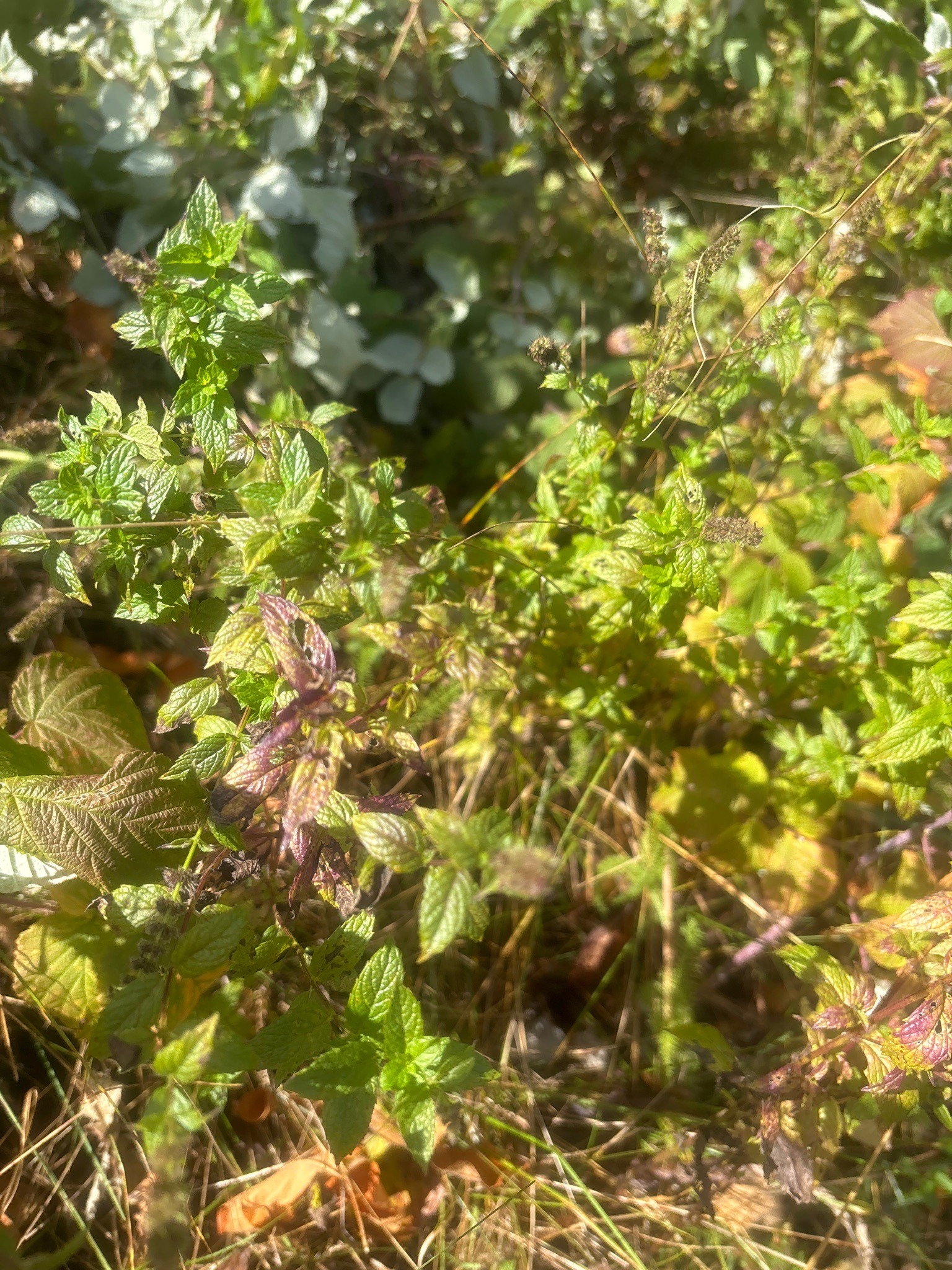
A vigorous perennial herb in the mint family, recognizable by its bright green, opposite leaves with serrated edges and a strong, refreshing minty aroma when crushed.
Characteristics
Stems are typically square-shaped (characteristic of the mint family), smooth, and sometimes purplish-green. Leaves are lanceolate to ovate, dark green with sharply serrated margins. Flowers are small, purple to pink, arranged in whorls forming terminal spikes.
Habitat
Damp, fertile soils along streams, ditches, wetlands, and damp woodland edges, though widely cultivated and escaped in gardens and disturbed ground.
When to Find It
Active growth and flowering occur from late spring through summer (June to September).
Conservation Status
N/A
Ecological Role
Provides nectar and pollen for various beneficial insects such as bees, butterflies, and hoverflies.
Easily Confused With
Spearmint (Mentha spicata) which has narrower, sessile leaves and a milder scent, and Pennyroyal (Mentha pulegium) which is smaller and more toxic in large amounts.
Observation Tips
Look for damp, shaded or partially sunny areas near water sources. Rub a leaf gently between your fingers to confirm the distinct peppermint scent.
Interesting Facts
Peppermint is a sterile natural hybrid between watermint (Mentha aquatica) and spearmint (Mentha spicata). It has been cultivated for centuries for culinary, medicinal, and aromatic purposes.