Dandelion Rosette
Scientific Name: Taraxacum officinale
Category: plant
Brief Description
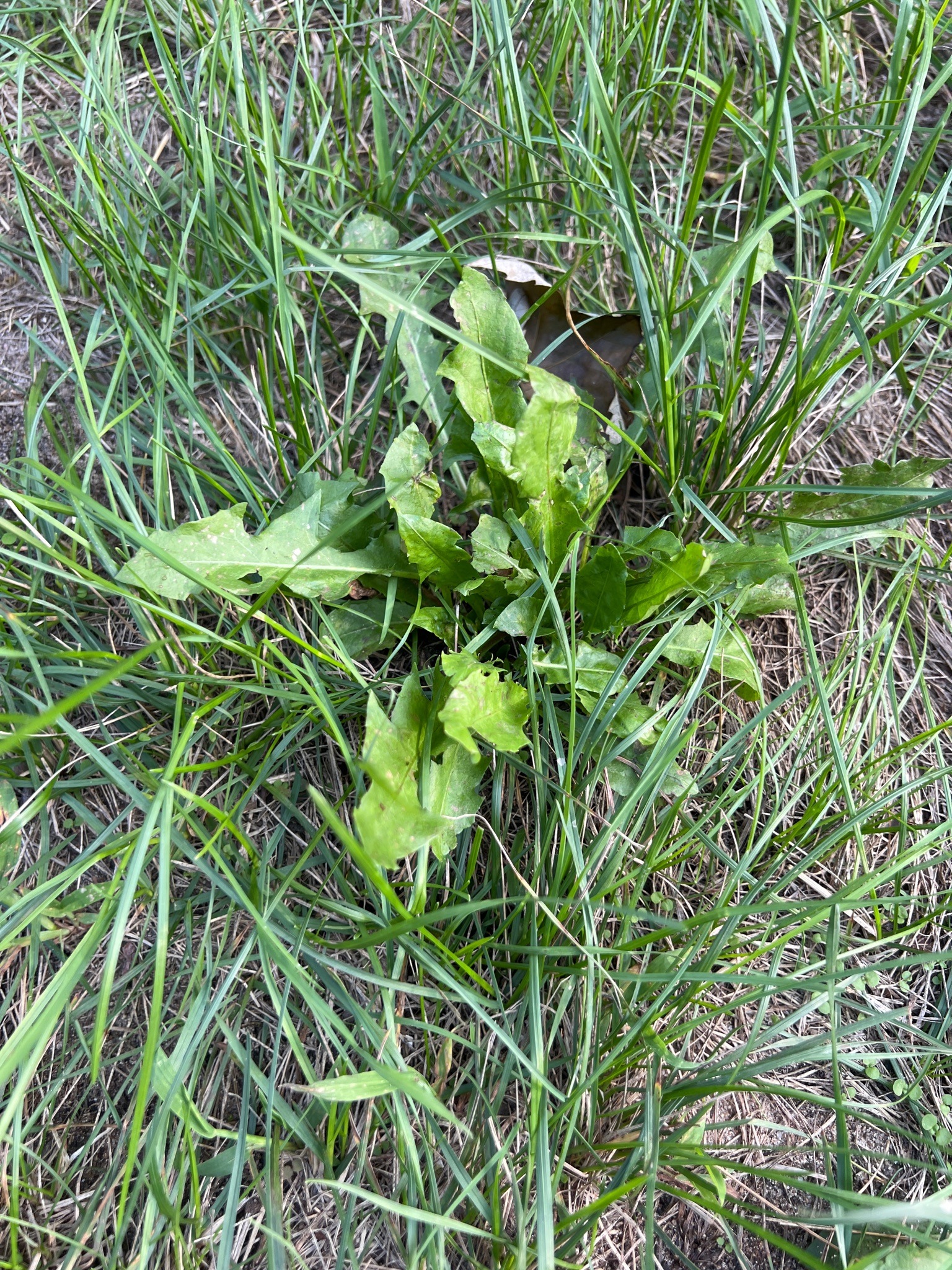
A low-growing rosette of jagged, deeply lobed green leaves nestled among grass, characteristic of the vegetative stage of a common dandelion.
Characteristics
Features a basal rosette of oblong to lance-shaped leaves with sharply toothed or lobed edges (runcinate leaves), growing flat to the ground to avoid lawn mowers.
Habitat
Lawns, fields, disturbed soils, roadsides, and gardens worldwide.
When to Find It
Found year-round in temperate climates as a perennial, greening up vigorously in early spring.
Conservation Status
N/A
Ecological Role
Provides early-season nectar and pollen for bees and other pollinators when few other flowers are blooming; deep taproots help aerate compacted soil and bring up minerals.
Easily Confused With
Cat's-ear (Hypochaeris radicata) or sow thistles (Sonchus spp.), which can be distinguished by hairy leaves or taller branching stems, respectively.
Observation Tips
Look closely in lawns and open grassy areas where sunlight is abundant and soil is slightly disturbed.
Interesting Facts
Every part of the dandelion is edible and rich in vitamins A, C, and K; the name comes from the French 'dent-de-lion', meaning 'lion's tooth', referring to the coarsely toothed leaves.