Orange Hawkweed
Scientific Name: Pilosella aurantiaca
Category: plant
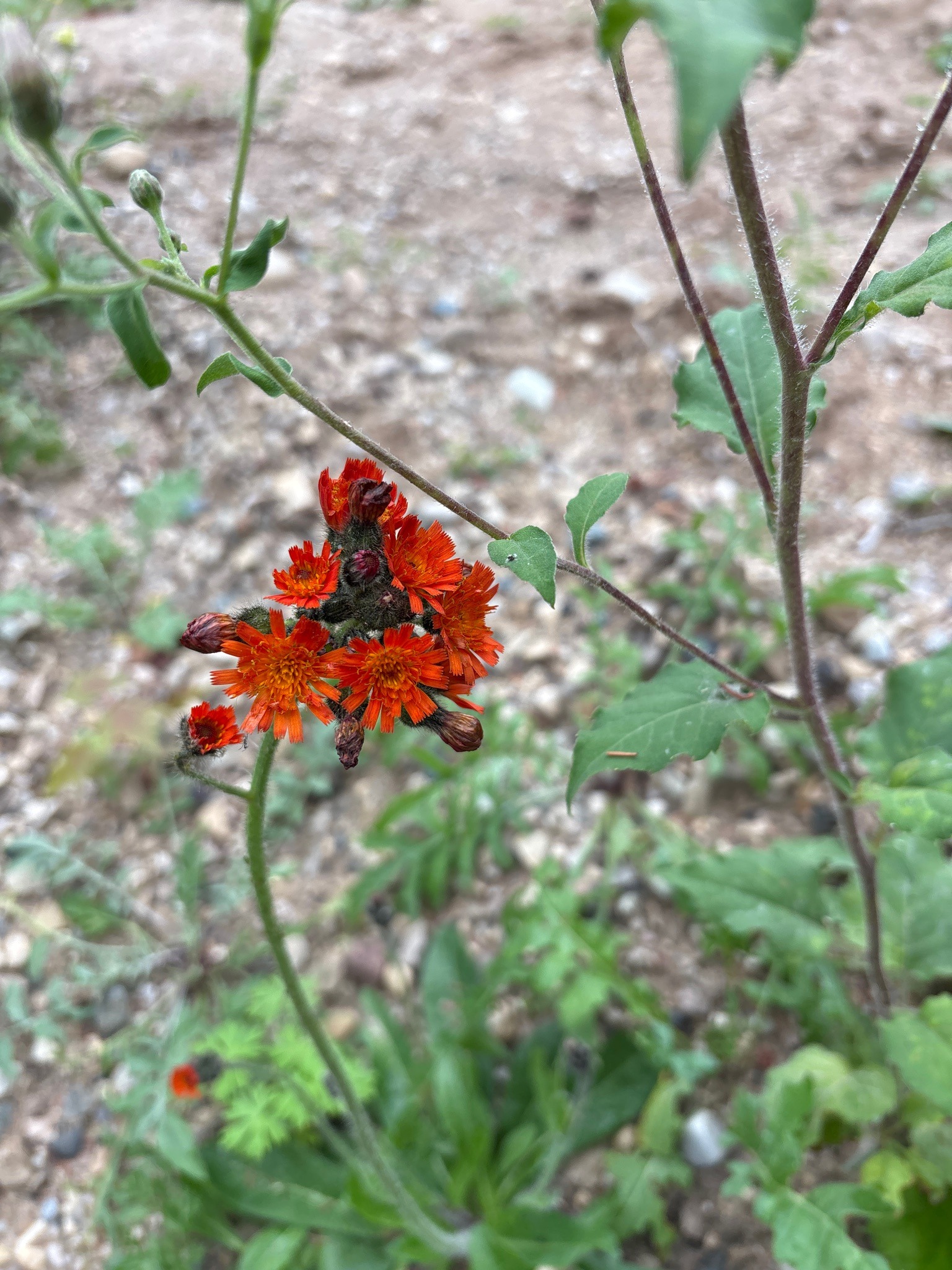
Brief Description
Orange hawkweed is a perennial herbaceous plant known for its vibrant, bright orange daisy-like flower heads and hairy foliage, often considered an aggressive invasive weed in North America.
Characteristics
Features small, vibrant orange to red-orange flower heads grouped in flat-topped clusters of 5 to 30. Leaves are mostly basal, oblong to lance-shaped, and covered in stiff, dark hairs. Stems are upright, slender, hairy, and exude a milky juice when broken. Grows up to 12-24 inches tall and spreads aggressively via stolons (runners) and underground rhizomes.
Habitat
Found in open disturbed areas, pastures, meadows, forest clearings, roadsides, and lawns, particularly in well-drained, acidic soils.
When to Find It
Blooms primarily from late spring through summer (June to August).
Conservation Status
N/A
Ecological Role
While it provides some nectar for pollinators, orange hawkweed is primarily known as an invasive weed that outcompetes native vegetation, reduces biodiversity, and degrades forage quality in pastures.
Easily Confused With
Can be confused with other native and non-native hawkweeds (Hieracium species) or dandelions. Distinguished primarily by its striking orange-to-red flower color, as most other hawkweeds feature yellow flowers.
Observation Tips
Look for patches of vivid orange flowers in rural pastures and along hiking trails during summer. Due to its invasive nature, observe without spreading seeds to new locations.
Interesting Facts
Orange hawkweed is native to the mountains of central and southern Europe. It is sometimes referred to as 'Grim the Collier' due to the black, soot-like hairs covering the flower buds and bracts.