Sugar Kelp (Sea Belt)
Scientific Name: Saccharina latissima
Category: other
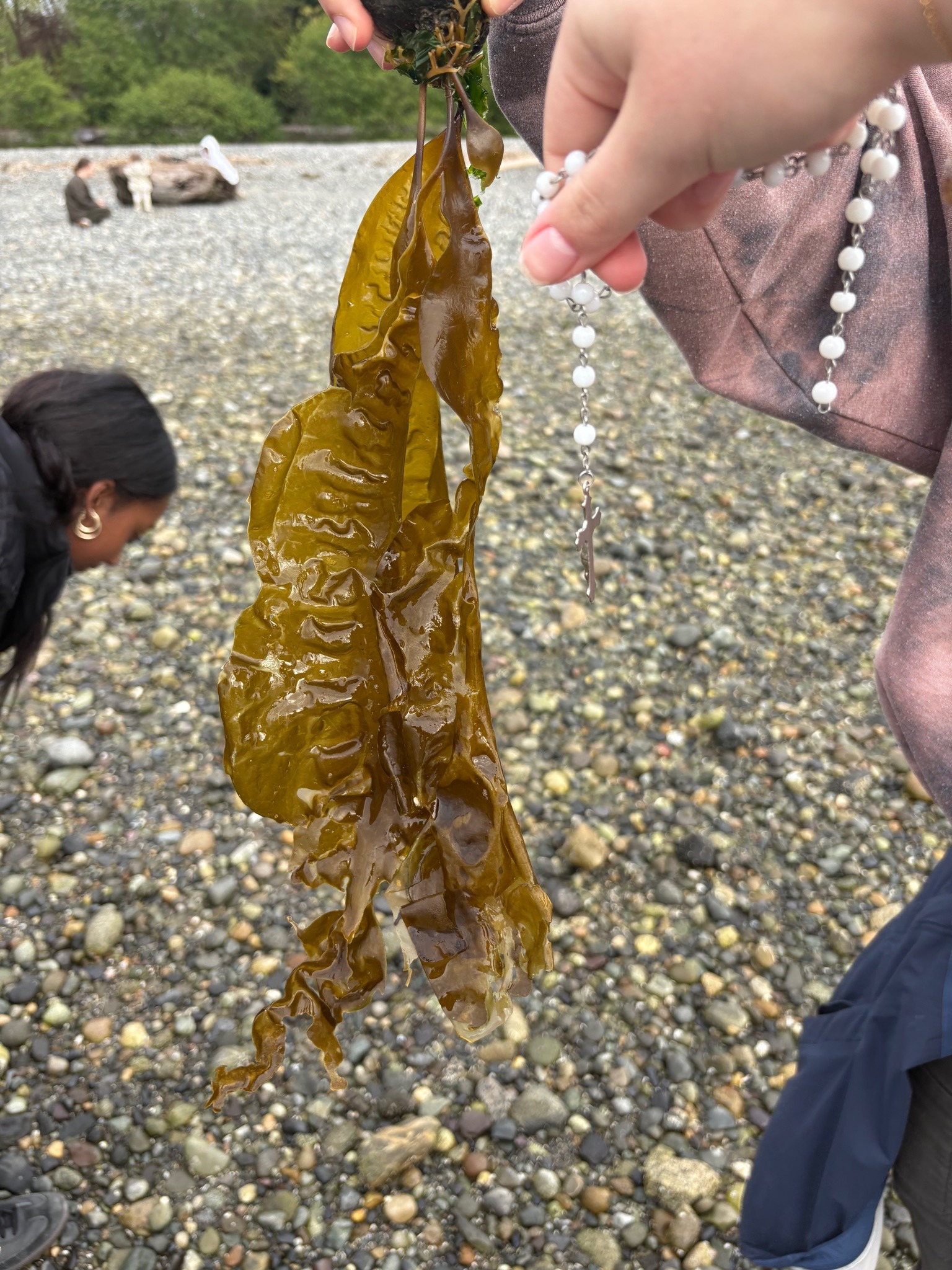
Brief Description
A type of brown algae (seaweed) commonly found in the intertidal and subtidal zones of the Pacific Northwest, characterized by its long, yellowish-brown, strap-like blade.
Characteristics
Broad, yellowish-brown to golden-brown blade that can grow up to 3 meters long. The blade is smooth but often has a characteristic puckered or 'crinkly' texture along the edges. It attaches to rocks via a root-like holdfast and a short stem called a stipe.
Habitat
The low intertidal and shallow subtidal zones on rocky substrates; frequently found washed up on pebbly beaches like Carkeek Park in Washington.
When to Find It
Can be found year-round, but grows most vigorously in the spring and summer months.
Conservation Status
Common/Not Endangered
Ecological Role
Provides critical habitat and food for many marine organisms, including small crustaceans and fish. It acts as a primary producer in the marine food web and helps sequester carbon.
Easily Confused With
Bull Kelp (Nereocystis luetkeana) which has a large bulbous float at the top; Winged Kelp (Alaria marginata) which has a distinct midrib running down the center of the blade.
Observation Tips
Look for kelp washed up on the shore after a high tide or storm. When handling, be careful of slippery surfaces and return living specimens to the water if possible.
Interesting Facts
It is called 'Sugar Kelp' because it contains mannitol, a natural sugar that can form a white powder on the surface of the dried blade. It is used commercially in food, cosmetics, and for biofuel production.
User Notes
At carceek beach in Washington State